
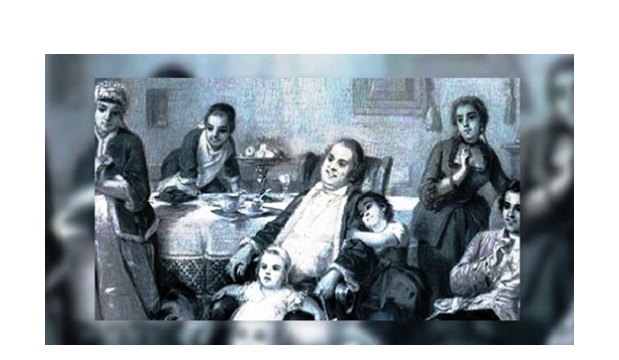
(Author: Bernard Katz, Vol. 66, No. 1, Pesach 2011)
Already in the Talmud, there is a reference to the military strength of ‘Germania’ (or ‘Germamia’) and its threat to the Roman Empire.1 Accompanying the Roman legions manning the German border were the first Jews to settle in Germany, merchants who lived in the Roman towns along the Rhine. Some historians cite reports of a Jewish presence as early as 300 BCE, and there are legends of Jews in the city of Worms petitioning Herod to save Jesus from crucifixion. 2 The earliest reference to the presence of a Jewish community in German territory is a decree which dealt with the Jewish councillors sent by the Roman Emperor Constantine to the Cologne city council in 321 CE.3 The original of this document resides in the Vatican library.4 There is, however, no evidence of a continuous Jewish settlement in Germany during those times.
Emperor Charlemagne (768 – 814) was favourably disposed to Jews, and during his reign invited them to settle in his territories and freely practice their religion. It was even possible for an imperial deacon, by the name of Bodo, to convert to Judaism without running the risk of being burned alive (which would have been the outcome a few centuries earlier, and would be so later).5 Our knowledge of actual Jewish history in Western Europe begins with the rise of the Carolingian dynasty (Charlemagne’s descendants). Jewish legend has it that Charlemagne himself invited the great Italian Talmudist Rabbi Kalonymus to settle in Mainz, where he founded a yeshiva.6
The first mention of Jewish settlement in Mainz dates from c900 and in Worms to 960. In 1084, the archbishop of Speyer invited Jews to settle there “in order to enhance a thousand-fold the respect accorded to our town”.7 Together these three towns are known as Shum, an acronym based on the initial letters of their Hebrew names.
Around the year 1000, Rabbeinu Gershom became head of the yeshiva in Mainz. He was the symbolic “founder of Ashkenaz”, and his yeshiva became the pre-eminent yeshiva in the Jewish world. Around this time, the rabbinic and Talmudic authority of Babylon was approaching its end and was being passed to Ashkenaz.8 Rabbeinu Gershom is well known for a number of new laws enforced under a cherem – known as the “Cherem of Rabbeinu Gershom” – which included the famous prohibition against polygamy. Max Weinreich describes this “Cherem of Rabbeinu Gershom” as the “declaration of independence of Ashkenaz”.9
Around 300 CE, approximately one million Jews lived in the Western Roman Empire, but of these only 5000 to 10 000 survived as Jews by the year 800. As late as 1170, it is estimated that there were only 100 000 Ashkenazi Jews.10
Despite persecution and the destruction of many communities, Jewish cultural and religious life enjoyed a golden age between the 10th and 14th Centuries. As a rule, the kings and emperors took a benevolent attitude towards the Jews during that period, but their power mostly proved too weak to protect the Jews from attacks by the Crusaders.
German Jewry ultimately lost its primary place in the Ashkenazic world as a result of plagues, pogroms and emigration. Starting with the First Crusade in 1096 and followed by further Crusades until 1270, the Rindfleish massacres (1293–1303) and the Black Death (1348–50), Jews began to move eastwards to Poland and later Lithuania. The year 1500 is taken as the symbolic shift in Rabbinic and Talmudic authority from Germany to Poland.11
Martin Luther (1483–1546) ushered in the Reformation. Initially, he was well disposed towards the Jews, but when they refused to convert he became a bitter enemy. Paul Johnson writes that Luther’s pamphlet “On the Jews and their lies” was the first work of modern antisemitism and was a giant step forward on the road to the Holocaust.12
By the 15th and 16th Centuries, such dangers and difficulties had reduced the Jewish population to insignificant numbers. The re-immigration of Jews from Poland, Lithuania and western Russia became the major source for the survival and rebirth of German Jewry from the late 17th Century onwards. 13
The founding of the modern Jewish community of Berlin, capital of Prussia, dates to 1671, when fifty wealthy Jewish families who had been expelled from Vienna were permitted entry by King Frederick I.14 Given Prussia’s importance as the preeminent German state, this effectively constitutes the date of the founding of the modern German Jewish community as a whole. Frederick was not moved by the Jewish plight but wanted to stimulate a stagnant economy. To become his Schutzjuden (protected Jews), each had to pay him 2000 thalers (roughly $90,000 today), promise to set up certain industries, and agree “not to establish a synagogue”.15
In the 17th Century, a small number of Jewish merchants and financiers, known as Court Jews or Hofjuden, began acting as advisers to the rulers of the decentralised German states. Most Jews, however, lived a marginal and restricted existence outside the mainstream of German life. These early Hofjuden were the forerunners of the great families of European Jewry, which included the Oppenheimers, Wertheimers and Rothschilds. One of the more colourful stories concerning a Court Jew was that of Joseph Suss Oppenheimer (1692-1738). “Jew Suss”, as he was known, was advisor to the Duke of Wurttemberg. He was arrogant and corrupt but was responsible for the financial recovery of Wurttemberg. After the duke died, he was tried and sentenced to death by public hanging. Put on public display in a cage, it was expected that he would save himself by conversion, but he refused and went to the gallows reciting the shema.16
Meyer Amschel Rothschild (1743–1812) became friendly with William, later elector of Hesse-Cassel through their mutual interest in collecting old coins. This relationship set the Rothschild family on the path to fame and fortune. The sons of Meyer Amschel settled in England, Frankfurt, Paris, Vienna and Naples and so began an international operation on a large scale. The House of Rothschild became known as the sixth Great Power of Europe.17
The philosopher Moses Mendelssohn (1729–86) arrived in Berlin in 1743 at the age of 14. A modern German guidebook to Berlin claims that the history of literature in Berlin began on the day Mendelssohn arrived in Berlin, which was through the Rosenthal gate, the only one open to Jews and cattle.18
Mendelssohn, a strictly Orthodox Jew, was an early promoter of the Haskalah (Jewish Enlightenment) and made it his mission to integrate Jews into German culture. He believed that this would speed up their emancipation and make them full citizens.
The Haskalah led to conversions to Christianity on an epidemic scale. In Berlin, no less than 50% of Jews converted, including four of Mendelssohn’s six children. By the mid 19th Century, only four of Mendelssohn’s 56 descendants were still Jews.19 The German Jewish writer Heinrich Heine also converted – he regarded it as his “entry ticket to European culture”. However, he retained some affection for his Jewish heritage and commented that his conversion could not be honest since no Jew could believe any other Jew to be Divine.20
Conversion did not always produce the soughtafter solution. Some converts found themselves rejected by both Jews and Christians; their descendants married other converts or descendants of converts, in a pattern that sometimes continued for two to three generations.21
Frederick II (‘The Great’, reigned 1740-1786) continued the business-friendly policies of his predecessors and enlarged the territory of Prussia by wars. In both these endeavours, he was assisted by wealthy Jews. The acquisition of territory added 170 000 Jews to his realm.22 Frederick was tolerant towards the practice of the Jewish religion but intolerant towards Jewish civil rights.23 It was he who introduced the so-called “Jews’ porcelain”, whereby Jews were forced to buy porcelain on marrying, on the birth of a child and on the purchase of a house. They were forced to take whatever was available, and if they wanted to sell they could only do so outside Prussia.24 (More than half a century later, the porcelain became valuable and those that had kept it made a healthy profit). In 1773, the Prussian Academy of Sciences elected Moses Mendelssohn to full membership, but Frederick refused his assent. Notwithstanding such discrimination, Frederick the Great was respected by Jews, probably because of his shielding them against anti-Jewish incitement.25
Around the beginning of the 19th Century, salons became the focal point of social and intellectual life in Berlin society. Those of Henrietta Herz, Rahel Varnagen and other Jews became places where Jews and Christians interacted. Nevertheless, Varnagen later complained that neither baptized nor unbaptized Jews were ever invited to the social functions of their Christian guests.26 These salons were a short lived phenomenon. Of the eighteen best known salon hostesses in Berlin, all but one eventually converted, mostly long after their establishments had closed down.27
Rabbi Berel Wein views Mendelssohn as the father of Reform Judaism (something disputed by the Reform leadership).28 Reform arose as an alternative to conversion, with its first Temple opening in 1810. The major driving force behind Reform Judaism was Abraham Geiger, who argued, inter alia, for a rejection of Talmudic Judaism, circumcision, the covering of heads during worship and Saturday services.
By the 1870s, Reform had become dominant in virtually all the major cities in Germany. Memoirs testify to the growing estrangement of Jews from their tradition. Victor Klemperer, who became a Protestant pastor, recalled that when his mother received a telegram from his father notifying her that he had been accepted for a position at the new Reform temple in Berlin, she immediately went and purchased an assortment of non-kosher cold meats. At home she tasted the meats and with a radiant expression on her face said, “This is what the others eat. Now we may eat it too”.29
But Orthodoxy mounted a strong counter attack. Its major figure was Rabbi Samson Raphael Hirsch (1808– 1888), who became the founder of what became known as Neo-Orthodoxy. Wrote Rabbi Wein: “Hirsch attacked Reform head on. He borrowed all of Reform’s ‘positive’ aspects – education, social acceptance in manners and dress, and the veneer of Western culture – and integrated them into a thoroughly traditional, punctiliously observant Jewish community. He not only refused to compromise with Reform, he refused to associate with it.” 30 Initially, American Jews originated mostly from Germany. From 1830–60, Jewish immigration from Central Europe may have been as high as 200 000, raising the total Jewish population in America to 300 000 by 1870.31 Poor economic conditions, in addition to antisemitism and discrimination, were contributory causes.
The ideas of the French Revolution and conquests of Napoleon had had an impact on the people of Europe. In the 19th Century, the assimilation of Jews into German life progressed so rapidly that the historian Fritz Stern described it as possibly “one of the most spectacular social leaps in European history”.32 At the beginning of the century 70% of Prussian Jewry (where most German Jews lived) had led marginal, insecure lives and many were wandering peddlers and beggars. By 1870, that figure had dropped to 5%. Three generations after Moses Mendelssohn, Jews were Germans in language, dress, and national sentiment.33
By 1870, Otto von Bismarck, after victories over Austria and France, had consolidated the thirty independent German states into one Reich, which became the most powerful nation on continental Europe. This led to the emancipation of the Jews, making every sphere of German life (except government) accessible to them. In practice, however, Jews were not appointed officers in the army or professors at universities, and at the social level they remained less than fully accepted.34
When, in 1871, Bismarck demanded large reparations from France, the French president protested that even had a beginning been made at the birth of Christ, such a sum could never have been brought together. “That” replied Bismarck (who was accompanied by the Jewish Berlin banker, Gerson Bleichroder) “is why I have brought with me as adviser one who begins to reckon his years with the creation of the world”.35
Bismarck pioneered Jewish emancipation in Germany and had made the memorable statement that the breeding of a “German stallion” and a “Jewish mare” would provide the country with its most valuable offspring.36 He was also associated with several Jewish bankers whom he respected. However, by 1881 he was persuaded that antisemitism was an indispensable weapon in wooing lower middle class support and, while opposed to it, he took no action to stop it.37 The German philosopher Friedrich Nietzsche (1844–1900) wrote, “I have never met a German who was favourably inclined to the Jews”. Former US Treasury Secretary Michael Blumenthal, who wrote a book about Germans and Jews, remarks that even allowing for hyperbole, Nietzsche was essentially correct.38
Over 100 000 Jews fought for Germany during World War I and 12 000 lost their lives. Nevertheless, Jewish patriotism was questioned. In 1916, the war minister ordered a “Jew count” to prove that relatively fewer Jews were serving at the front and that relatively more Jews were shirkers. This “Jew count” led to an increase in antisemitism as it created the perception that the allegations must be valid. It turned out that the allegations were not valid, but the results were never published.39
Following Germany’s defeat, the Weimar Republic was established. Jews were strong supporters of the Republic, and Walter Rathenau served as its foreign minister before being assassinated. Weimar adopted a democratic constitution and Jews were finally accorded full emancipation.
Jews made a significant and highly visible contribution to German life. At the beginning of the 20th Century, they comprised approximately 1% of the German population but contributed 15% of the lawyers and 10% of the doctors. In Berlin, these percentages were much higher, with 30 – 40% of the doctors being Jewish.40
In business, Jews dominated such fields as textiles, department stores and private banking. Half the private banks were Jewish owned, and of the public banks hardly any were not under Jewish ownership or with at least several directors. 41 Jews helped organise the banks that today dominate the German economy. Industrialists included Emil Rathenau, founder of AEG, and the shipbuilder Albert Ballin, and Jews were the major owners of newspapers. Of the 25 richest Germans in 1909-11, 40% were Jewish or of Jewish descent.42
Amos Elon writes that much of what is remembered and admired today as the golden age of Weimar culture was created by German Jews. Major Jewish figures in German scientific and cultural life included Fritz Haber, Paul Ehrlich, Albert Einstein, Sigmund Freud and Alfred Adler in the sciences, Heinrich Heine, Max Born and Franz Kafka in literature and Gustav Mahler, Felix MendelssohnBartholdy and Arnold Schoenberg in music, amongst and many others.43
Einstein and Haber were friends, but whereas Einstein was a pacifist who hated German militancy and hoped that Germany would be defeated in World War I, Haber, a baptised Jew and put himself at the disposal of the war effort seeking to develop the ultimate weapon, poison gas. After the war, Haber developed the deadly gas Zyklon B. On this Fritz Stern comments, “The horror of Haber’s involvement with the gas that later murdered millions, including friends and distant relatives, beggars description”.44
Shortly after Hitler came to power, it became impossible for Jews to be employed at universities. In 1934, the Nazi minister of education, Bernhard Rust, visited the University of Gottingen, a world renowned centre of advanced physics and mathematics. At a banquet, Rust sat next to the famous mathematician David Hilbert and asked whether the institute had suffered from the expulsion of the “Jews and their friends”. Hilbert answered: “Suffered? It hasn’t suffered, Herr Minister. It no longer exists”.45 Elon writes that the hierarchical structure of universities facilitated their total submission to Nazism. Writing after a visit in 1965 he was dismayed even then by the ‘grovelling’ and ‘submissiveness’ of students.46 The Nuremberg laws adopted in 1935 stripped Jews of citizenship rights and forbade marriage and sexual relationships between Jews and Aryans. A further 13 supplementary laws would subsequently outlaw Jewish participation in national life almost completely.47
Most historians agree that there was no “big bang” theory for the origins of the Final Solution and believe that the decision-making process was prolonged and incremental.48 Initially, emigration was the favoured solution to the “Jewish problem” and even Palestine had been considered as a possible destination. By 1938, Hitler was moving away from emigration towards a territorial resettlement (Madagascar was considered but the notion ultimately proved unworkable).49
Emigration as a policy to rid Germany of its Jews failed. Only one quarter of Jews living in Germany in 1933 had emigrated by October 1938. In 1937, Adolf Eichmann had suggested pogroms as the most effective way of speeding up emigration. On 7 November 1938, the murder of a German diplomat in Paris by a desperate seventeen year-old Polish Jew, Herschel Grynszpan (whose parents were amongst 17 000 ex-Polish Jews who the Germans dumped on the Polish border without food or water) provided the Nazis with the perfect pretext.50 What followed on 9-10 November was Kristallnacht, a state-sanctioned and organised pogrom by the Nazi regime against it Jewish citizens. It resulted in the destruction of some 100 synagogues, damage to several hundred others and the destruction of about 8 000 Jewish shops. Around 100 Jews were murdered, 30 000 were sent to concentration camps and many committed suicide. 51
In the months following the June 1941 invasion of the Soviet Union, the vague vision of implied genocide of the Jews evolved into “the Final Solution to the Jewish question”. Most scholars are of the view that no decision or order for the murder of all Soviet Jews had been given before the invasion.52 By the end of October 1941, the conception of the Final Solution had taken shape – the Jews of Europe were to be deported to secret camps designed to perpetrate mass murder.
At the Wannsee Conference, held on 20 January 1942, the extermination of European Jewry became official state policy. Here, the organizational and technical details of the “Final Solution” were discussed and decided. It was convened by Reinhard Heydrich and attended by 15 senior Nazi officials – eight of whom held doctorates. After Wannsee, those who had attended the conference could have had no doubt about the scope of the policy – the killing of every Jew in Europe.53
By the time of the conference, gassings had already commenced at Chelmo and killings on the Russian front had been in progress since June 1941. Heydrich desired obedience to his leadership in the work of extermination and decided that it would be achieved by a conference with all would-be pretenders to the title of “Commander of the Final Solution”.54 Heydrich reiterated on authority from Goering to coordinate – without regard to geographic boundaries – a Final Solution to the Jewish question. The conference lasted 90 minutes and was followed by lunch overlooking the lake and yacht club.55
Eichmann prepared the minutes but at Heydrich’s instruction did not include details of the discussion in them. At his trial in Jerusalem, Eichmann testified as follows: “…they spoke about methods of killing, about liquidation, about extermination”. Eichmann recalled that Heydrich “[had] expected considerable stumbling blocks and difficulties”. Instead he had secured “…an agreement which had assumed a form which had not been expected”.56
The source of Hitler’s hatred of Jews is a mystery, despite numerous biographies. There is no evidence that he ever had a bad experience with Jews. A Jewish doctor had tried hard to save his mother’s life and a Jewish officer, Lieutenant Hugo Gutmann, went to considerable lengths to secure Hitler an Iron Cross for bravery during World War I, despite reservations from the divisional commander. Gutmann not only convinced him but personally affixed the medal to Hitler’s chest.57
In his book Hitler’s Willing Executioners, Daniel Goldhagen argues that the particularly unique and virulent form of German antisemitism, which was ‘eliminationist’ and ‘exterminationist’ in nature, was what enabled the Holocaust to happen. The perpetrators were ordinary Germans, of whom about 100 000 played an active role. They did so ‘willingly’ and ‘zealously’ because they were brought up to hate Jews. It was these circumstances that allowed Hitler to carry out the Final Solution.58
Goldhagen’s chief opponent in this debate is Christopher Browning, who was influenced by the experiments conducted by Stanley Milgram. The latter found that most people will follow orders even if they find them reprehensible. Browning argued that the perpetrators killed out of obedience to authority and peer pressure, not blood lust or primal hatred.59 The genocidal commitment of the regime was not shared by “ordinary Germans”, he claims, quoting Kershaw’s memorable phrase: “the road to Auschwitz was built by hatred, but paved with indifference”.60
At the community’s peak in 1933, 564 000 Jews lived in Germany. During first six years of Nazi rule, around 350,000 emigrated, leaving some 214 000 by 1939. Of these, 180,000 perished. Possibly 19 000 remained alive in Germany at the end of the war, which would mean that approximately 15 000 left after the war began.
In the 65 years since 1945, significant improvements in German-Jewish relations have taken place.
Since the Luxembourg Agreement of 1952, reparations of over 25 billion have been paid to victims of Nazi persecution living in Israel.61 This deal was extremely controversial in Israel and met with strong opposition, eventually being approved by the Knesset by 61 votes to 50. Menachem Begin, who led the opposition against any deal with Germany, was suspended for three months from the Knesset due to “his unruly and emotional behaviour” during the debate.62
In 1965, West Germany and Israel established diplomatic relations, which led to Egypt breaking off relations with West Germany. In 2008, Chancellor Angela Merkel visited Israel and in a speech to the Knesset said that “The Shoah fills us Germans with shame. I bow before the victims. I bow before the survivors”. In the same speech she added: “Israel’s security is non-negotiable”.63 Today Germany is Israel’s third largest trading partner after the USA and China.
Of the 19 000 Jews who survived the war in Germany, 14 000 were married to a non Jewish partner and the rest were hidden.64 Approximately 11 000 returned from exile, some of these leaving again later.65 Of the Displaced Persons, approximately 6– 8000 joined the re-established Jewish communities. Most were aged pensioners, half-Jews or those married to non-Jews. As Howard Sachar writes, “Few appeared to be likely material for a communal revival”.66
The assumption after World War II that Jews would not resettle in Germany has not proved to be correct. In 1950, with West German government financial support, the Central Council for Jews in Germany was established and this became German Jewry’s main representative body. Prior to unification in 1990, approximately 20 000 Jews lived in Germany.67 Since unification, there has been a massive immigration from the former Soviet Union as a result of liberal German immigration policies, and this revitalizing Jewish community life in Germany.
In 2007 there were 107 Jewish communities in Germany, numbering 107 000 individuals. Berlin, Frankfurt and Munich are the largest communities. It is estimated that Jews who are not affiliated with the organized community number about 90 000. 68
Ignatz Bubis, former president of the Central Council, entitled his 1993 autobiography I am a German Citizen of the Jewish Faith. However, in a 1999 interview just before his death, he expressed his pessimism about Jewish life in Germany and chose to be buried in Israel. Charlotte Knobloch, the last of the Holocaust survivors to chair the Central Council (2006–2010), is more optimistic: “For me, the point about immigration is that the Jewish community in Germany should blossom as it did before Nazi times. I want to experience the revival of Judaism as it was before 1933, which made such a cultural and intellectual contribution for the country. I hope that Germany can again be proud. It would be good if the population could become aware that the existence of Jews in Germany could help win back Germany’s reputation in the world”.69
The treatment of Jewish Germans can be regarded as a barometer of national democratic and humane values. Otto Schilly, former Interior Minister, said, “The immigration into the Jewish congregations is, not least, a considerable demonstration of trust in the stability of German democracy and in the openness of our society”.70
In the last two decades, significant funds have been spent on new synagogues, community centres and Jewish museums. In 2003 a law passed contained a government pledge of 5m per annum for the building of further Jewish communities in Germany.71
Some Leading Centres of German Jewry Today
Mainz, Worms and Speyer, situated along the Rhine, were the leading Jewish communities in medieval Germany. In Mainz, a new synagogue and community centre is almost complete. The design contains the letters of the Hebrew word Kedusha.72 An old German man who sees us taking an interest in the building tells us that when he was eight years old in 1938, he witnessed the burning of the original synagogue on this site.
The Mainz Jewish community numbers around 1,300.73 Mainz has a rabbi and services are held in a synagogue inside the community centre.
The Jewish cemetery in Worms contains approximately 3000 graves,74 dating from the 11th to the 20th centuries and is the oldest in Europe.75 The two most famous tombstones are those of Rabbi Meir of Rothenburg (died 1298) and Alexander ben Salmon Wimpfen. Rabbi Meir was imprisoned and refused to allow the Jewish community to pay the ransom in order to discourage the repeated use of this tactic. Fourteen years after his death Wimpfen, a wealthy merchant, paid the ransom for his remains on the condition that he be buried next to him – a condition which was honoured. The Worms synagogue can be found on the Judengasse (Jewish alley) in the Jewish Quarter. First built in 1034, it has been destroyed and rebuilt a number of times. The latest destruction took place in the years 1938-42, but the building was reconstructed in 1961. A mikve, built in 1184, is one of the oldest in existence. Worms’ Jewish community numbers about 400 and services are held every second week.
Rashi Chapel, completed in 1623/24, is a yeshiva or study room named in honour of Rashi, who studied in the yeshiva in Worms around 1060. At the one end of the room is a stone referred to as the Rashi Chair, from which, legend has it, Rashi lectured. The official booklet discounts this legend on the basis that the chair cannot be older than the Yeshiva.76 Rashi House was used as a dance and wedding hall and today serves as a Jewish museum and archive.
In the Jewish Quarter of Speyer is a complex containing the ruins of a synagogue and a mikve. The synagogue was consecrated in 1104 and its eastern wall is reasonably well preserved. An annex was constructed in the 13th Century, which the women used as their prayer room. Two of the original six slots enabling the women to listen to services still exist. The mikve, first mentioned in 1128, is well preserved and is the oldest north of the Alps.77
There are approximately 130 Jews living in Speyer and a synagogue is being built. The woman on duty is a Christian German, who told the author she had been to Cape Town, where she visited two synagogues. A board on the site reads, “More than 50 years after the downfall of the National Socialist dictatorship, in 1996, Eastern European Jewish immigrants re-established a Jewish community in Speyer”.
Berlin has the largest Jewish population in Germany, numbering approximately 25 000. Although the founding of the modern Jewish community of Berlin dates back to 1671, the history of Berlin Jewry is almost as old as the city itself. Jews are first mentioned in a 1295 letter from the Berlin local council forbidding wool merchants from supplying Jews with wool yarn. Jews were regularly expelled from Berlin and in 1571 were expelled ‘forever’.78
The Jewish Museum was designed by the architect Daniel Liebeskind, who called his design “Between the Lines”. The floor plan, which has a zig-zag layout resembles a broken Magen David and is intersected by a single straight line. The intersection points are marked by ‘voids’ – empty spaces that run the entire length of the building and represent the absence of Jews from German society. A piano donated by Tessa Uys is on display. It was brought to South Africa by her mother when she left Germany in 1936. It was only after her mother’s death that Uys discovered that she had been Jewish.
The Memorial to the Murdered Jews of Europe was completed in 2005. It consists of 2711 grey coloured concrete stelae (blocks) each measuring 0.95 metres in width by 2.38 metres in length but of different heights. It is an unusual in that it has no symbolic significance or relationship to the number of victims. Underground is a museum, one of whose exhibits comprises fifteen personal accounts from letters and diaries of victims.
The Jewish Community Centre is located in the wealthy neighbourhood of Charlottenberg in western Berlin. Inside is Berlin’s oldest kosher restaurant, where Friday night dinner is available. Around the corner is Berlin’s main Orthodox synagogue at Joachimstaler Strasse.
Berlin’s first synagogue was consecrated in what became East Berlin in 1714. Permission to build was conditional on the building not exceeding the height of the surrounding houses. The ground floor was lowered to below ground level, which made the requirement to separate men and women architecturally possible. With the consecration of the New Synagogue in Oranienstrasse in 1866, this synagogue became known as the Old Synagogue. It survived Kristallnacht but was destroyed by Allied bombing in 1945. In 2000, the foundations were uncovered and can be seen today.
The New Synagogue is of Moorish design and was consecrated in the presence of the Prussian Prime Minister Otto von Bismarck. It was the largest synagogue in Germany and could seat 3000 congregants. On Kristallnacht, the district police chief Wilhelm Krutzfeld managed to stop the SA from setting fire to more than the men’s vestibule. He was punished for his action by being transferred and in 1943 went into early retirement. In 1995, a plaque to commemorate his bravery was put up on the façade of the synagogue. Allied bombing raids in 1943 severely damaged the building and in 1958 the destroyed main hall of the synagogue was demolished. The reason for this is still not known. The synagogue restoration was completed in 1995 but the main hall was not rebuilt. In 1998, a small prayer room was opened for egalitarian services.79
The “Women’s Block” commemorates the women’s protest and is a sculpture of human figures and Jewish symbols. On 27 February 1943, the SS rounded up 7000 Jewish men, mostly married to Christian women, in preparation for deportation to Auschwitz. Between 28 February and 11 March, several hundred women successfully demonstrated for their release. This protest was the only large scale protest by Germans on behalf of Jews.80
In Berlin and elsewhere in Germany, brass plates providing the names and biographical details of Nazi victims are set into the pavements where they once lived.
The oldest cemetery for Jews in Berlin was founded in 1671 and used until 1827. It once contained over 12 000 graves until it was destroyed by the Gestapo in 1943. The single gravestone standing in the cemetery today marks the spot where Moses Mendelssohn was buried.
At Bebel Platz, in 1933, some 25000 books were burnt by the Nazis. A monument commemorates this event. It is located below ground level and consists of empty shelves covered by glass at ground level. Heine, a German Jew who converted to Christianity, predicted accurately, “Where books are burned, human beings will be burned too”.81
The House of the Wannsee Conference, in the exclusive Berlin suburb of Wannsee, houses an exhibition of the Final Solution. The room in which the conference was held contains the minutes.
Munich is where Hitler gained control of the Nazi Party in 1921 and unsuccessfully tried to seize power in 1923, and was where 11 Israeli athletes were murdered in 1972.
The first reference to Jews living in Munich is in 1229, when a Jew called Abraham from Munich appeared as a witness at a Regensberg trial. In the second half of the 13th Century, Munich appears to have had a sizable Jewish community; the Jews lived in their own quarter and possessed a synagogue, a mikve and a hospital.82
Dachau Concentration Camp is 16 kilometres from Munich. Opened in 1933, it was the first formal concentration camp. Over 200 000 prisoners passed through this camp and 40 000 died.83 At the entrance appear the words common to other camps “Arbeit Macht Frei”. This camp had gas chambers, but for unknown reasons these were never used. It was remarked that certainly pity paid no part. A memorial to the Jewish victims has been built.
The Menorah Memorial marks the spot where Munich’s main synagogue was destroyed on Kristallnacht. On 9 November 2006, a modern synagogue was consecrated. Built of glass and steel, the base stone (similar to the Jerusalem stone of the Kotel) symbolises the Temple whereas the top represents the tent that housed the Tabernacle. An underground passage leads from the Community Centre to the synagogue and contains the names of the 4500 Munich Jews who were murdered in the Holocaust. This complex also houses the Jewish Museum of Munich.
Munich’s Jewish population is approximately 10 000.
A Jewish community has existed in Frankfurt since at least the 12th Century, when a few Jewish merchants from Worms settled in the city.84 In 1462, Jews were confined to live in a ghetto, which originally contained 110 inhabitants. By 1743, Frankfurt was perhaps the most oppressive place for Jews in Western Europe – the ghetto contained 3000, Jews equivalent to more than one person per square metre.85 The ghetto was dissolved in 1796 under the influence of the French Revolution.
The Judengasse’s most famous resident was Mayer Amschel Rothschild. Frankfurt is the financial capital of Germany but today there are apparently no more Jewish bankers in Frankfurt.86
The Museum Judengasse shows excavations from the Judengasse, which include the foundation walls of five houses, two mikves, two wells and a canal. In 1987, the ground was being prepared for a new building when these remains were discovered.87
The Frankfurt Jewish cemetery contains burials from 1272 and was used until 1828. There were more than 6000 gravestones, but two-thirds were destroyed by the Nazis. The enclosing wall of the cemetery contains a memorial to the Jews of Frankfurt murdered during the Holocaust – 11000 little blocks each bearing the name, date of birth, date of death and place of death.88
The Jewish Museum in Frankfurt exhibits Frankfurt’s Jewish history. Its highlight is the model of the Frankfurt Judengasse, comprising 194 buildings. The Westend synagogue was the only synagogue in Frankfurt to survive Kristallnacht. Before the war ,this was a Reform synagogue but today it is Orthodox.
The Jewish population of Frankfurt is approximately 10,000.
In April 1979 the historian Fritz Stern and the philosopher Raymond Aron were walking in Berlin. As they passed some bombed out ruins, Aron turned to Stern and said, “It could have been Germany’s century”.89
German Jews desperately wanted to be Germans, a desire not reciprocated. When Erich Maria Remarque, the exiled German author of All Quiet on the Western Front, was asked whether he missed Germany he answered, “Why should I? I’m not Jewish”.90
A survivor, Arthur Eloesser, wrote, “We Jews, especially we who were justified to consider ourselves quite assimilated have, in the face of so many strokes of misfortune, the one compensation – the happy insight that it has enabled us to rediscover ourselves as Jews…to renew the long buried roots of our history”.91
To Germany, a vibrant Jewish community is important in order to achieve reconciliation with its past. The climate in the country today is such that few of the current generation would appear to be “sitting on their suitcases”. They would agree with BenGurion’s assessment that “the Germany of Adolf Hitler is no more”.92
Could it be that the Jews from the former Soviet Union, whose heritage is Ashkenaz, will help rebuilt a proud and vibrant Jewish community in Germany? The future will be fascinating to watch unfold.
Bernard Katz, a frequent contributor to Jewish Affairs, is a Chartered Accountant who works for an investment bank in Johannesburg.
NOTES
-
- Encyclopaedia Judaica, 1972, 7:457, hereafter cited as “EJ”and Talmud, Megillah 6b
- Blumenthal, Michael, The Invisible Wall, Germans andJews, A personal exploration, Counterpoint, 1998, p27
- Gidal, Nachum, Jews in Germany, From Roman Times to the Weimar Republic, Konemann, English-language edition,1998, p10
- Ibid, p24
- Gidal, op cit, p10
- Wein, Berel, Herald of Destiny, The Story of the Jews in the Medieval Era 750 – 1650, pp49-50
- EJ7: 460
- Katz, Dovid, Lithuanian Jewish Culture, Baltos Lankos, 2004, p37
- Weinreich, Max, History of the Yiddish Language, Translated by Shlomo Noble, University of Chicago Press, 1980, p3
- Agus, Irving, The Heroic Age of Franco – German Jewry, the Jews of Germany and France of the tenth and eleventh centuries, Yeshiva University Press, 1969, pp10-11
- Katz, op cit, p146, quoting Max Weinreich
- Johnson, Paul, A History of the Jews, Weidenfeld & Nicolson,
- Blumenthal, op cit, p5, 45
- EJ4: 640
- Elon, Amos, The Pity of it All, A Portrait of German Jews,1743 – 1939, Allen Lane, 2002, p14
- Gidal, op cit, p108
- Roth, Cecil, History of the Jewish People, East and West Library, Revised and Enlarged Illustrated Edition, 1959,p362
- Elon, op cit, p34
- Ibid, p208
- Karlen, Neal, The Story of Yiddish, How a Mish – Mosh of Languages Saved the Jews, William Morrow, 2008, p3
- Elon, op cit, p83
- Blumenthal, op cit, p132
- Gidal, op cit, p114
- Elon, op cit, pp18-19
- Gidal, pp116-7
- Ibid, p15
- Elon, op cit, p87
- Wein, Berel, Triumph of Survival, The Story of the Jews in the Modern Era 1650-1990, Shaar Press, 1997, p44
- Elon, p228
- Wein, Triumph of Survival, op cit, p59
- Sachar, Howard, The Course of Modern Jewish History, Vintage, 1990, p185
- Blumenthal, op cit, p8
- Elon, pp206-7
- Gidal, op cit, p322
- Roth, op cit, pp363-364
- Sachar, op cit, p260
- Ibid, pp260-261
- Blumenthal, op cit, p391
- Gidal, op cit, pp312-313
- Blumenthal, op cit, p268
- Ibid, pp268-269
- Ibid, p270
- Elon, op cit, pp358
- Stern, Fritz, Einstein’s German World, Allen Lane,1999,p135
- Elon, op cit, p395
- Elon, Amos, Journey Through a Haunted Land, The New Germany, Holt, Rinehart and Winston, 1967, p218
- Shirer, William, The Rise and Fall of the Third Reich, Secker and Warburg, 1962, p 233
- Browning, Christopher, The Origins of the Final Solution, Yad Vashem, 2004, p213
- Kershaw, op cit, p453
- Kershaw, Ian, Hitler, Allen Lane, 1998, p 455
- Markovits, Andrei and Novek, Beth, The World reacts to the Holocaust, West Germany, Editor David Wyman, JohnHopkins University Press, 1996, p401, 459
- Browning, op cit, p214
- Ibid, p412
- Hausner, Gideon, Justice in Jerusalem, The Trial of Adolf Eichmann, Thomas Nelson and Sons Ltd, 1966, p93
- The Wannsee Conference and the Genocide of European Jews, Catalogue of the Permanent Exhibition, House of the Wannsee Conference, 2009, p171
- Browning, op cit, p414
- Elon, op cit, p310
- Goldhagen, Daniel, Hitler’s Willing Executioners, Ordinary Germans and the Holocaust, Alfred A Knopf Inc, 1996
- Browning, Christopher, Ordinary Men: Reserve Police Battalion 101and the Final Solution in Poland, Harper Perennial, 1993
- Browning, op cit, p389
- Web site of the German Ministry of Foreign Affairs
- Wein, Triumph of Survival, op cit, p418
- Ynet News, 18/2008
- EJ7: 496
- Urban, Susanne, ‘The Jewish Community in Germany: Living with Recognition, Anti-Semitism and Symbolic Roles’, Jewish Political Studies Review, November 2009
- Sachar, op cit, p633
- Bookbinder, Paul, Reborn Jews: A New Jewish Community in Germany, University of Massachusetts Press, 2008
- Urban, op cit, quoting Central Council for Jews in Germany
- Bookbinder, op cit
- Ibid
- Deutsche Welle web site
- The Magic Land Of Magenza, Jewish Life and Times in Medieval Mainz, Website City of Mainz, www.mainz.de
- Stella Schindler-Siegreich, Vorsitzende, Jewish Community Mainz
- Reuter, Fritz, Jewish Worms, Rashi House and Judengasse,1999, p39
- EJ16: 644
- Bocher, Otto, The Old Synagogue in Worms on the Rhine,State of Rheinland-Pfalz, pp18-19
- Notice at site
- EJ4: 639-40
- Rebiger, Bill, Jewish Sites in Berlin, Jaron Verlag, 2010,pp18-19
- Goldhagen, op cit, p119
- Kolatch, Alfred, Great Jewish Quotations, Jonathan David Publishers Inc, 1996, p192
- EJ12: 521
- The Dachau Concentration Camp, 1933-1945, Comite International de Dachau, 2005, p10
- Shyovitz, David, The Virtual Jewish History Tour Frankfurt,www.jewishvirtuallibrary
- Elon, op cit, pp25-26
- Tigay, Alan, The Jewish Traveller, Hadassah Magazine’s Guide to the World’s Jewish Communities and Sights, Jason Aronson Inc, 1994, p182
- Wachten, Johannes, Editor, Jewish Museum Frankfurt um Main, Prestel Verlag, 2002, p88
- Ibid, p100, 105
- Stern, op cit, p3
- Elon, op cit, p399
- Blumenthal, op cit, 393
- Sachar, op cit, p634
[/vc_column_text][/vc_column][/vc_row]


