
(Author: Bernard Katz, Vol. 73, No. 3, Chanukah 2018)
Jewish Presence in Ancient Times and the Middle Ages
Jewish settlement in Hungary stretches back to Roman times. Tombstones dating to the 3rd Century indicate that the Jews accompanied the Roman legions when part of what is today Hungary was a province of the Roman Empire. Further archaeological evidence from that time – the “thanksgiving stone” of a synagogue – indicates that Jews lived in organised communities.1
Thereafter, for centuries very little information is available on Jews living in Hungary until the arrival of the Magyars, a Central Asian people, in the 9th Century. Jewish historical tradition only mentions Jews living in Hungary from the second half of the 11th Century, when Jews from Germany, Bohemia and Moravia settled there.2
The first Hungarian king, Stephen I (c. 970 – 1038), also known as Saint Stephen, is considered to be the founder of the Hungarian state. He converted to Christianity and influenced many of his subjects to follow suit. This, over time, resulted in hardships for non-Christians including Jews. During the Middle Ages, Jewish spiritual life in Hungary was likely poor in comparison to that in the neighbouring countries because of the dispersion of the communities and their small size.3
Hungary was located on the frontier zone between the Habsburg and Ottoman Empires between the 15th and 18th Centuries. The Ottoman victory at the Battle of Mohacs in 1526 led to a more than 150 year occupation of Hungary by the Ottomans. The capture of the Magyar garrison at Mohacs in southern Hungary was the Ottomans’ final obstacle before Buda, which was later captured.
In the Ottoman-controlled area of Hungary the Jewish status was relatively satisfactory but in the Habsburg controlled areas the period was characterised by increased hostility towards Jews.4
In 1686 Austrian troops recaptured Buda, leading to most of Hungary reverting to Habsburg control. In the process of recapturing Buda, Austrian troops destroyed Jewish property and killed many Jews. Most of the Jews then living in Hungary retreated with the Turkish army. In recent years, archaeologists found the remains of those who perished when a synagogue in which they had sought refuge was burned. The Budapest Rabbinate buried the remains in a common grave at the Central Jewish Cemetery.5
After the Habsburg return, Jewish migration to Hungary began, mainly from the northwest, from Moravia (now the Czech Republic) and from the northeast, from Poland. This migration, which began towards the end of the 17th Century, became the foundation of the Hungarian Jewish community of the modern era.
The census of 1735 enumerated 11 600 Jews (the number is understood to have been much larger) of whom the vast majority were not born in Hungary – the majority were from Moravia and a minority from Poland. Thereafter the Jewish population grew at a rapid rate. By 1787 it had increased to about 81 0006 and by 1869 it had reached 542 000.7
During the reign of Queen Maria Theresa (1740-1780) the situation of the Jews deteriorated. However her son Joseph II (1780-1790) was influenced by the spirit of the Enlightenment and matters improved considerably. Joseph II was remembered with such gratitude by Jews that the Jewish quarter in Prague was named Josefov in his memory.
The 19th Century until Emancipation
In terms of their origin, language and culture the Jews of Hungary were divided into three categories: the Jews of the northwest of Austrian and Moravian origin, who spoke German or a western dialect of Yiddish, those of the north-east mostly of Galician (previously Poland) origin who spoke an eastern dialect of Yiddish and those of central Hungary, most of whom spoke Hungarian.8
Pressburg (today Bratislava in Slovakia) became the spiritual centre of Orthodox Jews in Hungary and its yeshiva was the most important in central Europe. Hassidism spread in the north-eastern regions (including towns such as Munkacs, Belz and Vizhnitz) and did not encounter strong opposition as was the case in Lithuania.
The Haskalah movement made inroads into Hungary from the 1830s and Jewish practice ultimately fell into three categories – Neolog, Orthodox and Status Quo. Neolog became the largest Jewish reformist movement in the world, claiming 60% of Hungary’s Jews by World War I. Although Neolog adopted a variety of innovations, some of them quite radical, the rationale for the reforms were traditional and conservative and held to the notion that halachic permissibility was the overriding guideline for innovation.9 Status Quo designates those that remained independent of Orthodox and Neolog. German-style extremist Reform made no headway in Hungary.
The period of reform in Hungary in the 1830s and 1840s resulted in improved civil rights for Jews. During the Hungarian independence revolt against Austria in 1848- 9, the revolutionary leader Lajos Kossuth, to enlist Jewish support for the revolution, attended a synagogue where he asked the Jews for forgiveness for past persecutions. The Jews trusted Kossuth and 20 000 enlisted to his cause.10 The revolution failed and the Austrians took revenge on the Hungarians, including the Jews who had supported them.
Dual Monarchy until World War I (1867-1914)
A compromise between Austrian and Hungary was, however, soon reached. In 1867 the Dual Austro-Hungarian Monarchy was established whereby the Habsburg Empire was split into two parts and the Magyars, the largest of the non-German races, were granted complete autonomy over their internal affairs.
Soon after the establishment of the Dual Monarchy, Jews were granted full emancipation although it was not until 1895 that the Jewish religion was placed on equal footing with Christianity.
The period after the establishment of the Dual Monarchy until World War I has been described as the Golden Age of Hungarian Jewry. During this period Hungary experienced high levels of economic growth and a major modernisation of the country took place in which Jews played an important if not dominant role. By World War I, 55-60% of merchants were Jewish, the percentage in literature and arts was 26%, journalism 42%, law 45% and medicine 49%.11 In no other country in Europe did Jews have so much control of an economy as in Hungary.12
By 1910, the Jewish population had increased to over 910 000, comprising 5% of the population.13 Jews assimilated into Hungarian culture to a much larger degree than elsewhere and even religious ones tended to consider themselves to be Hungarians first.
World War I and afterwards
Jews who served in the armies of the Austro-Hungarian Empire in World War I numbered 275 000.14 Of these some 10 000 Hungarian Jews died.15 The precise number of Jewish officers in the Austro-Hungarian army is uncertain but by 1900 (when Jews could not hold a commission in either the Russian or German army) it was probably over 2000 out of 27 000.16
The Austro-Hungarian Empire allied itself with Germany in World War I and defeat resulted in disastrous consequences for Hungary. The Treaty of Trianon carved up Hungary and parceled out two-thirds of its territory and three-fifths of its population to its neighbouring countries – Romania, Czechoslovakia and Yugoslavia. This carve up was a national trauma and the dream of reconstituting the historical borders was one of the reasons for Hungary allying itself with Germany in World War II.
After the war a short-lived (four months) communist government led by Bela Kun (born Berele Kohn) came into being. This was overthrown by a nationalistic and antisemitic regime with Admiral Miklos Horthy as its regent. The fact that Kun and many other communists in senior positions had been Jewish (18 of the 29 members of this Communist government were of Jewish heritage)17 had consequences for the Jews as the communist revolution was perceived as a “Jewish Revolution.” The anti-Communist “White Terror” which followed resulted in some 3000 deaths, most of them of Jews.18
Hungary was the first country to introduce antisemitic laws in 20th Century Europe. The “Numerus Clausus” Act was introduced in 1920, long before the rise of Hitler, and limited the number of Jews at universities to their percentage of the population, namely 6%.19 Jewish registration at Budapest University dropped from 40% in 1917-1918 to 8% in 1920-1921.20
In 1938 the First Anti-Jewish law was introduced, placing quotas on professional jobs accessible to Jews by capping them at 20% and thereby forcing large numbers of Jews out of the economy. This was followed in 1939 by the Second Anti-Jewish law which reduced the 20% to 6%. It has been estimated that this law forced between 60 000-70 000 Jews out of the economy, which if their families are included affected some 200 000 people.21 The Third Anti-Jewish law, adopted in 1941, forbade marriages between Jews and non-Jews.
With German support Hungary reacquired territories it had lost at the end of World War I – from Czechoslovakia (1938 and 1939 Ruthenia including Munkacs), from Romania (1940 Nor ther n Transylvania including Kolozsvar) and from Yugoslavia (1941). This territorial expansion almost doubled the number of Jews in Hungary.22
Holocaust period
In December 1940 Jews serving in the army were expelled from their units and stationed in units belonging to “labour battalions.”
The prime minister of Hungary at the outbreak of World War II, Pal Teleki was a vocal antisemite who claimed that in eight or nine cases out of ten he could recognise a Jew. Yet he was so appalled at the German invasion of Yugoslavia that he committed suicide after sending a note to Miklós Horthy, Regent of the Kingdom of Hungary: “We have allied ourselves with scoundrels.”23
Laszlo Bardossy then became prime minister. He par ticipated in the f irst deportations of Jews in June 1941 in the belief that this would keep German troops out of Hungary. In March 1942 Horthy appointed the less viciously antisemitic Miklos Kallay as prime minister. Kallay refused to co-operate with deportations, which resulted in increased tensions with Germany and ultimately to German occupation of Hungary on 19 March 1944. Kallay was sent to Dachau and later Mauthausen – after being liberated he went into exile in America.
The Final Solution of Hungarian Jews and deportations to Auschwitz under the control of Adolf Eichmann began on 15 May 1944 and was jointly organised by Germans and Hungarians. Between 15 May and 9 July, 436 000 Jews from the countryside were deported to Auschwitz24 and the deportations from Budapest were due to commence.
In the meantime Horthy had become i nc r e a si ng ly u nc om for t a ble w it h t he deportations. At a cabinet meeting on 26 June, he stated, “I shall not tolerate this any further! I shall not permit the deportations to bring further shame on the Hungarians!”25
In April 1944 two Slovakian Jews, Rudolf Vrba and Alfred Wetzler, escaped from Auschwitz and wrote the “Auschwitz Protocols,” a detailed report about what was going on in the camp. The Protocols only reached Hungary towards the second half of June 1944. Horthy reputedly read the Protocols on 3 July. Although he had not been ignorant as to what was going on he was now convinced that even the most horrifying details were true.26 On 7 July 1944 Horthy put a stop to the deportations. In the face of continued German pressure to resume them, he executed a coup on 24 August and appointed the anti-Nazi General Gezi Lakatos as his new prime minister. With Eichmann forced to leave Budapest the situation of the Jews in Budapest looked hopeful during July and August but on 15 October Germany urged rebellion against the Hungarian government. Horthy announced over the radio his intention to withdraw Hungary from the war and blamed the Gestapo for dealing with the “Jewish problem” in an inhumane manner. He further called on Hungarian soldiers to resist German attempts at a coup. Horthy’s attempt failed. On 16 October he was arrested, the Nazi supporting Arrow Cross government was installed and a day later Eichmann returned. By then there were no more deportations as by November 1944 the gassing installations at Auschwitz were no longer working.27
Jews possessing schutzpasse (safe conduct passes) issued by neutral powers were crowded into the International Ghetto. Officially there were 7800 Swiss, 4500 Swedish, 2500 Vatican, 698 Portuguese and 100 Spanish but the number of legal and forged safe-conducts approached 100 000.28
Of the 825 000 persons considered Jewish in the 1941-1945 period in greater Hungary, about 565 000 died. Of these, 298 000 were from Trianon Hungary and 267 000 from the annexed territories.29
At time of liberation 94 000 Jews survived in the two main ghettos and in the legations of the neutral powers, to which were added 25 000 in hiding plus some 20 000 later returned from concentration camps. About 105 000 Budapest Jews died between 19 March 1944 and the end of the war30 in addition to 15 350 who died during the period preceding the occupation. Hence almost 50% of Budapest’s Jews died during the Holocaust.31
Winston Churchill described the murder of Hungarian Jewry as “the greatest and most horrible crime ever committed in the whole history of the world.”32
Rudolf Kasztner
I n Ja nu a r y 1943 a Zion ist Rescue Committee was formed in Budapest to help Jews in neighbouring countries. Otto Komoly was president, Rudolf Kasztner vice president and Joel Brand was responsible for the underground rescue from Poland. After Germany occupied Hungary and the deportations began, Brand’s wife Hansi suggested that they try adopt in Hungary the Bratislava model, where lives had been bought with money. On 25 April Eichmann summoned Brand and proposed a deal whereby he was prepared to sell a million Jews for 10 000 trucks. Brand and Kasztner’s names – especially Kasztner’s -became linked to the transaction which became known as “Blood for Goods.” Brand was sent to Istanbul to negotiate with the Allies but progress was slow and ultimately failed.
In the meantime, Kasztner succeeded in securing a deal with Eichmann which resulted in a transport on 30 June 1944 which became known as Kasztner’s train of 1684 Jews from Hungary to Switzerland at a price of $1000 per person. Those on the train included industrialists, intellectuals, Orthodox rabbis (including the future Satmar Rebbe), Zionists, anti-Zionists and members of Kasztner’s family.
Kasztner’s actions are contentious. There are those including Anna Porter, a Canadian born in Hungary, who in her book Kasztner’s Train considers Kasztner a hero of the Holocaust who under extremely difficult conditions saved lives.33 On the other hand the memory of Kasztner’s Train is extremely distressing to those whose family members did not survive. In his recent book Kasztner’s Crime, British Jewish historian Paul Bogdanor accused Kasztner of collaboration with the Nazis and suppressing knowledge of what was happening at Auschwitz from Hungary’s Jews.34
After the war Kasztner moved to Israel where, in 1953, an embittered Hungarian Jew, Malchiel Grunwald distributed a pamphlet accusing him of collaboration. The Israeli government persuaded Kasztner to cooperate in a libel suit brought by the State on his behalf. Judge Halevi ruled against Kasztner, blaming him for not disclosing what was taking place at Auschwitz and for not encouraging resistance and stated that Kasztner “had sold his soul to the devil.”35 On 3 March 1957 Kasztner was murdered and a week later the Supreme Court exonerated him by a four to one decision.
The Israeli historian Yehuda Bauer regards the criticism of Kasztner to be unfair for notwithstanding that he was a very unpleasant person he certainly was not a traitor or a collaborator but wanted to rescue Jews and therefore had no choice but to turn to the Germans. He describes Kasztner as “white with a lot of grey spots.”36
How much did Hungarian Jews know?
Bauer is of the view that knowledge of what was happening in Poland was quite widespread in Hungary, contrary to post-war testimonies suggesting the contrary. He says the Hungarian army was in occupation of areas of Ukraine where Jews were being murdered and used Jews in the labour battalions – 50 000 of whom returned to Hungary in 1943. Furthermore, Hungarian officers and soldiers on leave would have spoken about what they had seen. While they didn’t know the details of the concentration camps, they knew that Poland meant death.37
The Hungarian-born Israeli historian Chava Baruch argues that there is a big difference between ‘knowing’, ‘internalising’ and “taking action”, saying that from 1943 her grandfather knew the situation facing the Jews yet stayed home. She adds that the uniqueness of the Hungarian Holocaust was that in 56 days the entire countryside was deported.38
Hungarian collaboration with Germany
Had Germany not invaded Hungary, Hungarian Jewry would have substantially survived but without the enthusiastic support of Hungarian authorities, the Germans would not have been able to complete the deportations in such a short time.39 A proportionately high proportion of Hungarians collaborated with the Germans.40
In his book Christianity and the Holocaust of Hungarian Jewry Moshe Herczl takes a dim view of Hungarian participation in the Holocaust. He writes that the number of Hungarians involved in the deportations numbered many tens of thousands. He quotes approvingly a comment that the Hungarians were the most brutal of European nations in the degree of bestiality and lack of humanity towards the Jews.41 Herczl also alleges that the delegitimising and dehumanisation of Jews in Hungary had occurred over a sustained period and the silence of the church and anti-Jewish legislation provided fertile conditions for the general population to participate enthusiastically in the deportations.42 There was general agreement that the number of Germans involved in the deportations was small in comparison to the enormous operation of deporting hundreds of thousands and that the vital factor in the success of the operation was that the steps against the Jews were found acceptable by most of the Hungarian nation.
Raoul Wallenberg
After the German invasion of Hungary in March 1944, the American War Refugee Board undertook an initiative to finance a rescue mission in Hungary. By then the American government had long known about the genocide. Given that America was a participant in the war and could not involve itself directly it asked neutral Sweden to assist and Raoul Wallenberg was appointed as the Swedish diplomat to undertake this mission.
Ingrid Carlberg, in her recent biography Raoul Wallenberg, is of the view that Wallenberg’s heroic deed was the huge organisation, employing nearly 350 people that he set up to help Hungarian Jews. This delivered food to tens of thousands of people, ran a hospital and had their own security police. The basis of the organisation was the distribution of Swedish Schutzpasses which Wallenberg had designed – a fake passport which saved many lives.43
Carlberg says it is hard to say how many lives Wallenberg saved. She says that in a letter he put the number at 20 000. This would include 15 000 people saved from forced labour due to his intervention with the Arrow Cross, 2000 people saved by his security police patrol and 1000 prevented from going on forced marches. She adds that the mention of his name saved lives. In January 1945 the order was given to destroy the central ghetto in Budapest, where between 70 000 and 100 000 Jews lived. Although Wallenberg was not in Budapest at the time, a companion of his in the Arrow Cross police force who had switched sides told the German general that he had been ordered by Wallenberg to remind him that he would face prosecution for war crimes if he destroyed the ghetto and this caused the German general to back off.44
In January 1945 Wallenberg approached the Red Army to suggest a collaborative approach to saving Budapest’s Jews and to provide post-war aid. They arrested him, took him to Moscow and imprisoned him in the Lubyanka. The mystery of Wallenberg’s fate remains unresolved to this day.45 Carlberg believes that Wallenberg’s it was probably sealed by Stalin, who was suspicious that the United States was trying to make a separate peace with Germany and thought that Wallenberg could be linked to those negotiations. The Soviets were also highly suspicious of Wallenberg’s contacts with the Arrow Cross and Nazis.46 Yehuda Bauer suggests that to the Soviets “the moral imperatives of a wealthy banker to endanger his life in order to save some Jews must have seemed incomprehensible and suspicious.”47
The official Russian answer to this day is that Wallenberg died of natural causes on 17 July 1947.48
Carl Bildt the former Swedish foreign minister is of the view that most likely Wallenberg was executed but the reason is unclear.49
Current Jewish community
Communist rule from 1949 led to the closure of many Jewish institutions and restrictions on Jewish activities. The Jewish population of Hungary today is estimated at between 35 000-120 000,50 mostly unaffiliated and 80% of whom live in Budapest. Half the community are estimated to be older than 65 and intermarriage rates are estimated to be over 60%.51
Israeli Prime Minister Netanyahu visited Hungary in July 2017. The visit highlighted tensions between his government and the local Jewish community who were unhappy with Netanyahu regarding t wo recent controversies where they felt that Netanyahu had ‘deserted’ them. The first concerned Hungarian Prime Minister Orban’s reference to Miklós Horthy (who the local community feel was complicit with the Nazis) as an “exceptional statesman” and the second concerned a poster campaign launched by the Hungarian government targeting George Soros accusing him of seeking to flood the country with immigrants (which was believed to evoke antisemitic undertones). Speaking in Netanyahu’s presence Orban said with reference to the Holocaust that “the Government of Hungary … committed a sin when it did not protect [its] Jewish citizens …” and promised a “zero tolerance” to antisemitism. Orban also referred to the renaissance of local Jewish life, saying “this is something that we are proud of…”52
Noteworthy Jews
Jews made significant contributions to Hungarian culture, science business and sports. These included Leo Szilard and Edward Teller (atom bomb), John von Neumann (computers), Arthur Koestler, George Soros, Andy Grove, Joseph Pulitzer, Ephraim Kishon, Harry Houdini and Tony Curtis.
Between 1908 and 1968 Jewish Hungarians won 80 medals at the Olympic Games predominately in fencing, swimming, water polo, gymnastics and wrestling. Agnes Keleti won 11 medals (including five gold) making her one of the greatest gymnasts in history.
Places of Jewish Interest
Budapest was considered a backwater until it was officially formed in 1873 shortly after the establishment of the Dual Monarchy from the towns Buda, Pest and Obuda. Jews played a major role in the creation and development of Budapest (the jibe Judapest used by the antisemitic mayor of Vienna Karl Lueger attests to this).
During the 150 years of Ottoman occupation the Jews were heavily taxed but nevertheless their population continued to increase. After the Habsburgs regained control over Buda, Maria Theresa expelled the Jews in 1746 but in 1783 Joseph II allowed them to return. In 1815 there were only 1754 Jews living in Budapest but by 1850 this had increased to 70 000 and by 1910 to over 200 000, comprising around 23% of the population.53
The Dohany Synagogue, recently renovated by the Hungarian government at a cost of $8 million,54 dominates the Jewish Quarter on the Pest side of the Danube and is located on a large complex of Jewish sites. Built in the Moorish style, it is one of the most beautiful synagogues in the world and, seating 3000, it is the largest synagogue in Europe and reputedly the second largest in the world. It was built in only four years and was consecrated in 1859. It has since been the most iconic symbol of Hungarian Jewry, testifying to the importance and cultural ambitions of the Jews of Budapest at the time it was built. The congregation is Neolog and Franz Liszt once played on the synagogue’s organ.
The Jewish Museum is located adjacent to the synagogue on the site where Theodor Herzl was born and this is commemorated with a plaque. Amongst the many interesting exhibits is a Jewish tombstone with a picture of a menorah etched on it dating to the 3rd Century from the town of Esztergom and Seder plates made by Herend Porcelain, founded by Mor Fischer, a Jew, in 1839.
The garden next to the Dohany Synagogue contains a cemetery which is said to be only one of three cemeteries to be found on a synagogue property in Europe (the other two being Prague and Krakow). After the liberation of the ghetto area on 18 January 1945, 2281 victims of the Arrow Cross were buried here in 24 mass graves.55
The Holocaust Memorial Tree is in the form of a Weeping Willow tree cast in steel and comprises 6000 leaves on which the names of remembered victims have been engraved. A plaque says the memorial is dedicated to the 600 000 Hungarian Jews who lost their life in the Holocaust. Tony Curtis, the American actor of Hungarian descent, contributed to its construction.
A memorial chapel known as the Heroes Synagogue is dedicated to the 10 000 Hungarian Jewish soldiers killed during World War I.
Two further memorials can be found on the complex. One honours Hannah Szenes (1921-1944) who grew up in Budapest but moved to Palestine. She was parachuted into Hungary to locate downed Allied pilots and to help save Jewish lives but was captured, tortured and executed by the Nazis. She also became famous for the poetry she wrote. The second memorial honours Raoul Wallenberg.
Around the corner from the Dohany synagogue is a memorial to Carl Lutz, a Swiss diplomat, who saved thousands of Jewish lives by issuing Jews with Swiss identity documentation.
In close proximity is the Kazinczy synagogue (Orthodox) which was used as a stable during the war and restored using its original pieces.
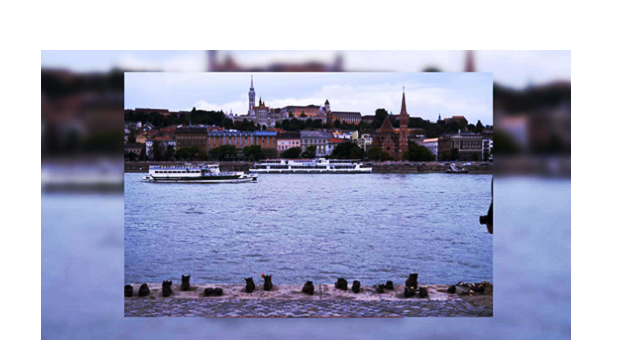
Along the banks of the Danube, on the Pest side of the city, is a monument to the Jews who were murdered by the Arrow Cross along the banks of that river. The monument “Shoes on the Danube” consists of 60 pairs of shoes made of bronze, recalling how the victims were made to leave their shoes along the shore before being shot into the Danube.

“Shoes on the Danube” monument, Budapest.
In central Budapest on Liberty Square a monument termed “Occupation Monument” portrays Hungary as the victim of Germany during World War II. After its erection public protests against this depiction of history were ignited. A note titled, “Civilians Protest Against Monument Falsifying History” has been pinned to the front of the monument and explicitly states that Hungary was an ally of Germany during the war and that the message suggested by this monument is an attempt to rewrite history. Many citizens have brought personal family memorabilia and placed it at the foot of the monument – e.g. photos of relatives murdered during the war. At first the government removed the memorabilia but the protesters replaced these with new memorabilia. Eventually the government let it be.
A plaque at 8 Vaci Street in downtown Budapest reads: “Dr. Rezso Kasztner 1906- 1957/During the Holocaust, as a member/Of the Budapest Rescue Committee, he risked his/ Own life to save the lives of many others.”
Organised Jewish communal life on the Buda side of the Danube is less well known but dates back to the 13th Century56 when the first Jewish quarter was founded. A mikvah dating to this time can be inspected. The synagogue from this time was found in 2005 when some pipes in the road were being repaired but is under a busy road. In 1420 the Jews had to move to a new area as the royal palace was being expanded. The site of this synagogue is known and it is hoped that one day it will be excavated.57
Szeged considered itself the capital of Neolog Judaism. Its New Synagogue, seating over 1000, is the second largest in Hungary and is considered by many to be amongst the most beautiful in the world. From a distance its magnificence can already be appreciated. On the arch in its interior are inscribed the words in Hebrew and Hungarian, “Love thy neighbour as thyself.” This synagogue, inaugurated in 1903, is in the Secessionist style, with a 48 metre dome representing the night sky, constructed from deep blue stained glass and dotted with stars. The tabernacle is made from Jerusalem marble and covered with gold leaf.
Unfortunately, these days the synagogue is only used for services on the High Holidays. Before the war about 6000 Jews lived in Szeged – the names of over 3000 of those murdered are memorialised on the walls at the synagogue entrance – but today only about 400 remain.58
The Tokaj wine region produces one of the world’s great dessert wines and in times past Jews were involved in this industry. The town of Mad is the home of the Royal Tokaji Wine Company where plaques were erected which read:
This was the home of Miklos and Blanka
Zimmermann and their two children.
Miklos was engaged in the cultivation,
production, and marketing of Tokaji wines,
like generations of his family before him,
dating from the early 1800s. In May 1944,
the family was deported to Auschwitz
along with other Jewish families of Mad.
Blanka died in Auschwitz on October
16, 1944.”59
A few houses away is a restored synagogue which was originally built in 1795 but destroyed after the Holocaust. Today no Jews live in Mad so it serves as a memorial and museum. During World War II, 800 Jews from the village were deported to Auschwitz.60
NOTES
1 Benoschofsky, Dr Ilona, The History of Jewry in Hungary, 1988, p3
2 Encyclopaedia Judaica, Keter Publishing House Ltd, 1972, 8:1088, hereafter referred to as EJ
3 EJ, 8:1089
4 Ibid
5 Benoschofsky, op cit, p6
6 EJ, 8:1089
7 Ibid, 8:1090
8 Ibid, 8:1091-1092
9 Lupovitch, Howard, Aron Chorin, Neolog, and the Reform of Judaism
10 Sachar, Howard, The Course of Modern Jewish History, New Revised Edition, Vintage Books, 1990, p111
11 EJ, 8:1090
12 Bauer, Professor Yehuda, Baruch, Dr. Chava, The Hungarian Tragedy in Retrospect, Interview, The International School of Holocaust Studies, Yad Vashem, 2016, p2
13 Braham, Randolph, Hungary, The World Reacts to the Holocaust, Editor, Wyman, David, John Hopkins University Press, p201
14 Ibid, pp649-650
15 EJ:1091
16 Vital, David, A People Apart, A Political History of the Jews in Europe, 1789-1939, Oxford University Press, 1999, p135
17 Herczl, Moshe, Christianity and the Holocaust of Hungarian Jewry, New York University Press, 1993, p25
18 Ibid, p26
19 Porter, Anna, Kasztner’s Train, Walker & Company, 2007, p12
20 Herczl, op cit, p46
21 Ibid, p117
22 Braham, op cit, p203
23 Porter, op cit, pp28-29
24 EJ, 8:1101
25 Rabinovich, Eliezer, How “Anti-Semite” Miklos Horthy Saved the Jews of Budapest, p2
26 Carlberg, Ingrid, Raoul Wallenberg, The Heroic Life and Mysterious Disappearance of the Man Who Saved Thousands of Hungarian Jews from the Holocaust, MacLehose Press, 2015, p209
27 Bauer, op cit, p14
28 EJ, 4:1453
29 EJ, 8:1105; Braham, op cit, p207
30 EJ, 8:1104
31 EJ, 4:1454
32 Porter, op cit, Dust jacket
33 Ibid, p1
34 Frazer, Jenni, On quest to clear Kasztner, historian ‘shocked’ to prove Nazi collaboration, Times of Israel, 15 November 2016
35 Porter, op cit, p348
36 Bauer, op cit, pp11-12
37 Ibid, pp6-7
38 Ibid, pp7-9
39 Braham, op cit, p217
40 Ibid, p205
41 Herczl, op cit, p242
42 Ibid, pp242-244, 185,188
43 Resnick, Elliot, Raoul Wallenberg: A Hero Gone Missing, An Interview with Author Ingrid Carlberg, 30 March 2016, p2
44 Ibid
45 Carlberg, op cit, p14
46 Resnick, op cit, p3
47 Porter, op cit, quoting Bauer A History of the Holocaust, p295
48 Carlberg, op cit, p597
49 Ibid, p598
50 www.worldjewishcongress.org/en/about/communities/ HU
51 www.worldjewishcongress.org/en/about/communities/ HU
52 Ahren, Raphael, With Netanyahu in town, Hungary’s Jews lament Israel ‘deserting’ them, and, In meeting with Netanyahu , Hungary’s PM acknowledges the ‘sin’ of WWII, Times of Israel, 17 and 18 July 2017
53 EJ, 4:1449
54 Frank, Ben, A Travel Guide to Jewish Europe, Hungary, Pelican Publishing Company, 2001, p536
55 www.greatsynagogue.hu
56 EJ, 4:1449
57 Szemere, Kinga, Tour guide in Budapest
58 Zámbó, Krisztina, Jewish Community of Szeged
59 Czuk, Dorottya, A postcard leads to a discovery of a Jewish family’s lost vineyard in Hungary, www.tabletmag.com, 25/7/2016
60 Weiner, Rebecca, Hungary, The Virtual Jewish World, www.jewishvirtuallibrary.org/hungary


