
(Author: Rodney Mazinter, Vol. 71, No. 3, Chanukah 2016)
Respected commentator and senior journalist Benjamin Pogrund has mastered the art of dissecting received opinion and exposing the truth beneath. His political views while deputy editor of the now defunct Rand Daily Mail, a liberal newspaper that was targeted and became a victim of South Africa’s apartheid regime, resulted in his doing time in prison. During his tenure as editor of the RDM he fearlessly exposed the iniquities of the Nationalist government and nailed his anti-apartheid colours to the mast.
Reporting on the political scene in South Africa has literally changed Pogrund’s life. After his departure from the country he wrote for the Independent in London, and the WorldPaper in Boston. He has also written for Haaretz in Tel Aviv, the Guardian in London, Facta in Tokyo, the Star in Johannesburg and others.
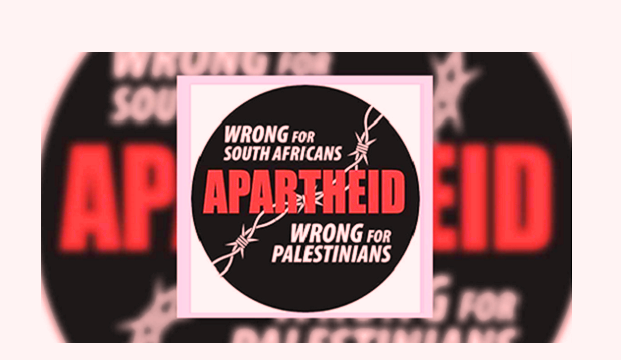
In Drawing Fire – Investigating the Accusations of Apartheid in Israel (Rowman and Littlefield, 2014), Pogrund shows how disproportionate criticism of Israel, particularly the use of the Israel = Apartheid analogy, distorts the facts and incorrectly promotes the tendentious, malicious accusation that Israel practices apartheid against the Palestinians.
Pogrund writes: “Israel is relentlessly criticised. Even its right to exist is questioned. However, deconstructing the criticisms reveals that overwhelmingly, they are based on falsehoods, distortions, prejudice or lack of knowledge, … often emanate[ing] from people…who hate and reject Israel as a Jewish state.”
Pogrund acknowledges that “Israel, despite awesome achievements, is not a perfect society.” Every country in the world has its problems and a great many are open to the same criticisms leveled at Israel. Israel does much that is commendable but also is by no means beyond censure. Complicated social interactions set against a backdrop of a state of war with hostile neighbours bring about decisions that impact on its Palestinian inhabitants, sometimes poorly. When the legality of its position is ignored not only by its enemies, but also by the international media, and when Israel’s policies relating to settlers in the West Bank do nothing to help its cause, it is not surprising that the malevolent intentions of the Muslim states hold sway.
In this summary, the reader will learn:
- Why it is important to ask and challenge questions, now and whenever hearing, seeing or reading negative reports about Israel.
- The importance, given the negative propaganda about Israel, of not taking news reports at face value and of questioning their veracity by educating oneself on the facts.
- Why helping others understand the true situation depends on informing oneself.
- How to weather poor reporting and form one’s own opinions based on relevant and verifiable information.
1. The Beginning
Zionism had its Genesis in a climate of a search by Jews in Europe and Russia for personal actualisation and a desire for freedom from oppression after 1780 years of enslavement, libel, slander, defamation and containment. Lives eked out, existing as second-class citizens in hostile countries gave rise to a stirring that culminated in a strong political move to return to the Biblical and historical homeland of the Jews.
Compared to Europe, the Jewish diaspora lived in relative peace among the Muslims in North Africa albeit as second-class citizens (dhimmitude) and were never totally secure.
The stirrings of freedom engendered by the French Revolution kindled Jewish intellectuals appalled by the plight of Jews to write arguing the case for a return to Zion and a rebuilding of Eretz Israel. Outstanding among these was Theodor Herzl, whose book Die Judenstaat (“The Jewish State”)
galvanized thought in the Jewish communities in the late 19th Century. At first, many Jews were hostile to the idea and remained so in significant numbers until the events in the 20th Century that gave rise to violent antisemitism and culminated in Nazism and the Holocaust persuaded the vast majority of what remained of diaspora Jewry to see a mass move to Palestine (Zionism) as the solution to the Jewish question.
The bonds of a common religion and the Hebrew language that had sustained Jews in the diaspora was also the cement that secured the foundations of what was to become the new state of Israel; a vaguely delineated expanse of land, mainly desert, that described an area on the eastern extent of the Ottoman Empire.
The existence of vast reserves of oil and its growing importance in the mechanized world, the demise after World War I of the Turkish influence followed by Britain’s imperfect mandate, the post-war division of Ottoman lands, the formation of new countries arbitrarily established and allocated among the Arab populations, the political maneuverings of firstly the League of Nations, and later the United Nations and, not least, the importation of hatred for Jews from the ravages of World War II, served to prepare the ground for the trauma that marked the advent of the Jewish state of Israel in 1948.
2. Freedom and War
Israel came into being by virtue of a United Nations resolution, passed in November 1947 against a backdrop of violence by Arabs against Jews in Mandated Palestine. On the declaration in May 1948 of the new state of Israel, five Arab armies from surrounding states attacked the fledgling state in a war of ‘Annihilation’.
In what some termed God’s will and others call nakba (catastrophe) the under-prepared, poorly equipped, ill-trained, amateur fighters of Israel prevailed over huge odds, and the new state arrived with a bang and a fanfare. Back-to-the-wall determination and effort brought about the defeat of the Arab armies.
After the war the new state stabilised quickly by firstly installing the trappings of a representative democracy and independent judiciary, and drawing in the disparate fighting groups to form a national army. A UN brokered truce set the boundaries of the warring parties, but brought neither peace nor negotiated borders. In the chaos that prevailed in those beginning years the groundwork was laid for Arab rejectionism and ongoing war by any means, leading to terrorism. The eventual elimination of Israel was enshrined in Arab policy by being incorporated in the various movements’ charter documents and by resolutions by Arab state organisations.
Internal disputes between Ashkenazi and Sephardic Jews complicated the situation. It took many years for this predicament to settle down into an era of mutual tolerance among Israelis.
This war also marked the start of the Arab refugee problem, with about 750 000 fleeing the new country and the refusal of surrounding Arab states to absorb them.
This state of affairs pertained for twenty years until the Six Day War of June, 1967. A pre-emptive strike by the Israeli air force decimated the Egyptian air force on the ground and a determined land attack drove them out of the Gaza and Sinai. A similar fate befell the Syrians and Jordanians who were driven out of the Golan, Jerusalem and Judea and Samaria (today’s West Bank).
Israel offered to return the Sinai and the Golan to Egypt and Syria in return for peace; this search for an accommodation with its enemies, sometimes successful, more often not, continues until this day.
3. Inside the Green Line
Modern Israel began to take shape after the Six Day War and the beginning of a shift from an agricultural to a technological economy. The borders with Egypt and Jordan were established in separate peace agreements; those with Syria, Lebanon and the West Bank were not, and remain an issue to this day.
Israel showed itself to be a democracy as valid in the way it conducted its affairs as any other in the free world. However, like others, it has its imperfections that were exacerbated by a growing terrorist onslaught. This gave rise to a schism that developed between the minority Palestinian Arab citizens and the Jewish majority. Despite this, Israel’s democratic pedigree held firm and all citizens enjoyed equal protection from the courts which upheld the founders’ determination to make Israel a country that conducted regular elections embodying universal suffrage, sending representatives to a parliament (Knesset), a free press and independent courts to which all citizens had access.
Over the years, as Israel continued to battle with terrorism from across its borders, a progressively more conservative Knesset was elected, reflecting the fears of the Jews and their demand to be protected by the government. The socialist, agrarian dream of Israel’s founders was dismantled on the rocks of modernity and necessity as Israel sought to maintain its edge over its hostile neighbours. This led to social discrimination against Arabs, something at variance with the vision of Israel’s founders.
The debate revolves around religious and secular issues, military service, land ownership and settlements, the latter being a very contentious matter that finds emotional resonance among all the other issues mentioned above.
Despite all the arguments over differences, Israel is far removed from being an apartheid state by any definition or comparison. While there are social divisions that keep groups separate from each other, these are not mandated and enforced by laws and are no worse than can be found in any democratic country one would care to mention. In any event Israel’s conduct of its social arrangement is streets ahead of the discrimination found in many of the countries that are Israel’s most virulent critics.
4. The Occupation
Israel does itself a serious disservice and lays itself open to criticism and accusations of practicing apartheid by encouraging, or at least tolerating, settlement in the West Bank. At the very least it ties up the army in a difficult and thankless task of providing protection to thousands of Israeli settlers in an area that has been designated as an envisaged Palestinian state that would co-exist in peace with the Jewish state.
There can be little doubt that the Palestinians manipulate the negotiation process to their own advantage and enter into talks with Israel with an insincerity that is breathtaking in its obstructionism, distortions and lies. However, Israel does itself a mischief and Jews in Israel and the diaspora an injury by its lack of patience and disregard for the future and wellbeing of all people living in Israel and in the disputed territories.
There is no other option but a two-state outcome to the conflict. Historical precedent needs be set aside in the interest of finding peace and Israel should promote it vigorously. It should not face accusations of seeking to annex the West Bank, a solution the modern world will not accept.
5. What Was Apartheid? Are They The Same? Comparing Israel and Apartheid SA
Pogrund spends the next three chapters (forty pages) examining the prevailing governing system of Israel with that of apartheid South Africa. He begins by looking at the philosophy underpinning the system of separating the races that prevailed in South Africa and how a minority grouping of white settlers, sustained by the power of historical colonialism, kept the black populations under subservience and condemned them to second-class citizenship. This was achieved through laws promulgated in a whites-only parliament and enforced by a white controlled police force.
The subsequent social engineering experiments culminating in ‘Grand Apartheid’, whereby the land surface of South Africa was divided into self-governing “Bantustans” subservient to the white parliament was rejected by all, including a significant white segment, and was doomed to failure. The entire system and structure eventually foundered on moral and economic grounds.
Pogrund then demonstrates in the next two chapters that in no measure can Israel’s governance of its multi-cultural population be compared in any way with the separation pertaining in South Africa. No legal separation exists in law, government, military service, ownership of land and property, education, sport, entertainment, business, or social interaction, nor is any restriction placed on Israeli groups or Israeli individuals of any race, religion or culture, seeking to achieve the highest level possible in these activities. Every Israeli enjoys full, equal and unencumbered citizenship with freedom of movement anywhere in the country, and freedom from fear of being arrested for not carrying the right documents.
It is claimed by critics that Israel and apartheid South Africa both use detention without trial, therefore Israel is apartheid. This is an argument that is both fallacious as it is inaccurate. Every one of Israel’s accusers uses detention without trial, yet no apartheid issue is made of that. The USA and other Western countries have also been known to use it on occasions of danger and urgency (Guantánamo Bay). Apart from security issues and precautions common to all countries, Israel’s citizens are free and cannot by any definition be considered to be living in an apartheid state.
6. The Critics (1) and (2)
Pogrund points out that, “Israel is relentlessly critici[s]ed. Even its right to exist is questioned. However, deconstructing the criticisms reveals that, overwhelmingly, they are based on falsehoods, distortions, prejudice or lack of knowledge. They often emanate from people with tendentious motives who hate and reject Israel as a Jewish state.”
The appellation ‘apartheid’ is a political ploy used to denigrate Israel despite its impressive achievements and performance as a moral, caring society that holds life dear. It is easily demonstrated that millions of lives throughout the world have been saved and positively affected by Israel’s technological achievements in many fields, including medical, health, water management and IT, and that the country shows an unrestricted willingness to share its knowledge and achievements with the world.
But, like all societies, Israel is imperfect and makes mistakes. It is these errors of judgment and decisions that its enemies latch on to, blow entirely out of proportion, and use to berate her in international forums. These critics can be found in organisations such as the various bodies that go to make up the United Nations, especially the UN Human Rights Council and the skewed representation of Israel’s enemies in the General Assembly.
Out of this international campaign against Israel have come disparate bodies from both the extreme left and right such as BDS and neo-Nazi groups that operate on the fringes of normal society. Their mutual target is the State of Israel and their coin is distortion, exaggeration and outright lies. Out of these murky waters has emerged former US president Jimmy Carter, Christine Chinkin, John Dugard, Alister Sparks, Alice Walker, Richard Falk, Ronnie Kasrils and John Pilger. Also counted on the anti-Israel bandwagon are various academics, clerics and politicians, including Alan Boesak and Desmond Tutu.
To the above can be added a truly hostile mainstream and mainly left leaning press, TV and radio, where the concept of fairness and balance in reporting has been discarded. Also, in academia an assortment of vocal, but by no means a majority, of professors and other academics have turned against Israel, jettisoning balance, critical thought and context in their support for the Palestinian cause.
Organisations such as BDS and Palestinian Solidarity Committee have trampled over facts in their rush to condemn Israel and to destroy it. They unblushingly employ distortion, lies and invention to delegitimise the Jewish state, reawakening the ancient blood libels and dusting off the discredited fraud, the Protocols of the Elders of Zion. They do not hesitate to disrupt meetings and cultural events to promote their ends.
Added to this motley assortment of critics must be added international political leaders such as Ahmadinejad, Khomeini, Gaddafi, Arafat, Abbas and others, all of whom wage or have waged an unrelenting campaign against Israel.
There is an ongoing, distorted depiction of the non-existence of Israel in schools and among the young from an early age. This denial serves only to raise fears among Israelis that the Palestinians and what they say are not to be trusted and serve only to prepare a growing population for hatred of Jews, ongoing terrorism and unrelenting war. To compound this perception are the Hamas and PA charters that call for, inter-alia, death to Jews and the destruction of Israel. Iran calls for Israel to be wiped off the map. The intemperate reaction of some Jews has also served to keep the flames of conflict alive and leaders such as Menachem Begin and others have much to answer for in this regard.
7. The Big Issues
The obstacles preventing an accommodation between Jews and Muslims (Israelis and Palestinians) remain complex and daunting. On the surface they appear insuperable. But the alternative is equally, if not more so, unacceptable: endless war, insecurity, killing and an eventual general conflagration. Pogrund lists them as follows:
- Israel’s formation following the resolution of the UN that there should be two states, Palestinian and Jewish, living side by side in peace.
- The refugees: largely the Palestinians who were not helped or absorbed by surrounding Arab states, but also Jews who were absorbed by the new state.
- Jerusalem: a very contentious and intractable issue underpinned by religious zealotry, over which both parties are prepared to go to war.
- Settlements: increasing Jewish settlements mainly in the areas surrounding Jerusalem has become a cause célèbre among the Palestinians and the international community.
Pogrund goes into some detail under all of these headings scrupulously setting out the pros and cons of both parties. He believes that these remain the main issues that will have to be addressed in order for an accommodation to prevail.
8. The Way Forward
Pogrund sets out to promote two states, Israel and Palestine, living together in cooperation and peace as the only possible way out of the mess. His view is that Israel, being the more powerful, has more scope for making concessions and should thus do more to lead the way in seeking reconciliation. The obstacles are not conducive to a policy of leaving them be to resolve themselves. A conscious effort must be made to tackle and overcome them.
Is there a lesson to be learned from the South African experience? Pogrund observes: “There is no sentimentality in advocating peace. The South African experience offers a guide – not false, contrived analogies with apartheid but instead drawing on hard-headed self-interest. Both blacks and whites finally reached the conclusion that they could not go on as before and struck a deal, which is what the Jews and Arabs must do.” He poses the following questions that all people of good will must answer:
- Is it too late for two states?
- Are the doomsayers correct?
- Have the settlements spread so far and wide in the West Bank and East Jerusalem that a viable independent Palestinian state is no longer possible?
- Has a point of no return been passed
A one state solution is no solution at all because in any form it means the demise of Israel. Either the influx of Arabs into Israel will presage a swamping of the Jews to the eventual loss of their self-determination. Or if the Jews impose their will by force on the Arabs in the West Bank they will lay themselves open to charges of practicing an apartheid solution and be forced to defend it at great cost in lives and money.
The entire world has a stake in seeing that the conflict in the Middle East does not bring on the Armageddon.
Rodney Mazinter is a Cape Town-based writer, poet and author, who has for many years been involved in media activism on behalf of Israel. He has held numerous leadership positions within a wide range of educational and Jewish communal bodies in Cape Town. His novel By a Mighty Hand was reviewed in the Pesach 2016 issue of Jewish Affairs.


