
(Author: Veronica Belling, Vol. 68, No. 1, Pesach 2013)
A cookbook bearing the most unusual name of Bread and peacocks: a Cookery Book: Exotic Recipes, by Sarah Shaban, described as “a prominent hostess in South Africa”, was published in London by Grosvenor Publishing Co. in 1969. It included a foreword by Cape Town teacher and journalist, Hilda Purwitsky.1 A collection of exotic recipes, it is a fascinating and undeservedly neglected work, one that opens a window on the amazing ‘rags to riches’ story of Lithuanian immigrants, Sarah and her millionaire husband, former Yiddish journalist, Abel Shaban. Both were clearly great characters on the Johannesburg social scene from the 1950s to the 1970s.
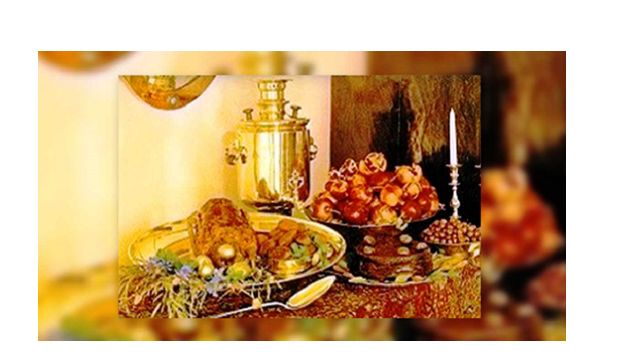
Although Bread and Peacocks makes no claim to being a Jewish cookbook, its largest section is devoted to such Jewish staples as pirogen, blintzes, and tsimmes. On the other hand, the Fish section, that includes gefi ltefi sh, also includes crayfish, and the Meat section, in addition to such favorites as ptcha (brawn), also incorporates recipes for ham. As the author was a Jewish immigrant from Lithuania, who arrived in South Africa in 1925, this book is very unusual. Fortunately, it is possible to acquire some insight into the nature of the author and the background to the book from her memoir of her home town of Pren in Lithuania, entitled On Golden Corn, published the following year by the same London publisher.[/vc_column_text][/vc_column][/vc_row] Sarah was the oldest of four daughters born to the Lieberman family in Pren, a small village not far from Kovno, surrounded by forests, fields, meadows and streams. She describes it as “small and enchanting with cobbled streets, whitewashed houses, with shingled and red-tiled roofs”.2 In 1920 it is recorded that there were 935 Jews living in Pren, fractionally under 30% of the total population.3 Sarah describes her parents as tall and aristocratic of bearing with a taste for beautiful clothes and beautiful things. Her father was forced to give up his timber business during World War I, but even after he had lost all his money the family strove to maintain a certain lifestyle. From her mother, Sarah inherited a taste for the finer things in life that included beautiful clothing, gracious living and fine dining. She writes: Our meals were a gourmet’s delight, for mother was an inventive cook. There was no food so humdrum that she could not make it look sumptuous. Her art lay in her fl air for arrangement, in her play with colors and her ability to use nature’s bounty…Mother put all these ingredients to work, setting them off in the beautiful silverware, glass and crockery that better days had left her. Even sitting down to a rush meal on her own, she never omitted to set the table, to add a small vase with a single flower. She served as our finishing school. Mother taught us sewing, embroidery, housekeeping, knitting.4 Sarah describes her father as extremely religious and wrote that from early childhood she rebelled against the stringent demands of religion. This possibly helps to explain this very unusual and exotic cook book. Yet she writes that although she has few inhibitions about non-kosher food, she inherited her father’s loathing of pig, that he used to refer to as is the Yiddish custom, as davar aher (that different animal), yet recipes for ham are included in her cook book!5 Her memoir of Pren is replete with descriptions of food. Dill and poppy seed grow in her backyard. Caraway can be picked in the fields. Mushrooms and berries abound in the woods. Cherry trees grow as large as oaks and the cherries themselves are as big as plums. 6 She describes the different fish: shtinka – smelt fish – a tiny fish no longer than an English whitebait, that was cooked with saffron in a copper pot, oklaikes, a tender white-fleshed fish no larger than a pilchard, zirten, that her mother bought in a twenty five pound load and put into the oven to dry out and which was chewed like biltong. She also recalls bob, a broad bean that was usually cooked for Purim, served cold and salted. Other more typical foods that were perpetuated in South Africa are cholent, herrings, lokshen puddings, kasha, milk buns, hamantashen, teiglach. More unusual is porridge made with oats or rye with gribenes – fried poultry skin and fat, and a pie made out of calf lung, rossel – pickled beetroot, and mead made out of honey fermented with hops.7 She ecstatically describes the Shabbes meal, the finest meal of the week: …golden chicken soup with fine noodles or kreplach (a Jewish ravioli) swimming in it. Then our knives would fall through stuffed fish, saffron colored in a pale yellow gravy; next, roast chicken with stuffed, braised chicken necks and chest-nut brown potato pudding, served with pickled apples or tzimmes, and finally a fruit compote and lemon tea.8 In 1925, as a young girl, Sarah immigrated to South Africa together with her sister, Ruth. They thus escaped the fate of their mother and two sisters, who perished in the Holocaust.9 Their father had already passed away. They were sent tickets by his brother, Sam, who had immigrated to South Africa some years before and who had prospered. Sarah writes that they were devastated when he sent them third class tickets. However, somehow her father managed to get together the £100 necessary to upgrade them.10 Between 1925 and 1928, the sisters lived with their uncle’s family in Kroonstad, where they attended a convent school. In 1928, Sarah moved briefly to Jeppe and from there to Doornfontein, where she spent the next five years.11 In Johannesburg in 1933, she married Abel Shaban, a Jewish immigrant from Lithuania. He had been attracted by her striking good looks and long black hair with its distinctive grey streak on seeing her perform in a Yiddish play staged by the Zionist Socialist Party.12 Abel Shaban, whose story is told to Amos Ben Shalom, in the book Portrait of a Volksmensch (published 1974), immigrated to South Africa from Krakinova, a small village in the district of Ponevezh in Lithuania. Far from any of the larger towns, it would seem that more Jews from Krakinova came to South Africa than from other villages. It was only thanks to the monetary support that was received from family and friends in South Africa that the remaining sixty Jewish families in the small village were able to survive between the two World Wars,13 after which they were massacred by the Nazis. Abel’s father died in the First World War and with the exception of one brother who happened to be in South Africa at the time, the rest of his family perished in the Holocaust. With the traditional education in kheyder, folkshul, yeshivahand modern Hebrew gymnasium, Abel arrived in South Africa in May 1927,14 aged nineteen and with only two shillings and sixpence in his pocket. He spent the first six months living in a boarding house in Cape Town while he worked as a packer in the storeroom of CTC Bazaars15 and learnt English. He then received his first break when he was offered a job as the private secretary to Reuven Brainin, the Zionist leader and Hebraist, who had come to South Africa on a lecture tour on behalf of the Jewish Colonisation Fund together with his son, Joseph. This job launched Abel on a life in communal and social welfare work, in journalism and even in business.16 Abel worked as a journalist for sixteen years. He had begun writing for Di Yidishe Shtime, a Yiddish newspaper in Kovno in his native Lithuania at the age of just thirteen. In Johannesburg between 1930 and 1931, he co-edited the monthly journal, Dorem Afrike, forerunner of the later version of the same name that appeared continuously between 1948 and 1991.17 In 1934 he published a memoir, Heymloze teg (Homeless days) about the experiences of Jews during the First World War that was published in Warsaw.18 Between 1934 and 1939, he was also one of the editors of the weekly, Afrikaner Idishe Tsaytung,19 published in Johannesburg between 1931 and 1981. Before the outbreak of World War II in July 1939, he attempted to publish a Yiddish daily, the Dorem Afrikaner Yidishe Shtime (South African Yiddish Voice), which only lasted for a few months.20 During this period, he and Sarah lived in Judith’s Paarl, from where they moved to Parktown for a year, and then to Emmarentia21 while supporting themselves by running a sweet shop.22 In 1944, Shaban had another lucky break. An article of his predicting that the Germans would be defeated by the Russians had been published in the English monthly digest Foreign Affairs, the official organ of the Red Cross in South Africa. It caught the eye of that organisation’s president, one Colonel Donaldson, a prominent financier who subsequently encouraged him to work on the Johannesburg Stock Exchange.23 After a few months of training, he had the good fortune of getting in on the ground fl oor of the new Orange Free State Gold development (Hartebeespoort and Buffelsfontein mines)24 and by the age of forty was head of a chain of imposing companies.25 In 1945 he was described as President of the Alpha Group, worth twenty million pounds sterling, with enterprises that included gold and diamond mines, copper and zinc, oilfields, forests, buses, aeroplanes, with shares on the Stock Exchanges of Johannesburg, London and Amsterdam. Towards the end of 1948, only four years after the commencement of his business career, Shaban sold out his interests in the Alpha Group, and while still very young, retired from business altogether to devote his life to communal and social welfare work. His particular charities were ORT, the international Jewish vocational and technical training organisation affi liated to the International Labour Organisation, OZE, the international Jewish Health Organisation affi liated to the World Health Organisation, of which he was World President, and HIAS – the Hebrew Immigrant Aid Society.26 He also served on the Executive of the SA Jewish Board of Deputies.27 At the same time he maintained a suite of offices and a limited staff to look after his family’s and his own private interests.28 The Shabans had three sons, of whom one died as a baby of eighteen months and a second was tragically killed in a motor accident at the age of eighteen. In 1974, their eldest son was married with two sons, and practising as a lawyer in Johannesburg.29 With his meteoric rise from rags to riches, Shaban and his wife acquired a stately mansion that had been built for the legendary mining magnate, Barney Barnato, in the northern suburbs of Johannesburg.30 They renamed it ‘Prenova’, a fusion of the names of their home shtetls of Pren and Krakinova. The mansion was situated on three acres on the Houghton Ridge with a view over Johannesburg. They installed a private swimming pool and converted the original stables and out houses into garages, a two storey building to house the servants, and a cinema where family and friends were able to view films in private. The house itself was a two storey building with twenty two rooms each beautifully and tastefully furnished in its own style, with furniture imported from France, England and Holland, including Persian carpets, antiques and priceless paintings.31 The Shabans became well known for hosting the elite of Johannesburg Jewish society as well as visiting dignitaries at huge banquets that gave Sarah the opportunity to demonstrate her considerable culinary talents. According to Hilda Purwitsky, who wrote the preface to her cookbook, “Guests who have eaten at her table remember her offerings no less for their delicious taste than for their eye-appeal and the pleasing harmony with which delicacies have been assembled into a poetic structure.”32 Thus when Yiddish travel journalist, Henry Shoshkes, visited Johannesburg in 1948, it was only natural that he should be hosted by the Shabans at their mansion; the welcoming banquet was attended by no less than Chief Rabbi of the Federation of Synagogues, Louis Rabinowitz, Member of Parliament, Morris Kentridge and Louis Pincus, head of the Poale Zion, and future Chief of the Jewish Agency in Israel, not to mention the “three giants of the Jewish Press”, Leon Feldberg of the S. A. Jewish Times, Chaim Gershater of The Zionist Record and Boris Gershman of the Yiddish weekly, Afrikaner Idishe Tsaytung. Other guests included J. S. Judelowitz, characterized as “a walking encyclopedia, a secular free thinker, yet who never fails each day to read a page of Gemara”, Reform Rabbi Dr Moses Weiler and Leopold Berger, wealthy Johannesburg magnate. Guests from Israel included Mr Hilman, Chairman of the Tel Aviv Industrial Association, Revisionist leader, Y. Shofman and Johannesburg based Histadruth leader, Alexander Levin. Shoshkes describes the Shaban home in these terms: On Friday nights, after a week of hard work, the Shaban’s home sparkled with lights and fl owed with wine, and I could relax and muse about this extraordinary metamorphosis from the humble beginnings in Krakinova, Lithuania to this palatial mansion, “Prenova” in the northern suburbs of Johannesburg. On clear sunny days, the view from the terraces of the white house, stretched as far as the eye could see, even to the Voortrekker Monument near Pretoria. Shaban’s study had a strong Jewish ambiance – dominated as it was by an original Marc Chagall – the Jew carrying a large heavy Sefer Torah on his back… Next to Chagall, is an oil painting of the shul of Vilna Gaon. Around this is a collection of religious artifacts, spice boxes, Sabbath candlesticks, kiddush cups from all periods and styles. In the massive entrance hall that could accommodate several hundred people, was a display of exquisite Sevres and Dresden porcelain, once owned by the French Empress Eugenia, and emblazoned with Napoleon’s crest, the Eagle and Crown. Opposite stand two colossal seventeenth century Dresden vases, decorated with the sword and crown emblem of the Polish king Sigismund Auguste.33 The house was distinguished by this mixture of antiques, Jewish religious artifacts as well as paintings by Jewish artists. Besides Chagall, they had paintings by the French Jewish artist Mane Katz. Most imposing was his mural, ‘Mother Rachel Bemoans Her Children’. Writes Shoshkes: “so much concentrated pain and agony and protest of all Jewish mothers, such as no artist has yet managed to capture! The mural was so large that even in the spacious rooms of the Shabans it looked cramped.”34 Shoshkes also describes a grand banquet set in their sumptuous gardens with long tables that are “groaning with the abundance of Africa’s earth”. The guests were served by no fewer than a dozen black waiters, among who was one who seemed “more at home in Lithuanian Yiddish than in Oxford English”. At this banquet, Sarah was accompanied by her friend, patron of the arts, the Dutch Jewess, Roza van Gelderen, who assisted her in the furnishing of her luxurious home. It was Roza’s great friend, Hilda Purwitsky, who wrote the preface to Sarah’s cook book where she expostulates: Cooks like poets, are born, not made. And while anyone with intelligence, taste, a discriminating palate and a sense of fitness can learn how to cook, the really creative and inventive cuisiniers are able at all times to go right outside the limits of the text book and produce dishes which are poems in their own right…35 Sarah Shaban kept her methods and her recipes a strictly guarded secret and would never allow anyone to come into her kitchen to watch. It was thus fortuitous that she decided to publish a cookbook to share her skill and experience with others.36 The scope of the book is wide – there are over 750 recipes – yet it is essentially the personal collection of a gifted and original cook. It is by way of being a culinary autobiography that takes the author from her home town of Pren in Lithuania to South Africa. Besides a preponderance of Litvak favorites, there is also a section of South African specialties that include bobotie, tomato bredie, melktert and koeksusters. The book represents a unique blending of cultures, Lithuanian and South African, at a time when Lithuanian dishes were still very much alive in the kitchens of South African Jews. However, recipes range from the exotic splendor of roast peacock, a bird not generally considered to be kosher according to Jewish law, to the ‘sustaining realism of home baked bread’. The recipes are accompanied by color illustrations photographed in the author’s home. The photographs glow with the shine of copper, brass and silver vessels, that remind one of the Old Country. The cover is adorned with a color photograph of a large copper bowl overflowing with red cherries. Another photograph has a brass samovar and silver candle sticks, surrounded by plates stacked with pomegranates, chestnuts, and a chocolate cake, adjacent to a plate of roast chicken with a dish of latkes (potato fritters) alongside. Copper, specifically reminds Sarah of her home as she reminisces in the introduction to the chapter on ‘Fish dishes’: With the Nemen running along our doorstep, and the green-banked ponds and lakes nearby, and the joyous tradition of my mother behind me, I speak of fish with a certain holiness. It would be unthinkable for me to entertain without fish on the menu. There can be no formal dinner without fish. I have other convictions about fish. One of these is that it cooks better in copper, not only does it not burn, but it has the taste of ‘home’.37 By far the longest chapter in the book, “Cheese Dishes, Pirogen, Dumplings and Other Dishes”, is dedicated to a wide range of Jewish favorites and including many little known dishes taken from the Lithuanian cuisine. Shaban confesses to being a great lover of cheeses that are generally accompanied by wine. However for those who don’t drink wine she provides her own recipe for punch, made out of orange juice, canned fruit juices, ginger ale and champagne. The recipes for cheesecake start with ‘Russian Pashka’ that is usually served at the Russian Easter. Other Lithuanian favorites are ‘Shaltenosses’, described as ‘one of the national dishes of Lithuania’. It is made out of noodle dough cut into two inch squares, fi lled with a mixture of cream cheese, egg yolks, cinnamon and sugar, and boiled then baked. Pirogen are filled with a variety of fillings such as cheese, salmon, chicken, kasha, liver carrot, mushroom, onion, buckwheat and potato. This section also has eight different recipes for the traditional kugel (pudding) with lokshen and potato but also with cherries or plum puree; five varieties of tsimmes, and four varieties of latkes. The chapter on Soups contains all the typical Lithuanian Jewish favorites: four variations of sorrel soup, three types of beetroot soup and four cabbage soups as well as a section on rossel, pickled beetroot. To add a personal touch she has included ‘My Mother’s Spring soup’ made from baby carrots, green beans, turnips, potatoes, cauliflowerets and asparagus added to clear chicken soup. Then there are the soup garnishes, mandelach, kreplach, and kneidlach (matzo balls) with neshomes, literally souls – usually made from gribenis (chicken skins fried with onions) but also with almonds. Sarah reminisces, Mother never made kneidlach without ‘neshomes’ (souls)….a filling placed in the centre of the dough of the dumpling. A little extra and different flavor to come upon unexpectedly. As children we always demanded what ‘that thing’ was in the centre. Father called it a ‘soul’ and without a soul he explained, drawing the parallel to the human being, the body is incomplete. The thought has remained with me ever since. I never make a kneidlach without a soul.38 Even the recipes for familiar dishes contain unexpected variations, such as almonds and saffron in gefi ltefi sh, trout stuffed with apples and walnuts, and stump nose fi sh cooked with mangoes. There are many original and unusual creations, such as ‘Bloody Mary soup’ made with tomato juice blended with sour cream and doused with a tumbler of vodka, curried chicken served in coconuts and a pyramid of sheep’s tongues. Unlike mammals, the Torah does not specify signs to differentiate between kosher and non-kosher birds although Mishnah (Rema Yoreh Deah 82: 3) mentions four. Despite the fact that early sources including Rashi seem to indicate that the peacock is kosher, as it is unclear whether it is the same bird, it is therefore prohibited.39 Notwithstanding, the most dramatic recipe in Sarah Shaban’s book is that of the peacock, that is roasted, stuffed with herbs, then dressed in its own feathers and a crown placed on its head, as described below: When the bird is roasted, place on silver platter in sitting position. Dress tail with its feathers and the top of the head with a crest of little feathers and place on it a little golden crown. Paint the beak and the claws of the bird gold. Surround it with little bunches of red and green grapes, ripe persimmons, pomegranate halves and black figs. Trim whole arrangement with small grape leaves… A pair would look magnificent.40 However even more than for her lavish banquets, Sarah Shaban is remembered for her collection of Jewish ceremonial objects that she acquired in the course of her travels around the world. The collection was housed in one of her beautifully furnished rooms, darkened by heavy velvet curtains, and contained in cabinets that were themselves collectors’ items. Some of the items, such as a Channukiah from Poland, candlesticks from Breslauer, an alms box from Kiev, and an old wedding ring from Venice, were over three hundred years old. There was a three-tiered matzoplate from Egypt, another from Spain, an Eliyahu Ha-Navi (Elijah the Prophet) cup from Nuremberg and a Ner Tamid (Eternal Light) from Hungary. All these objects reminded one that in the poverty stricken world of the European shtetl there was a wealthy Jewish middle class who spent lavishly on objects that they valued. Other items were distinguished by their historical associations, such as the parochet (ark curtain) saved from the destruction of Kristallnacht in Germany. 41 Sarah also served as Chairman of the Jewish Museum in Johannesburg, to which she donated many valuable objects as well as fittings.42 In 1974, she agreed to allow the public in to view her private museum and tours were conducted at the Shaban mansion under the auspices of Women’s organisations.43 In 1978, shortly after they relinquished their stately home, the couple presented a collection of shtetl paintings to the Harry and Friedel Abt Museum in the SAJBD’s then Sheffield House premises in central Johannesburg.44 Abel Shaban died in 1978, aged seventy. Sarah moved to an apartment in Hyde Park in Johannesburg45 and lived on another twenty years. She died in 1998.46 Veronica Belling is the author of Bibliography of South African Jewry (1997), Yiddish Theatre in South Africa (2008), and the translator of Leibl Feldman’s The Jews of Johannesburg (2007) and Yakov Azriel Davidson: His Writings in the Yiddish Newspaper, Der Afrikaner, 1911-1913 (2009). She held the position of librarian at the Jewish Studies Library, part of U.C.T. Libraries and the Kaplan Centre for Jewish Studies and Research, for over 30 years, retiring at the end of 2012. 

NOTES


