
(Author: Don Krausz, Vol. 72, No. 2, Rosh Hashanah 2017)
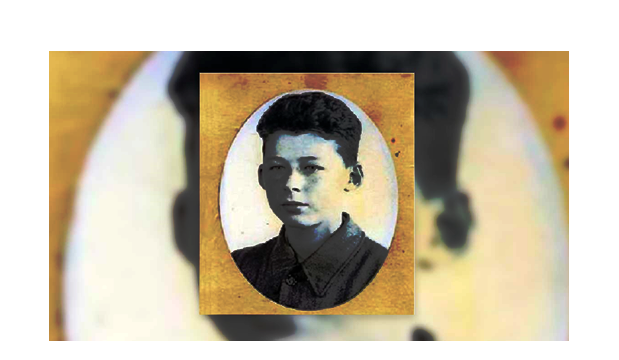
My name is Donald Krausz and I was born in Schiedam, Holland, on 17 July 1930. My father was a Persian carpet merchant of Hungarian nationality while my mother was English. I have a sister, Irene, who is five years younger than I. We are Jews. For the first six years of my life we lived in Schiedam. I went to school there, while my father commuted daily to nearby Rotterdam, where he had his business.
We were very friendly with our neighbours, a Christian family by the name of van Hulten. Their younger son, Jan, was my closest friend. Mr van Hulten, who was headmaster of a primary school, spoke fluent English and was thus able to help my mother adjust to a foreign country where she did not understand the language. During the war the van Hultens took risks on our behalf that could have caused them a great deal of trouble had they been found out.
Ours was a happy family without being exuberant or demonstrative. I hardly ever saw my parents quarrel and they were loving and supportive towards each other. My father had nine brothers and sisters, of whom seven lived in Holland. His mother and two younger brothers had remained in Hungary. There were also numerous cousins living in Holland. The patriarch of the family was Marton Kulszar, called Baczi, who was married to my father’s half-sister, Lenke. The family kept in close touch with one another and most of them were involved in the Persian carpet trade. I even remember receiving a Persian cushion as a birthday present when I was about seven years old, a rather odd gift for a child of that age. My father had many friends, both Jewish and non-Jewish, who had regular bridge games in our home.
In 1937 we moved to Rotterdam, where my father had rented an old five-story house on the North Blaak, a street on the side of a tree-lined canal. It was a business street, with large shops, a departmental store and the stock exchange, a massive building known as the Bourse. The other side of the canal was called the South Blaak. Like many of the old Dutch houses, ours stood between two streets, so that the front entrance (the shop) was in the North Blaak while the rear (living quarters) entrance was in a street called the Vissers Dijk. Our shop was at street level, the office and warehouse on the first floor, while the remaining three stories and the attic were used as living quarters. Like most old Dutch houses, this was a high, narrow house, with only two or three rooms per storey.
The Vissers Dijk consisted of some of the oldest houses in Rotterdam, many going back to the first few years of the 17th Century. It was a lower class district with many prostitutes. I don’t think my father anticipated that when he moved into this rather well-to-do North Blaak, that his son would be associating with the children of the Vissers Dijk.
I went to a government primary school and had quite a few friends, both Jewish and Christian. After the war had started I even had a gang of my own. At no stage did I ever experience antisemitism from neighbours, teachers, classmates or associates. Although both my parents came from strictly orthodox homes, we were not as observant as their parents had been. We belonged to the Orthodox Synagogue, lit candles on the Sabbath, but did not observe its rules and celebrated the religious holidays. We went to shul on Rosh Hashanah and Yom Kippur only, that is three days every year. From the age of seven I went to Cheder. The first year I won a prize and the second I was expelled for missing too many classes. I don’t remember my parents being particularly upset about this.
War comes to Rotterdam
On 10 May 1940, I was awakened by the noise of many aircraft. My parents told me that we were at war and that the Germans had landed troops in Rotterdam. Before long the streets emptied and I saw Dutch marines in their black uniforms take up positions in the North and South Blaak. They stood in doorways or lay prone behind trees, all facing to the left of our street. Dutch infantry with fixed bayonets were meanwhile occupying the Vissers Dijk. We were told that the Bourse to the left corner of our block had been occupied by German troops.
Although it was obvious that we were in the front line, I did not feel a sense of danger. Our phone was working, we had running water and electricity, and I do not remember much shooting. The radio was still in Dutch hands and broadcast regular news bulletins. We were informed that Dutch Nazis had taken up arms against the government forces and that we should try and remember the voice of our familiar announcer, in case the Germans or their collaborators took over the radio station or set up their own.
The Dutch military in the Blaak now began to warn people not to appear at the windows. They were probably afraid that they might be shot at. One would hear a command: “Van de ramen weg!”(Get away from the windows!) This would be repeated in a more strident tone, followed by a shot and the sound of breaking glass.
Some hours later a terrible noise was heard. The Dutch had lifted the paving stones in front of our house, dug a trench and mounted a machine gun, which commenced firing on the Germans in the Bourse. Meanwhile, behind us in the Vissers Dijk, the soldiers stood guard, tense and alert. I noticed a window opening behind one of them; a soldier jumped and swung around, his gun at the ready. Then an arm clad in a lady’s nightgown appeared holding a tray with sandwiches and a glass of milk. Rotterdam’s prostitutes were doing their patriotic duty.
My father now gathered us all on the first floor, which was used as the warehouse. Many of the carpets were rolled and tied, and he stood these up against the windows to prevent bullets, shrapnel or glass fragments from entering the room. We spent our first night of the war sleeping there on the floor. The following day a house in our block was bombed and stood burning. Apart from the walls, those old houses were largely constructed of wood and because of the fighting the fire brigade was unable to get near. I do not know whose decision it was to leave, or whether we were ordered to do so, but we packed as much clothes and personal possessions as we could carry and evacuated our home using the rear door in the Vissers Dijk. We went on foot, although my father did own a car. In our area we saw few civilians, except for the women of the Vissers Dijk mingling with the soldiers and watching the fire. On several occasions we were stopped by Dutch soldiers and searched.
My parents had decided to go to friends of ours, the Feketes, an old Hungarian couple who lived in another suburb. We walked several kilometers to that address and I will never forget the contrast that we found there. It was as though the war did not exist; children were playing in the streets, shops were open and people seemed to be going about their normal affairs. I had the impression that our friends did not believe us when we told them of the situation that we had just left behind. This experience made a lasting impression on me. In later years, when we would hear of trouble spots around the world close to where friends and relatives lived, I never panicked, because I remembered that one could have a war in one suburb and not even know about it in the next.
During the following days, other refugees came to stay at the Feketes. We slept on couches, in armchairs and on the floor. Apparently there was no problem in obtaining food. On 14 May, the fifth day of the war and our third day at the Feketes, I was in the basement chopping firewood. Suddenly I became aware of whistling sounds and distant explosions. They did not perturb me and I carried on with my work, but after a while my father called me to join the others who were standing in the passage for safety. In a bombardment, the smaller the room, the stronger the structure. Later, I would see many houses that had been destroyed, with only the toilet remaining intact, sometimes stuck several floors up and projecting from a remaining wall.
Only the elderly Feketes and my family remained. After the bombing we went out into the street and noticed that a large part of the town was in flames, with the wind blowing the fire steadily towards us. The block of houses where we stayed had an overhead railway line between us and the fire and a stream on the other side. A fire engine was positioned there and pumping water from the stream for the fire hoses. The fire on a broad front was now approaching us rapidly. There were German soldiers on the railway line, the first that I had seen. I assumed that they were there to extinguish any fire that might threaten the railway.
We now began to evacuate our possessions, piling them in a heap on the island in front of the house. Irene, who was only four years old, was left sitting on top of those belongings. Eventually a Dutch couple approached, giving my father their address and telling him that their house, which was on the other side of the stream, would be available to us should we need it. I walked in the street and watched the fire approach. House after house would burst into flame. A chemist shop caught fire and in a fierce blaze it burnt to the ground in about fifteen minutes.
It was already dark when my parents decided to avail themselves of the kind invitation. There was no point in spending the night on the street, and to stay in the house was too dangerous. The Feketes elected to remain. So once again we picked up our belongings and began walking. Upon arrival at our benefactors’ house we were taken up to the attic, where there were several bedrooms. On our way up we noticed a large picture of Hitler on the wall. These people were Nazis. My father immediately told the proprietor that we were Jews. He said that he had realized this by now, although Irene’s and my father’s Aryan looks had deceived him. He told my father that we were welcome to stay. He had once been in a similar predicament to ours, he said, and this had made him resolve to repay the debt should the opportunity arise. Before going to sleep I happened to glance out of the attic window and saw a sight I shall never forget. The whole city from horizon to horizon was in flame.
The following morning we awoke to find that there was no running water. Our hostess brought my mother Eau de Cologne to wash with. My father and I then left to see what had become of the Feketes. Luckily the block in which they lived had been spared, as the fire had not been able to cross the railway line, or if it had, the firemen had been able to control it. My father and I then began a nightmare journey through the smouldering streets. I don’t remember him saying much, but his agitation showed in the way that he would sometimes roughly lift me up by my arm to carry me bodily over heaps of broken glass. We could not have gone very far from the Fekete’s house when a van drew up alongside us. It was the delivery van belonging to my father’s Uncle Baczi which, with my cousin Theo and a driver, had been sent from The Hague to try and find us. They had first tried, unsuccessfully, to reach our house on the North Blaak and been told that nothing remained of that suburb. They then tried the Feketes and eventually, after driving to and fro, found us. To me it seemed like a miracle, a chariot sent from heaven. And so the end of that day saw us all safely with my aunt Lenke in The Hague, all unharmed albeit shocked, ruined and dispossessed.
Life in a country at war
We lived with my aunt Lenke for about three months, while my father tried to re-establish himself. Everything had to be replaced: the home, furniture, and the business. During this period I went to school in The Hague. Eventually we returned to Rotterdam and to our new home in the Claes de Vrieselaan. It was a small three-roomed house, one bedroom, dining room and a lounge that my father turned into his shop. The shop had large display windows and served as my bedroom at night. My father had two shop assistants. One was Jan Speelman, who had been caught in the streets during the bombardment, and although he suffered no visible injury, his legs remained partially paralyzed. In any case the shop was now so small that my father could manage it by himself.
I returned to my old primary school. Situated in the centre of the town, it had been bombed and the top stories burnt out. It was the only usable building for kilometers around, other than the Townhall and the hospital. Every other building was a shell, burnt out and blasted.

Rotterdam city centre after the bombardment.
If you should think that this was a most depressing place to re-establish a school, you would be mistaken. We children had a glorious time. The ruins became our castles, and the enemy, children from other schools. Our weapons were the stones that were lying in heaps everywhere. We could not wait for school to end so that, with our leather satchels over our arms as shields, we could do battle with other children. We would confront each other on any cleared plot and throw stones. Alternatively, we would occupy one ruin and beat back any boys that tried to dislodge us by throwing stones and dropping the occasional boulder on them. The following day the roles would be reversed. We would go looking for an occupied ‘castle’, bombard it with stones and then storm it.
Obviously children were hurt. My friend Loekie van Veen was hit by a stone just below one eye. We took him to the nearby hospital where he was duly admitted and for some unknown reason his shoes were given to us by a nurse. As his best friend, I volunteered to take them to his mother. The houses in Loekie’s part of the world were also long and narrow, with one endless staircase connecting all the different floors. I rang the bell and Loekie’s mother, who lived on the top floor, pulled the string that was connected to the lock thus opening the door. I stood in the doorway and she stood five floors above me looking down the uninterrupted staircase. With the wisdom of my nine years I shouted: “Loekie is in hospital and I have brought his shoes back”, and then I saw this woman start swaying at the top of that staircase.
In due course Loekie returned to school with a magnificent red scar below his eye. He was promptly paraded in all the schools in the neighbourhood to demonstrate the evils of throwing stones at people. A week later, Loekie happily rejoined our stone-throwing expeditions.
One day I left school a bit later than usual, only to come across a pitiful sight. A boy wearing spectacles, of small stature and my age, was cowering against a wall while my classmates threw stones at him. I asked for the reason and was told that he was Italian and that his father was one of the foremost Nazis in Rotterdam. I knew that when I was with this boy the others would leave him alone, so from that day he would wait for me and I would walk him home. I was not the biggest boy in the class, but I had many friends and the boys respected me. This boy, Pietro, was intelligent, loyal to his parents and yet apologetic for their beliefs. We would sit on the doorstep of his home and converse. He would tell me that he regretted not being able to invite me in, as his parents did not approve of Jews. I never heard an antisemitic remark from Pietro. Years later I would meet him again under very different circumstances.
Rotterdam at that time was the biggest port in the world, and air raids were the main events in our lives. The RAF bombed the harbour facilities with its docks and oil tank farms almost nightly. At the end of the Claes de Vrieselaan stood a skyscraper which housed the electricity and, I think, the telephone communications network for the whole city. Our house was about three blocks away from this complex, which put us in the target area. The trouble was that despite weekly and sometimes nightly air raids the complex was never hit, but everything around it was.
How can I describe the terror of the air raids? One would look at the full moon or its combination with fresh snow, lighting up the night until you could read by it. Then people would whisper, “Tonight they will come”. First, one would see the searchlights stabbing the night sky with their ghostly beams. Then the wailing sound of the air raid sirens would be heard, followed by the roaring of the giant 88mm anti-aircraft guns. Soon the distant throbbing hum of the bombers would sound, coming closer and closer, accompanied by the shrill whistling and explosions of bombs. The house would shake and creak and I would join the silent figures of my parents in the bedroom. There was no panic, no hugs or words of comfort – what was there to say? We would just sit and await our fate.
I remember one night when the bombers sounded as though they were right overhead. The bombs were falling so close that we would not even hear their whistle, just the devastating explosions. My four-year old sister lay asleep in her bed and there was talk of waking her in case we had to leave the house. We could hear the crash of collapsing buildings, the display windows in the shop blew out, cutting my bed into shreds. The leaded glass in an interleading door buckled, the grate fell out of the fireplace and the pictures dropped from the walls. And all this time my sister slept.
Daylight would bring relief, that is, until the American Superfortresses took over in 1942. I would rush outside to survey the damage, check to see if my friends were all right, and then start searching for the shrapnel from the anti-aircraft shells. Collecting shrapnel was on a par with postage stamps. To us they were things of beauty; they were rare, could be exchanged and had a value, especially if the serial numbers and the screw threads were still intact.
In front of our house was an air raid shelter, which we never used unless caught out in the open. I awoke one morning to find a huge gaping hole in the street on the far side of the shelter, obviously a bomb crater. I happily jumped into it, hoping to find bomb splinters and when this proved in vain, I resumed my usual rounds of checking up on my friends and neighbours. Returning about an hour later, I found the whole area cordoned off. I asked for the reason and was told: “You see that hole in the street over there? There are unexploded chain bombs lying in it” (chain bombs were several bombs chained together to create a greater impact.) So the Krausz’s packed up once more and went to Auntie Lenke in The Hague for three weeks until those bombs were finally defused.
It was now 1941. We had been under German occupation for a year and the Jews had not been touched. In Eastern Europe the story had been very different: in Poland the persecution commenced with the entry of German troops. In other parts of Eastern Europe the population did not even wait for the Germans to encourage them – the murders, rape and plunder began immediately. Latvia, Estonia and Russia were not too different: the German Einsatzgruppen moved in right behind the advancing Wehrmacht to massacre the one and a half million Jews now under the control of the Third Reich. But that was in Eastern Europe, with its age-old history of antisemitism, actively encouraged by government and church. Holland had no official policy of discrimination against Jews. Once a year the Royal Family would attend a synagogue service, so I had been told, and Jews occupied high positions in the army and the government service. Besides, from the German point of view, the Dutch were of Germanic stock and should therefore be encouraged slowly to accept the Nazi ideology rather than be alienated with brutal measures.
So, for about a year an a half we were left in peace. Meanwhile, the German propaganda machine was hard at work. In the newspapers, on the radio, in all the cinemas, through the placards on the walls, the Dutch population was being re-educated, especially as far as Jews were concerned. When the Nuremberg Laws were promulgated in Holland, the Dutch population did not read of it in their newspapers; every Jewish family received its own paper with the latest prohibitions. The Dutch population did not have to know everything that was happening to us.
This propaganda was horribly effective. My father, who looked Aryan and did not have to wear the Yellow Star because of his Hungarian nationality, used to go to see the German antisemitic films. He would tell us that if he had not been Jewish himself, he would have become an antisemite. The placards on the walls showed in lurid detail repulsive Jewish caricatures engaged in acts of murder and robbery against innocent and pure-looking Aryan men, women and children. The arrest of Jewish criminals was trumpeted through the press and exaggerated out of all proportion.
And so the Jews were forced to wear the yellow star whenever they appeared in public. Parents and children were prohibited from entering any public place of entertainment. Jewish children could no longer go to playgrounds, parks, sports meetings, swimming pools, cinemas or theatres or use public transport and we children were taken out of our schools and made to attend special schools for Jews only. We were not even allowed to walk on the beach. Not only were we stigmatized through our yellow stars, but we ourselves began to feel different and abhorrent. Our introduction to the new German ‘Kultur’ was through the persecution of children.
Friends of my parents came to our house telling how they had been kicked out of their businesses and jobs. People began to disappear. Lists were published in the Jewish press of age categories of young men and women who had to report for forced labour. My cousin Theo, son of Lenke and Baczi, who like his parents had given up his Hungarian nationality, was sent to one of these labour camps. From there he was eventually sent to Auschwitz and we never saw him again. After the war we heard that his hand had become infected, so that he was unable to hold a spade. A course of sulfa drugs or in today’s age, antibiotics, would have cured him; instead he was gassed.
We Hungarians were exempt from these regulations. Hungary was an ally of Germany and insisted at that time that her Jewish nationals be treated accordingly. (Most of my father’s family had taken out Dutch citizenship, and this seemingly harmless act would eventually cost them their lives.)
Despite our exemption, the prevailing atmosphere was one of fear and despair. Life became violent. The Dutch Nazis in their black uniforms would march in the streets armed with truncheons. The locals would taunt and insult them and fights used to break out. This happened several times right in front of our house. For a child unused to physical violence, seeing adults being beaten bloody right on one’s own doorstep was a fearsome sight. The prevailing mood is best described by the fact that we had rucksacks made for each of us and kept them, plus several suitcases, packed just in case. And that was while being exempt Hungarians; how the Dutch Jews felt can only be imagined.
There was resistance of sorts. My father would go out at night with friends and sabotage German army directional signs. Many of his clients were German army personnel and my father spoke fluent German. He did not look Jewish and I must assume that we did not have a ‘Mezuzah’ on our front doorpost. One day, the Gestapo arrived and asked to see his ledger. They did not know that he was Jewish. When he asked them for an explanation they told him that all Jews had to declare their income. If a Jew bought Persian carpets which were luxury items and yet declared a low income then he was obviously lying. My father asked how one could tell whether a person’s name was Jewish, as many Dutch Jews had Dutch names. “We’ll know!” was the answer, and to my father’s surprise the agents were able to identify the majority of the Jewish customers. My father spent the rest of the day phoning and warning them.
I, of course, also joined in the fight against Hitler. During the winter we would throw snowballs at German soldiers. I remember one chasing me until I managed to duck into a department store and get lost in the crowd. I would also try and tear or damage the horrible antisemitic posters on the walls. Once I was so occupied when I felt that something was wrong. I turned around to see a fat individual with a Hitler moustache, a cigar and a swastika lapel button advancing on me. I managed to escape. About six months later we all went on holiday to a place near the German border. Who should share our compartment but this same man with his swastika badge? Luckily he did not recognize me, but my journey was far from pleasant. His face I remember to this day. Thereafter I developed a technique of standing with my back to a poster and scraping away at it behind me with a knife. Thus I could watch out for anybody hostile.
By now I had also been removed to a Jewish school, despite my Hungarian nationality. This was a blow, for I had attended my previous school for about five years and most of my friends were there. I spent about a year at that Jewish school, but do not think that I learned much. The poor Jewish teachers were continually being changed as one or the other would disappear. They taught under terrible tension, and I have seen a teacher so enraged that he grabbed a pupil and proceeded to bang his head against a wall.
One Jewish holiday the school was closed and I took my bicycle and paid a visit to my old school. My erstwhile classmates were pleased to see me and asked where I had been. I explained the circumstances, which my old friends refused to accept. They then took me to the headmaster in order to find out whether I spoke the truth. The headmaster confirmed what I had said, but assured me and those Christian boys that as soon as the war was over he would be only too glad to welcome me back. So much for antisemitism in Rotterdam.
Westerbork
On 16 September 1942 we were all having dinner when suddenly a window was smashed at the back of the house. A Dutch policeman put his hand through the broken window, opened the backdoor and marched in. He curtly ordered my father to open the front door to his German compatriot and a soldier entered. They gave us fifteen minutes to pack and accompany them. Despite our shock and consternation this was not difficult as our rucksacks and suitcases were packed already. We were marched across the river to the other side of Rotterdam, where we joined a large group of people in a warehouse and spent the night sleeping on the floor. The following morning we were packed into a passenger train and taken to the Westerbork transit camp in the north of Holland on the heath near the German border.
Westerbork was not a concentration camp, if compared to the ones we were to experience later. There were no executions, or uniformed thugs lumbering around beating people, cursing and kicking them. There was hunger, but no one died of it. We were housed in barracks with three-tier beds spaced in twos with a table and two benches in between. The barracks did not leak and were heated with stoves. Men slept in one half of the barrack, women and children in the other, so that families could see one another every day. There was a wire fence around the camp, but it was not electrified and there were no watchtowers. The camp had an excellent hospital, an orchestra, a theatre – all of top quality as they were staffed by the foremost Jewish doctors, musicians and actors in Holland and from Germany The camp commander and some of his staff were SS, otherwise it was guarded by Dutch Military police, who at a later stage were replaced by Dutch Waffen SS. We were allowed to wear our own clothes. One could even get a milk ration for babies.

Prisoners’ barracks, Westerbork transit camp.
The whole camp was administered by German Jewish refugees, who had very little sympathy for us. We were to find out that the camp predated the war, having been established by the Dutch government to house these refugees who, I assume, had left Germany without any means of support, passports or visas and had no contacts in Holland. These refugees regarded their having been housed in such a camp as a disgrace, both on the part of the Dutch government and the Jews of Holland who had not seen to it that the Jewish communities in the cities of Holland absorbed them.
The inhabitants were employed in and around the camp. Although food was minimal and there was hunger, these were not the starvation rations of a concentration camp, nor was the work such that, when combined with totally inadequate rations, it could amount to a death sentence. We children went to school, and only occasionally were sent out to help with the harvest on the surrounding farms or cleaning barracks. My mother worked at her profession of English teacher while my father was a hospital orderly as far as I remember.
So with the exception of some SS officers and the guards that camp was run by Jews, mainly German refugees. The camp commander was a German Jew and only responsible to the SS. The administration was Jewish and drew up the lists of the Jews that had to be sent to the death camps, even though I believe that they were unaware of the ultimate fate of those unfortunates. The camp police that took the people from the barracks and put them into the cattle trucks were Jews. The hospital was staffed by Jews, some including famous German specialists.
Many of the German refugees were religious and they had a well-organized Zionist youth movement in the camp. It was there that I first participated in an Oneg Shabbath, the ceremonial celebration of the Sabbath with song, dance and cultural activities. The language was German; we went to German classes at school, all of which was to stand me in good stead later.
Nine months after arriving in Westerbork I ‘celebrated’ my barmitzvah. In preparation thereof my parents arranged for a Hebrew teacher, Mr Finkel, to teach me my Torah portion. Normally, the preparation for a barmitzvah ceremony would involve a certain amount of study of our religion, customs and scripture, but because of the circumstances pertaining to inmates of the camp it was decided to prepare me in as short a time as possible. The aforementioned circumstances I will come to later.
Mr Finkel was a good teacher and a fine, impressive man. I came strongly under his religious influence and became friendly with his son and his circle of very religious boys. It was through them that I first experienced the wonder and beauty of the Sabbath when properly kept, as well as the fervour and devotion that can be put into prayer. In due course my barmitzvah was held in a tent and my father managed to obtain a tallis, tefillin and even a silver watch for me. I am afraid that there could not be a reception.
By that time my friends and cousins had all gone, and so I joined Yitzchak Finkel and his ultra-religious group of boys. One Sabbath I was walking between the barracks together with young Finkel and his group. There would be a stove outside each barrack and I saw a woman come and placed a pot of milk thereon. In Westerbork milk was only obtainable for babies, and once that daily ration had been drawn it could not be replaced. Having put that milk on the stove, the woman went back into the barrack. I noticed that the milk was going to boil over and so removed the pot from the fire. Chillul Shabbat!! One may not cook, touch or light a fire on the Sabbath! The outcry from my new friends was harsh; they called their fathers, tall men all dressed in black with black hats and long beards, and their condemnation was even stronger. They brought me the Bible and showed me where it was written that desecration of the Sabbath was punishable by death! That sounded daft to me and I tried to explain that we were no longer in Amsterdam, but to no avail. Although a child, I insisted that they accompany me to my teacher, Mr. Finkel. I could see that he was not too happy to be involved in this matter, but could not dispute the fact that in a certain chapter of the Chumash, on such a page and such a line, I was duly condemned. I pointed out that the milk was irreplaceable, only to be told that that was not my responsibility, but that of the mother. I had virtually signed my own death warrant.
The sad and ironic side to this story is that with the exception of the Finkel family, I am probably the only one left alive of all those people.
I must mention the superb entertainment in Westerbork. Some of the finest actors, musicians and cabaret artists of both Holland and Germany were Jews, and sooner or later the Dutch ones, and those of Germany who had sought refuge in Holland, were arrested and sent to the camp. I think that my first introduction to classical music stems from that time, while the cabaret and both opera and Yiddish vocalists were unforgettable.
We were allowed to receive parcels. My father had left money with friends and relations to provide for this contingency, and as the food was insufficient, the arrival of a parcel was most welcome. But there were those who did not receive anything and were as hungry as we were. Consequently most of the parcels were plundered, but at least the thieves often had a sense of humour. I remember our receiving an apple crate with one apple inside. Another time the box was empty except for what looked like a very moldy loaf of bread. My mother sadly gave me the task of throwing this loaf out, but on the way to the dustbins it struck me that this loaf felt rather heavy. So back I went for a knife, only to discover that I held a complete round cheese in my hands. I also remember our receiving a few wooden boxes of sardines from Portugal sent by my mother’s English family through the Red Cross. For normal, well-fed people this won’t sound like a big deal, but believe me, if it had not been, I would not have remembered it after all these years.
So what kind of a camp was this? We were told that our destination were labour camps in Poland where families would be together, the work hard, but the rations adequate to perform that work. In retrospect we now know that these benevolent conditions were part of a diabolical plan. Westerbork existed to send the Jews of Holland to the gas chambers. Provided that it served its primary function of railing 1000 Jews every week to places such as Auschwitz or Sobibor, the SS in charge of the camp could allow the inmates to do what they wished. The more successful they were in dispelling any misgivings of the inmates as to their fate the easier it would be for all concerned.

Westerbork prisoners boarding deportation train
But were we completely stupid? Surely the fact that babies and aged people were being sent to these so-called “Labour Camps” must have set the alarm bells ringing? I believe that there were several factors at work in dispelling our doubts.
a) The Jews were a sane people and would not have readily accepted information that did not make sense. Had some one informed us of the real purpose of Auschwitz, we would not have believed it. Why should we have believed something that even today with the wisdom of hindsight appears utterly insane? Germany had mobilized millions of men for its war effort. These had been taken from the farms, factories and commercial sector. They had been employed, and others would be needed to replace them. We saw ourselves selected for that role, the Geneva Convention governing the treatment of civilians and prisoners-of-war notwithstanding.
b) Even if we became aware that we were being duped, there was not much that we could do about it. Breaking out of the camp would have been easy, but then what? There were thousands of men, women and children there. To get back to their places of origin they would have needed travel documents and money; to obtain food they would need ration cards. A break-out would have caused a mass mobilization of the German forces, which had been known to react with the utmost savagery. Westerbork was situated on a heath. Escaping was not a matter of quickly popping next door to the neighbours. The casualty rate might well have been horrendous and for what? A highly unlikely rumour?
In view of the above, those who had knowledge denied to others may have felt that it was better not to cause alarm among thousands of defenseless men, women and children and give the highly cultured, civilized Germans the benefit of the doubt…
Don Krausz as served as the chairman of the Association of Holocaust Survivors in Johannesburg (She’erith Hapleitah) since 1985. Over the past three decades, he has spoken to thousands of South Africans, Jewish and non-Jewish, including addressing many school groups, on his experiences during the Holocaust.
-
Don Krausz is the subject of the youtube presentation ‘Don Krausz Holocaust Survivor 91 in 2021. Courage, Resilience & Education for a better world’ by Carolyn Massey: https://youtu.be/SlKCjNeoWbI.
This, together with other videos on subjects relating to contemporary South African Jewry such as Limmud, Reform Judaism, Purim, Tu Bishvat, Shabbat and Havdalah, can be found on her channel “Carolyn 4 Creativity” https://youtube.com/channel/UCnp0idg_L5A3-S_QlcNs9iQ


