
(Author: Don Krausz, Vol. 73, No. 1, Pesach 2018)
Shortly after our arrival in Ravensbruck, a prisoner called Riva Fridova approached my mother. Riva was a Mishling, a person who was half Jewish, and the red triangle that she wore above her prison number meant that she was political, in her case a communist. Her husband had been executed. She told my mother that the Czech women had influential jobs and would try and help us where possible.
In the months that followed, Riva and my mother kept in touch and became friends. We would be advised of anything happening that concerned our group and of the latest war news. One of the Czech women worked at the bathhouse; it was arranged that my mother could draw a bucket of hot water occasionally, so that Irene could have a proper wash. When I developed boils, a Czech doctor would arrive at my barrack with dressings hidden in her bosom. I obviously did not present myself to the SS doctor at casualty because of the risks involved. Only once did an SS guard assist in my recovery, and that was when I developed an abscess on my backside and could not march properly. The kick that this man gave me burst the abscess and it began to heal.
The Czechs were not the only group that distinguished itself in Ravensbruck. There were several barracks of female Russian prisoners of war. They seemed fearless and would tolerate no ill-treatment from anyone, irrespective of punishments. Unlike the Western powers, the Russians used their women as combat soldiers and these women were tough. When the 1000 bomber raids came over and nobody was allowed out of the barracks, they would run out, wave to the planes and cheer. Apart from the Czechs they were also the only ones who took an active interest in us children.
I shall never forget how they would find out when a small child had a birthday. Then they would somehow get the ingredients, and present us each with a tart consisting of a one and a half inch cube of bread wrapped up in silver paper and with a decoration in jam on top. Then we would be invited to a party in their barrack, where they would dance and sing their Red Army songs. Not much by present standards, but in that hell of starvation, murder, disease, abuse, fear and hatred, these incidents stood out like a light from heaven.
I remember seeing an elderly American woman with white hair in our barrack. When I rejoined my mother in England after the war she told me a remarkable story about her. She had married a French count, thus becoming a countess, and lived in an old chalet overlooking the French coast. The chalet had a space between the ceiling of one room and the floor of the room above it which could be used to hide people. It could be accessed by lifting a large stone slab in the floor of the upper room.
The countess befriended my English mother and told her a most remarkable story. She had been part of a chain of the French resistance that used to smuggle escaped POWs, downed Allied airmen and others to the coast, where they could be picked up by British warships. The German army was stationed in a nearby village which was connected to the chalet by a single road. Any vehicles that were heading for the chalet could be viewed long before their arrival.
The countess told how at times there were some twenty individuals hidden in her chalet awaiting their rendezvous with a Motor Torpedo Boat or submarine. A lookout was always kept for prowling patrols or the periodic arrival of German officers on a tour of inspection. Then the ‘guests” would be warned to get into their hidey hole as a matter of urgency.
Upon my arrival in England after the war I would see Allied war films that usually showed how the Allies got the better of the Nazis because the latter were downright stupid. This story presents a different picture. The Wehrmacht must have had an inkling that the chalet played a role for the resistance. From time to time German officers would pay a visit, always being most courteous and polite, and being received with the same decorum. There would be pleasant conversation, food and drink, and then the countess would escort them around the premises according to their wish.
Now my mother told me this story within months of the end of the war and so I can assume that her memory was still sharp. But the details of the story are so unbelievable that I would have had my doubts for if true it showed that the Germans were very canny. In touring the chalet the Germans also entered the room below which the ‘guests’ were hidden and then proceeded further. The countess always accompanied them, but on one occasion she excused herself for reasons of her own and returned the way she had come. Entering the room where the hiding place was she noticed a folded piece of paper on the floor. Written on it was a message in English stating that if she was in any danger ‘they’ would give themselves up. Her first reaction was to destroy this incriminating note. Then she realized that her guests were unable to exit their hiding place without assistance. That note must have been dropped there by the Germans! Had they found the note missing there would have been awkward questions. She carefully replaced it on the floor where she had found it.
Not long thereafter she was arrested and interrogated her. The chalet was closed down. Although she claimed not to have revealed anything under interrogation she was sent to Ravensbruck under the German ‘Nacht und Nebel” (Night and Fog) programme for neutralizing people that were under suspicion.
After her liberation she returned to the USA, and was killed in a car accident.
Sometimes when I speak at schools, the children ask me about religion in the camps. One of the women in our group, a Mrs Laufer, was very orthodox; she was the only one who took the trouble to work out approximately when the Jewish religious festivals were due. When it was Rosh Hashana and Yom Kippur she would say the required prayers from memory and I believe that she fasted on the latter day. There may be something to this, for she was sent to Bergen Belsen with three tiny children and they all survived, as did her husband. Bergen Belsen was the camp where people succumbed in their tens of thousands to typhus and tuberculosis.
Mrs. Laufer and her husband had been friends of my parents, and I visited her in Holland after the war. She told me that one of her more horrible experiences in Bergen Belsen was the awareness that she was able to walk over the corpses of babies without feeling any emotion. As stated, she had three children of her own there at the time, the oldest being about four years old.
Bergen Belsen brings back another story. After the war I met a film producer who had been one of the British soldiers that liberated the camp. Most of us will have seen the films of the mass graves into which the 17000 corpses found in that camp were bulldozed. The inhabitants of the nearby town were brought in by the British to view what had been found and to witness the mass burials. Many seemed horrified.
The war was not over yet and that soldier continued fighting elsewhere. After the war he returned to Britain for demobilization and traveled via Belsen. He told me that he saw that the locals had planted cabbages on the mass graves, each of which held up to 5000 victims.
Then there were the Polish women in our barrack. They distinguished themselves by two strong beliefs: they were deeply religious and viciously antisemitic. We had the Polish nobility there, as well as the peasant classes, and apart from their mode of expression, their attitude to us Jewish children was the same. Never a smile, never a kind word or a pat on the head, as is normal behaviour with children.
There was a shower room in Ravensbruck. About every six months we would all be marched off, told to strip and allowed to take a hot shower lasting five minutes, boys and women all together. We would have to share one shower with one or two women, but so great was the enjoyment of this luxury that nobody minded. I should mention though that ever since Ravensbruck I have had a horror of anorexic women. It was also the first time that I saw my mother naked. Other occasions were when there was a medical inspection by SS doctors. One of our group limped as a result of polio. The ‘doctor’ asked her why she was crippled and on being told the reason commented that all Jews were cripples.
These medical and racial experts also had a lot of difficulty with my sister Irene who was blond, blue eyed and very beautiful. She did not conform to their textbook description of what a Jew should look like. They first tried to get my mother to admit that this was not her natural child. Then they tried to persuade her to give Irene up for adoption, as she would obviously be better off elsewhere. The amazing thing is that they even asked. When my mother refused, they had another close look at Irene and decided that her ears were Jewish after all. I have an idea that my mother kept Irene with her because she would rather have the child take her chances as a Jew in a concentration camp than be brought up as a Nazi by those murderers. Maybe her action was just instinctive.
And what was the effect of this on Irene? Today she remembers very little of what she experienced in the camps, yet must have been aware of the unusual attention that she received while her racial purity was investigated. She may well remember overhearing the discussion about her “Jewish ears.” It was only about fifty years after the war that she was made aware of this episode and then understood why she had always insisted even as an adult on having a hairstyle that completely covered her ears.
Ravensbruck was a centre for Nazi medical experiments. We would see women with scars on their lower limbs about one inch wide and about a foot long. We were told that they had been subjected to bone grafting experiments against their will. They had probably been fed properly while the healing process lasted, but I heard that eventually nearly all were executed.
The barracks, and we ourselves, were infested with lice and fleas. Apart from the discomfort, lice cause typhus while infected fleas carry bubonic plague. On Sundays we did not work and would spend our time sitting in the sun destroying this vermin. I would kill about 100 at a time and the following Sunday there would be another 100 to get rid of, despite my daily washing from head to toe. Actually this infestation was not surprising. Our mattresses and blankets were crawling with vermin and we slept five to a space of 120 cm, body to body, head to toe.
I had managed to acquire felt slippers in the camp and they were full of fleas that I could not reach. So one Sunday I borrowed a bucket, filled it with water and soaked those slippers at the bottom of the bucket for half an hour. Then I put the slippers in the sun to dry, and as they dried, the fleas revived. It seems that one can’t drown a flea.
From time to time the Germans would order an Entlausung, a delousing. We would have all our clothing taken from us, clean uniforms would be brought, and we would be packed like sardines into one room for a whole night while our barracks and old clothes would be fumigated. The problem was to be able to sleep during that night. You would lie on the shoulder or in the lap of the next person, sleep for a while and then change places. I arranged that I would put my head in the lap of a dark-haired, emaciated young girl with a pale pretty face, who sat alongside me. When next I opened my eyes it was daylight; she had sat there all night and let me sleep. Eventually we would get our clothing back again.
We did not stay in Barrack 23 for long. With much trepidation we were transferred to another barrack run by a German woman called Kate Peters. Survival in concentration camps depended to some extent on the barrack leaders, who were usually viciously antisemitic. In the Ravensbruck Camp for Women 50 000 women died over a period of some six years and that was without there being a gas chamber until early 1945. We were lucky in finding ourselves with barrack leaders who were not Nazis or psychopaths.
Kate Peters was unusual. She wore a red triangle, indicating that the reason for her imprisonment was political. She always gave us to understand that her family was anti-Nazi and that this caused her to be imprisoned. Possibly, she had been a Social Democrat.
Kate Peters looked like a goddess and behaved like one to us. A very tall, blond woman, she did not wear the camp uniform, but an all-enveloping gown which suited her statuesque good looks and Wagnerian appearance. She immediately began to care for our group of 80 Jews that included 20 children of which, at 13, I was the oldest. In contrast to many other inmates she behaved to us as a human being despite the stigma of our religion. She would get us to come to her private quarters, dance, and sing our Hebrew songs, after which she would hug and kiss us, also a rarity in that camp. When she learned that a young child had had a birthday without her knowledge she upbraided the mother as she would have arranged something special for that child. She also made sure that we got as much food as it was possible to obtain.
I believe that I owe my life to Kate Peters. After a three-week spell in the hospital with acute diarrhea during which period I was unable to eat, I returned to her barrack in a state of severe malnutrition. A member of our group screamed when she first saw me. By that time I had already turned 14, which would have necessitated my removal to the adjacent Men’s camp where I would have had to perform heavy labour. The inability of doing this in a concentration camp usually carried a death sentence, especially for a Jew. I remember Kate Peters taking me by the hand like a small child and marching me to the camp administration, where she seemed to be on good terms with everyone, SS and inmate. There she arranged a three-month extension of transfer for me, during which period she and others fed me as much extra food as could be obtained.
After the war I met up with an aunt who had remained in the camp after I and subsequently my mother and sister were removed to other camps. She told me that Kate Peters had eventually undergone a change of personality, lost her good looks and begun to beat young Jewish girls to death.
I was left with the question: Supposing I met her again, who would she be to me? My savior or a murderess?
This was not the only metamorphosis that I heard of. Not long after I left, my mother managed through Riva to have herself and Irene transferred to the nearby Siemens labour camp, where conditions were better. Someone had to keep an eye on the children and the Germans, in their wisdom appointed a woman with a green triangle, who was there because she had killed her mother with an axe. You can imagine the feelings of the mothers, yet nobody could have taken better care of those children than that murderess.
Two other inmates stand out in my memory. One was a lovely young German girl in our barrack whom I befriended and who told me that she had been put into the camp for not being accommodating enough to her Nazi boyfriend. Sometimes people were incarcerated to serve as hostages for the good behaviour of their family. She was a fervent admirer of Hitler and a product of the Hitler Jugend, the Nazi equivalent of the Scouts. She would tell me of the wonder of Hitler and all the miracles that he had performed for Germany. Once I asked her how she reconciled the concentration camp with her beloved Fuhrer, and she replied with innocent eyes that if he knew about this he would never allow it.
The other was a young French woman with whom I became friendly because we could both speak English. Her name was Jenny and was, I think, half Jewish. She had worked in England for British intelligence and been parachuted into France, only to find the Germans waiting for her at the landing ground. She told me earnestly that according to the Geneva Convention she was a prisoner of war and should not be held in a concentration camp. She also said that she had asked for an appointment with the camp commandant Fritz Suhren in order to point this out. It seems that eventually she did get her appointment; returning work parties told us that they had seen her hanged outside the camp.
This brings me to punishment. There was a building inside the camp surrounded by barbed wire and it was called the Bunker. We used to pass close to it on our way to Appel. It was the Gestapo interrogation centre, and dreadful screams were sometimes heard emanating from there. Sometimes in the morning as we marched to the parade ground one would see a woman clad in underwear only, who had been fastened to the barbed wire and left there for the night.
One last word about Ravensbruck Women’s Camp. Although we children were not expected to work, on one occasion there was a blockage in the sewage system. We older boys were sent to dig it up, and I found myself working in raw sewage up to my knees.
Ravensbruck Men’s Camp
In October 1944, after I turned fourteen, an eleven-year-old boy called Otto Kallus and I were transferred to the adjoining men’s camp. Otto left behind his mother, a fine but frail looking woman, a brother called Rudi aged about nine and a little sister called Emmy. She was the child described earlier who had been in the Revier (from Krankenrevier, or “sick bay”), with typhus and had been smuggled out before an anticipated selection took place.
Once again there was sorrow but no visible tears. Our mothers gave us parcels with our belongings, embraced us and said good bye. Mrs Kallus made me promise to look after Otto. The men’s camp joined onto the women’s camp and so we walked there. Upon our arrival and having been given new numbers and had our heads shaven, we were put into a barrack housing about 300 German Gypsy men and children aged from four years to my age. Those Gypsies had come from Auschwitz, where hundreds of thousands of their race were gassed. With time more children were to join us, a French boy from the women’s camp named Herbert Klein, and eventually a group of Czech boys aged from nine to seventeen, all Jews. We found a Gentile Polish boy there of my age who had half his arm missing and who was rather pleased to join up with us, even though he spoke Polish and rather poor German. Some months later a Polish speaking boy who had American papers joined us. In the months to come there would be more additions to our children’s group.
The camp housed about 5000 people and was run by German criminals, who actually treated us quite fairly. The camp commander was an old army type, who could be quite decent as we were to find out. Most important, the food was much better. The soup was quite thick, contained potatoes and on Sundays pieces of meat. Otherwise the routine was not very different from the women’s camp. Instead of a siren, we would be woken by a bugler who also blew “lights out” at night. Influence of the Wehrmacht camp commander, I suppose.
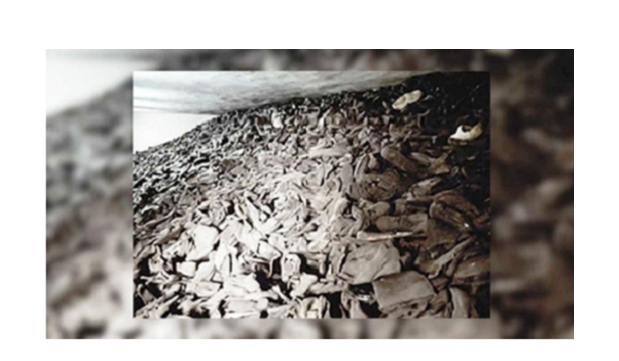
We also met up with an old acquaintance who had been with me in the women’s camp, a Belgian boy named Jacques. He was about a year older than I and sexually fully developed. He was not quite normal and my mother had had trouble with him. I remember giving him many a hiding for that reason. In the men’s camp, he had become the pet of the guards, had his own very nice and clean uniform, and used to assist the guards in beating up old Jewish men as they arrived from other camps. I was worried that Jacques would make use of his new position to get even with me for the beatings I had given him, but he kept his distance.[/vc_column_text][/vc_column][/vc_row] Gypsy prisoners, Belzec concentration camp, Poland The Gypsy boys, who far outnumbered us, lost no time in introducing themselves: they beat us, much to the amusement of their elders. Once again we were assigned our sleeping quarters, five to two beds. Herbert Klein slept with Otto, the Polish boy and me, and a Czech boy eventually joined us. Herbert had very few clothes and seemed unused to looking after himself. I gave him one of my jerseys, for which he was grateful, but not grateful enough to co-operate with us: he would not wash himself every day. The vermin problem was bad enough without this and I was quite harsh with him, refusing to let him join us in bed until he had performed his ablutions. He did not have much choice really; his only other option was to try to crawl in with the Gypsies, who would probably have kicked his teeth in. Otto and I still had the blankets that we had brought from Holland. Herbert used to stand at the foot of the bed and cry, but with time and some gentle encouragement he became as adept at survival techniques and foraging for food as I was. We were sent out to work without delay. During the following months I worked outside the Siemens labour camp digging trenches for water and sewerage pipes, building roads and similar heavy work. The Germans used a very effective method of supervising our efficiency. If soil or rubble had to be moved they did not use wheelbarrows; instead we would stand in a long line, evenly spaced out, between the source and the destination of the soil and with long-handled spades pass the material from one to the other. If the heap that you were moving became too big, then it meant that either you were working too slowly or the chap behind you was working too fast. In either case you would be beaten, usually with that six-foot spade, or kicked. So the work required a fine degree of co-operation between prisoners. I remember an occasion, several months after we had arrived, when we were sent to work some distance from the camp. Nearby I noticed a forest of beech trees, so at the first unguarded moment I stole away to see whether there were any beechnuts to be found. I had in the meantime managed to find some pieces of fur, as I will describe later, and had made gloves similar to the ones that traffic cops wear. There were beechnuts and I lost no time in filling my gloves with them. Then, suddenly, I had a feeling that something was wrong. I looked up and saw Fritz Suhren, the commandant of the women’s camp, walking on a path about 25 yards away. Luckily he was looking in the opposite direction. I dropped flat on the ground behind a tree and was fortunate not to be detected. Had I been found, a flogging would have been the least that I could have expected. At one stage I was assigned alone to working in and cleaning a warehouse supervised by a crippled soldier of the Wehrmacht. The place was packed with suitcases and personal belongings of Jews and SS who had been at Westerbork. It was a strange experience, but I lost no time in seeing what I could find that would suit my purposes. On one occasion I had climbed right on top of the shelves to examine the contents of a suitcase when suddenly a quiet voice said, “What are you doing up there?” It was my supervisor. I made some excuse and hastily climbed down, soon to be transferred to my usual work party. I believe that I owe my life to that soldier; if he had chosen to pursue the matter I could have been hanged. At the age of 14? Eli Wiesel describes in harrowing detail the hanging of a six year old child that he witnessed. From time to time goods trains would be shunted into the siding at Ravensbruck. They came from the Death Camps, and were packed with possessions of people who had been sent there. We boys had to manhandle such railway trucks to a platform and help to offload them. Here again we would pinch whatever we could. The Gypsies would lay their hands on anything that glittered, such as costume jewelry, while I took fur, sewing materials, medical supplies, and once even a German medical book dating back to the previous century. Libraries were in short supply in concentration camps and I was only too delighted with my book. The Gypsies gave me the title “Der Judendoktor” and began to discuss their ailments with me. These foraging expeditions were actually extremely dangerous. If one was caught stealing government property, as the Germans called all the things that they had stolen themselves, one would be severely punished and at the whim of an official could even be hanged. I was almost caught on two occasions. The first time we were marching back into the camp when suddenly two guards cordoned off a group of us and made us stand with our backs against a barrack wall. They then assigned one of the Gypsies to search us. I suspect that they didn’t do the job themselves in case they caught lice. Each person had his pockets turned out and as things were found, he received a beating. These seldom killed anyone, but they had a cumulative effect and were very demoralizing. The boy fourth in line from me was examined and beaten, the third and the second ones as well. Then came my turn. The Gypsy put his hand into my overcoat pocket, felt the wool and cotton thread and the bandages there and told the guard: “This one has nothing”. He was a Gypsy and therefore no friend of mine. I can only surmise that to a Gypsy my loot was valueless. On the second occasion we were again lined up against a barrack wall. It was quite dark by that time. I had pieces of fur on me and articles of clothing. As the search approached me, I suddenly realized that I was standing with my back against a drainpipe. In the darkness I managed to stuff all my ill-gotten gains behind that pipe without being detected. Later that night I returned to retrieve them. We were supervised by the guards and Capos (prisoners who had been put in charge of other prisoners). Mostly, the latter were not too bad; the war was obviously nearly over, this was a small camp where all the old hands knew each other, the camp commander was not a psychopath – it all helped. But a convalescent home it wasn’t. I became friendly with some of the old hands, criminals all, and some of the people in the barrack. We would communicate in German and sometimes in English. They would tell me of the old days in that camp before the war and before Stalingrad put the writing on the wall. They told me how a Capo would be sent out with 200 men and instructed only to return with 198. How he did it was his concern. The favorite method was to tell a prisoner to take a walk towards the guards (Postenkette) that ringed every concentration camp and work party, and who would shoot to kill once one came within a certain range. A guard would be awarded with leave for every prisoner killed. Since its establishment, twenty thousand men had died in that little camp. The barrack leaders would be murdering monsters, but there was retaliation. A Capo who overdid his elimination programme might be found with a spade cleaving his skull. A barrack leader might be found hanged. One of the criminals that I became friendly with was a cripple nicknamed Hop-la-hop because of the way he walked. He wore a green triangle but a pink one (homosexual) would have been more appropriate, for he was always putting his arms around and hugging me close. My sex education was absolutely nil, and I knew even less about homosexuality, but I did know that I didn’t need Hop-la-hop draping himself all over me. Still, he was an interesting source of information and occasionally some food. Meanwhile, the German Gypsies were making the life of us Jewish boys an absolute misery. They were the scum of the earth, and as brutal to each other as they were to us. After the war I learned that they were abhorred also by Gypsies from neighboring countries. Many of them had been serving with the German army when somebody discovered that they were non-Aryans, whereupon they were stripped of their uniforms and sent to Auschwitz to be gassed. This did not seem to change their thinking much; as far as we Jews were concerned they were still good Nazis. The assaults, abuse and humiliation reached such a point that I was not prepared to tolerate it any longer and decided to talk to the barrack leader. This however was not so simple: one of the unwritten rules of a concentration camp was that a Jew keeps a very low profile. “You don’t like the way we treat you here? You would be happier elsewhere, Auschwitz perhaps?” This was a possibility, not only for me, but also for the whole Jewish group. After all, if we meant trouble, even if through no fault of our own, then what did they need us for? Concentration camps were not established for the administration of justice. But then again, what did we Jewish boys have to lose? This existence left no room for self- respect. So one evening, when I had had more than my share of being beaten up, I knocked on the criminal shaven-headed barrack leader’s door. I told my story and he asked me one question: “Are you the English boy?” I did not know of any other English-speaking boy so I said ‘Yes’. He sent me back to the barrack. Later that evening he returned together with the Lageralteste, the head of all the prisoners in the camp, a severe looking man carrying a truncheon in his belt. That individual asked me to point out who had been assaulting us. I saw this as an invitation to my lynching and politely declined. The man screamed at me, repeating the question. I pointed out the worst culprit, who thereupon received a beating with the truncheon. After this the Gypsies left us alone, at least while we were in Ravensbruck. It took some time before I was able to understand what had happened. One day a few Gypsies with whom I was on speaking terms came to tell me that there was an American boy in one of the barracks. Intrigued I accompanied them and found myself facing a tall, thin, very refined looking boy with almost girlish good looks. I addressed him in English. A look of fear crossed his face; he went white and did not answer me. I looked at his red triangle; on it was printed AM for American. One of the Gypsies started laughing: “He isn’t American,” he said. I quickly left, for unwittingly I had endangered this boy’s life. Shortly after this the American boy came to our barrack where he was careful to avoid me. Our Polish boy soon joined him and they shared a bed. This poor chap was Polish with American papers. What I think had happened was this: it was known that there was an American boy in the camp. I spoke English and was mistaken for him. The barrack leader and his superior, who must have had a lot to answer for, decided that if the English or Americans liberated the camp, it would do them no harm if I could put in a good word for them. And while I was in Ravensbruck this stood me in good stead. The Gypsies were not quite finished with me though. One day a group of them came and told me that I had been selected to cut up the bread ration. I don’t remember why I did not refuse, maybe I couldn’t, but I was aware that it was a trap. What I did know was that this was one of the most dangerous jobs in the camp, something that was proved to me after the war in horrible fashion. The loaves in the Men’s camp were shaped like our rye bread, tapered at the ends. Without a scale it is very difficult to cut such a loaf without the end pieces looking bigger, or every piece weighing the same, and remember, I was dealing with very hungry, hostile, violent people. So I took the job, and made very sure that I kept the smallest looking piece for myself. Predictably, after the first division, the largest of those Gypsies rose from our table and tossed his ration at me: “What do you call this?” he said. “You can have mine” I told him and quickly exchanged the two pieces. And that was the end of the matter. Not long thereafter I was relieved of this task: It had not worked out as planned. One day a Muselman came into our barrack, probably to beg for food. A Muselman was a prisoner who had become so emaciated and weak from starvation, that he could no longer work. They were skeletal and the lack of flesh on their bodies resulted in them always feeling cold. They usually walked around during the day wearing their blankets, which gave them the appearance of Bedouin, hence the name Muselmanne, Moslems. These people would spend their day in the camp scrounging and begging for food, and eventually would all be gathered and put on transport never to be seen again. The Gypsies promptly attacked this pathetic creature and beat him until he managed to escape. As mentioned before, the Gypsy boys greatly outnumbered us and there was nothing that we Jewish boys could do about this assault. But when it was over, I went to speak to the leader of the Gypsy boys, a chap with protruding teeth, which gave him a wolfish look, and by the name of Menelo. I asked him if his father was still alive, and what his reaction would have been if we Jewish boys had ill-treated his father the way he and his young thugs had molested that Muselman. Menelo said that he would have been most upset and eventually agreed that what they had done was wrong. The following day that same Muselman came again into the barrack and the whole performance repeated itself. Once again I had been taught the separation between logic and emotion. After the war Otto and I remained in touch. He also began to lecture in Germany where he was recognized by some Gypsy survivors and made an Honorary Gypsy. A few years ago Otto came to SA and brought me greetings from…Menelo. I picked up a few Gypsy words: Lourdo meant guard, Moulo – death. Quite appropriate considering the circumstances. After about three months in the Men’s camp, Otto, Herbert and I were told that a visit had been arranged between our mothers and us in the adjoining Women’s camp. This was highly irregular, and I am sure that Riva or Kate Peters must have had a hand therein. We met in a building at some halfway point. I don’t think that there were any gifts, there couldn’t have been. All that the meeting really achieved was to show one another that we were still alive and what our condition was. Herbert’s mother was pathetically grateful that he had received one of my jerseys. My mother told me after the war that she was shocked by the change in my demeanor. As far as I was concerned, as pleased as I was to see my mother again and to hear about my sister, the experience merely helped to accentuate the loneliness and desolation that I felt once my mother had left again. At one stage we found ourselves in a barrack run by a German criminal with pedagogic ambitions. He decided that it was a crying shame that we youngsters were not going to school and decided to do something about this. So he got all us Jewish boys together and proceeded to instruct us. The Gypsies, he decided, were uneducable. His first and only lesson I will never forget. He chose astronomy as his subject and began to tell us how the sun revolved around the earth. Some of the older Czech boys had received some schooling and one of them politely begged to differ. He received a terrible smack across his face, while the Block Alteste thundered:” You imbecile! Can’t you use your eyes? Can’t you see that the sun comes up in the morning and goes down in the evening?” But he never tried to teach us again. Each barrack had a barrack towel – that’s right, one towel for about 600 men. It was hardly a bath towel either, just a rag about 60cm square. I had the belief that washing was important and even in winter when the water supply was frozen, I would rub down with snow. I think that if nothing else it helped me to tolerate the cold better. The Gypsies did not have any such notions; you could tell a Gypsy at a glance by the dark ring around his face, where he had washed it daily at the expense of the rest of his body. I used to wash myself when the others were occupied elsewhere, but on one occasion I was caught. The Gypsy boy who saw me ran screaming to the Kindervater, the Gypsy adult who was supposed to keep an eye on us. The child told him of the horror that he had witnessed. The Kindervater shouted, “You have the gall to dry your backside with the towel that we have to use for our faces?” and gave me a bad hiding. I suppose that he had a point. One evening a German criminal with a pleasant face came into our barrack and announced that he wanted three boys to come and work for him in his cobbler shop. The Gypsies fell all over themselves, shouting and gesticulating, but he refused to have anything to do with them. He picked a Ukrainian, a Czech boy and me and the following morning we reported for work. The shoemaking shop was a pleasant, well-heated place and the shoemakers there, of all nationalities, were kind people. One received a good lunch of thick soup at midday, something that others most certainly did not get. But what did these skilled artisans, who were employed making jackboots for the SS, want with us? We soon found out. Upon our arrival we were shown a room about four meters square and packed to the ceiling with shoes and boots of every type, size and description. These had been brought from death camps where their owners had long since been cremated. Our task consisted of cutting up these shoes to see if anything was hidden in them. Outside it was 28 degrees below zero, people were walking around in open wooden sandals and we were to cut up perfectly good shoes! We were told that if we found anything we would be rewarded. We were each given a leather shoemaker’s apron and a cobbler’s knife. It was easy work and looked as if it could last until the war ended. The working conditions were congenial, and I lost no time in persuading our boss to let me bring Otto in as well. I also selected a fine pair of boots for myself. Otto and I decided that if we found any gold or diamonds they would not go to aid the German war effort. We would keep any findings for ourselves and if that was impossible then we would dispose of them. Otto was eleven years old and looked like six, while I was fourteen and looked like eleven – concentration camp conditions. Yet as far as I know on that occasion we represented the Ravensbruck Mens’ Camp Resistance Movement. But how would we justify our employment? With our childish logic we felt that paper money could not be as valuable as gold and diamonds, and that was what we would hand to our captors. In doing this we were taking a calculated risk, for we knew that to be found with Valuta, as the Germans termed gold and jewelry, meant the gallows, with no mitigating circumstances. Shoes taken from Holocaust victims, Auschwitz-Birkenau We would sit there day in, day out, picking up a shoe, cutting open the instep and the heel, throwing it away, picking up the next shoe and so on. Anybody who has done mindless, repetitive work knows that one’s thoughts can be far away and still the hands will continue with their appointed task. And so it happened one day that I saw something glistening among the scraps of leather in my apron. It was a gold 10-dollar piece that I had not even seen. With this find I started trembling uncontrollably, which luckily no one noticed. What also drew my attention was a piece of leather in my apron with the imprint of this coin on it. If one side of the coin had left an imprint, then there had to be another piece of similarly imprinted leather for the obverse side of the coin. If that was found then the game would be up. Feverishly I began to search through the leather in my apron and amongst the pieces recently discarded and was lucky enough to find the other imprint. I took my cobbler’s knife and went to the toilet where I cut the imprinted leather pieces to bits and flushed them. Coming out of the toilet, I found one of the Polish workers standing there waiting for me. “I know that you have found something,” he said,” Give it to me!” I denied all knowledge and brushed past him. Later on I waited for an unguarded moment and, using the cobblers’ tools, stitched the coin into the inner heel of my boot. Some weeks went by. One day I was sitting next to Otto when I noticed that he had stopped working and was trembling. “Give!” I said, and surreptitiously he handed me a gold 5-ruble piece, which in due course was stitched into the heel of my other boot. We made friends amongst the adults in the barrack, and would spend our evenings talking. One man was a German sailor whom I got to try and teach me navigation. Then there were two Norwegians, both captured for resistance activities. The one spoke halting English and we would converse. One had to be very careful with whom one spoke and what was said, for a misplaced word to an informer could land one in the hands of the Gestapo, but I grew to like and trust the Norwegians and would speak freely. They had both come from a nearby camp called Sachsenhausen, where, they told me, people from Western countries were allowed to receive Red Cross parcels. In our hunger we would dwell on the contents of these parcels. Later on I would receive them myself and even after all these years I can still lovingly enumerate most of what they contained. Every day we would stand on Appel, and at the command: “Achtung!” we would come to attention and click our heels together. I have mentioned that boots were a luxury in that place and to prevent mine being stolen I would sleep with them under my pillow at night. One night I happened to look at the heels of my boots and saw the outline and imprint of two coins staring me in the face. This was the result of all my heel clicking. I then realized that I could not keep those coins any longer, for where was I to hide them? I determined to speak to one of my Norwegian friends and find out whether he could exchange the coins for food. He was most reluctant and told me that there were certain unwritten rules for survival in concentration camps, one of which was not to touch Valuta. One would get camp fever, he explained, be sent to the revier and lie there in delirium. All one’s secret fears would come to the fore, and the SS doctors, well acquainted with this phenomenon, would be there to listen. One’s next public appearance would be on the gallows. I told him that as a Jew I had nothing to lose, and was willing to take the risk. In due course and over a period of time, he managed to get me seven loaves of bread and a kilo of carrot jam for those two coins. Needless to say Otto and I shared everything that we had. In 2013 a numismatist estimated that those two coins would have been the equivalent of a little less than one Kruger rand. This means that at today’s prices, we paid R12 000 for that fare. On a few occasions we found paper money. These would be handed over to our German boss, who in turn handed them to the camp commander who would then come and thank us and reward us with several slices of rye bread smeared with lard. One slice we always kept for each of our Norwegians. Our work at the cobbler’s shop was not all bread and lard. It had a courtyard and there stood the block. This was a device one had to lie on when being flogged. One’s feet would be locked into a box controlled by a lever and one’s outstretched arms held down. The block had a downward slope towards the head, so that the buttocks were elevated. The flogging was carried out by the camp commandant alone or accompanied by one other person and they would use whips made of stitched leather about an inch (2.4cm) thick. When these showed signs of wear and tear they would be brought to us in the cobbler shop. I asked one of the men there to hit me just once with this thing and it was very painful. Watching the flogging is one of my most terrible memories. A man would be brought in and held down on the block. His buttocks would be felt to see whether he had padded himself, and if so, his trousers and underwear removed, he would be beaten on his naked behind. I remember an occasion when the camp commandant and another man flogged a person, each one taking turns to strike a blow. Soon the victim began to writhe, then to scream horribly. Eventually in his agony he managed to pull one leg free from the box where it was supposed to remain locked in and he tried to kick his tormentors out of the way. This enraged them and they began to beat him as hard and fast as they could while all the time his terrible screaming rose to the heavens. Later, in Sachsenhausen, I saw a naked man with his one buttock looking like a dried raw piece of steak. There was no skin left and I was told that this was the result of repeated flogging. Next to the cobbler shop was the revier. Occasionally I would cut myself and if the injury needed attention I would go to there. I once arrived in time to see a corpse being carried out in a sheet. I accompanied the body to see how it was disposed of and we walked to a small shed which, when opened, was found to contain a heap of corpses. Our corpse was heaved on top of the others, after which the jolly souls who had done the carrying picked me up by my arms and legs and made as if to throw me on top as well. Many of those corpses were leaking and I was not too impressed, but they were only pretending. On Christmas 1944, we were all marched out of our barracks at night and made to stand in the snow and sing carols to the camp commandant (Silent Night, Holy Night…). For this, we each received a dried-out piece of steak. That winter they also held a delousing, but in contrast to the women’s camp, we were not given fresh clothing to wear while ours were being processed. So all the Jewish boys were chased stark naked out into the snow to stand and shiver, much to the amusement of the onlookers. I got the boys to dance the Hora and to sing in an effort to be warm. That stopped the fun of course and after a while they let us back into the barrack. By now the Russian front was approaching rapidly and the Germans were scraping the barrel for troops. Many of the older German Gypsies were battle-hardened soldiers, and one day they were told that as a special concession they would be taken out of the camp and allowed the honour of once again fighting for Fuhrer and Fatherland. There was one snag though; they were still not Aryans and could not expect to be let loose and pollute the German population with their genes. Therefore, before being released, they would each have to submit to a vasectomy. The Gypsies were overjoyed at this, volunteered happily. I remember going to have a look at them as they lay unconscious on the floor at the revier. Only two of them escaped this fate. One was a subnormal boy who at the last moment went and hid himself; the second one who did not look like a Gypsy at all, being blond, said: “You killed most of my family in Auschwitz and now you want me to fight for you? Forget it!” He was the only one who showed any character out of the 300. Don Krausz has served as the chairman of the Association of Holocaust Survivors in Johannesburg (She’erith Hapleitah) since 1985. Over the past three decades, he has spoken to thousands of South Africans, Jewish and non-Jewish, including addressing many school groups, on his experiences during the Holocaust. 

-
Don Krausz is the subject of the youtube presentation ‘Don Krausz Holocaust Survivor 91 in 2021. Courage, Resilience & Education for a better world’ by Carolyn Massey: https://youtu.be/SlKCjNeoWbI.


