
(Author: Saul Issroff, Vol. 71, No. 2, Rosh Hashanah 2016)
In his 1999 paper ‘The Port Jew: Notes Toward a Social Type’1 David Sorkin, drawing on his work on Sephardi and Italian Jews living in Mediterranean, Atlantic and West Indian seaports between the 17th and 20thCenturies, noted five characteristics of port Jews:
- A trading network dependent on trusted Sephardi commercial and family connections, between the Atlantic and Mediterranean economies.
- The commercial value of Jews to the new country guaranteed security of residence.
- The legal status of Jews in the new country ensured privileges and legal e qualit y.
- The re-conversion and re-education of individuals who had unwillingly converted to Christianity during the Inquisition (haskalah avant la lettré).
- Jewish identity and belief strengthened in both secular and religious areas.
In broad terms, it is possible to apply some of Sorkin’s criteria to the Southern African port Jews from Germany and England.2This study will outline the establishment and development of the South African port city of Port Elizabeth and the role played in this of families of Jewish origin in that city and further inland.
Port Elizabeth is possibly unique amongst port cities in that it has had a Jewish presence since its founding, in 1820.3 The early Jewish settlers in the area (1820-40) in the main had family and trading connections, primarily with Germany and England. There was no pressure on them to convert. Some of the families seem to have been at ease in both Christian and Jewish circles, and several of the more prominent figures contributed financially to both groups. There appears to have been little discrimination against Jews in the Cape until the influx of Eastern European Jews towards the end of the 19thCentury, when attempts were made to limit this immigration.
Sephardic Jews were prominent in the Portuguese voyages of discovery, especially with respect to mapmaking, navigation, and astrological charts. Theoretically, South Africa was a Portuguese possession for almost a century after Bartholomew Diaz rounded the Cape in 1487;4 the goal of the Portuguese, however, was India and the spice routes. While they explored and mapped the southern African coast carefully, it was mostly with a view to securing fresh water and food for its mariners, and they established no permanent settlements at the Cape.
In 1497 Vasco da Gama’s voyage aboard the São Gabriel brought him to Algoa Bay, where he planted a wooden cross on a small island, now called St Croix or Santa Cruz island. He gave the bay a name meaning ‘Bay of the Rock’. This was later changed to ‘Bahia de Lagoa’ (Bay of the Lagoon), which eventually became Algoa Bay.5
At the end of February 1752, a large, well equipped, expedition under the command of Ensign August Frederick Beutler left the Cape to explore the land east of the settlement and report on any changes since 1688. They reached Algoa Bay in early May, explored the salt pans and took bearings of the surrounding shore. Beutler regarded this as too exposed to the south east winds to be of any use for shipping. He set up a beacon inscribed with the letters VOC6 at the mouth of the Zwartkops River to denote that possession had been taken by the company.7
In 1799 Fort Frederick, with a garrison of 150 troops, was established at Algoa Bay by the British, primarily to gain better control over the rebellious Boers of the hinterland. In 1820, the settlement that grew up around it was formally proclaimed as a town and named after the deceased wife of Cape Governor Sir Rufane Donkin. Port Elizabeth grew rapidly after 1873, when a railroad to Kimberley was built. Today, with over a 1.3 million inhabitants, it is South Africa’s fourth-largest city and third-largest seaport. The major industry is related to car manufacturing.8Wool washing and export, fruit processing and export, tanning and shoe manufacturing, metal and timber processing, and electrical engineering are also of significance.
The Jewish Settlers of 1820
The story of the Jews in Port Elizabeth9dates back to the arrival of the 1820 British settlers in Algoa Bay. There was considerable unemployment in Britain following the conclusion of the Napoleonic Wars and many were easily induced to settle at the Cape by the Governor of the Cape Colony, Lord Charles Somerset.
The immigrants made a major contribution to the commercial and industrial development of the Cape, despite all starting in agriculture.10Among the members of Willson’s party of settlers, who sailed in the Belle Alliance and reached the Bay in May, 1820, were four Jewish families comprising eighteen persons, including John Norton, Philip Simons (38), Morris Sloman (33) and the Norden brothers – Benjamin, Joshua Davis, Marcus, Samuel and Harry. Maurice Garcia was another settler of Jewish descent.11
The Nordens settled in Grahamstown, about 100km inland. Benjamin, a typical London man, was known as “the Cockney gardener”, was not suited to farming and after three years went to Uitenhage, trading in ivory. He joined the Grahamstown committee that planned the first jetty in Port Elizabeth (completed 1837). Norden was impressed by the commercial possibilities of Natal, urging outright annexation by the British, and also investigated the economic possibilities of Delagoa Bay (now Maputo). Asked by Sir Benjamin D’Urban, then governor of the Cape Colony, to meet with the Zulu chief Dingaan, he stayed several days at the latter’s kraal and concluded a good ivory deal. Later, he wrote about his travels in the Gra h a m’s Town Journal.12 Norden further assisted in funding the building of churches and synagogues, and in 1841, the first Jewish prayer service was held in his Cape Town home. He was a precursor of the future Cape industrialists.13
Joshua Davis Norden became an auctioneer and one of the most prominent citizens of Grahamstown. He was appointed commandant of the Grahamstown Yeomanry, a crack military body which, together with the Stubbs’ Rangers, rendered valuable services to Grahamstown during the early troubled days on the Eastern Cape frontier. Early in the Seventh Frontier War of 1846-7, he was killed at the head of his troops in a skirmish near the town. A marble tablet to his memory was placed upon the south wall of the Grahamstown Cathedral.14 The Jewish community in Grahamstown was established in 1843, twelve years before that of Port Elizabeth.
The Brothers Mosenthal
During the 1820s, German Jewish traders (the Merchant Pioneers)15 started to arrive in the Colony, developing a particularly Jewish branch of commerce and setting up trading stations in towns best suited for commercial exploitation of rural areas with itinerant agents (often family from Germany). The Mosenthals from Hesse-Cassel were the most significant Jewish family connected with the early settlement and development of the Eastern Province, with family connections in the other provinces as well. The Mosenthals’ ancestors, Sustman and Moses were Shutzjuden, who in 1700 were living in Petershagen on the River Weser. The Schutzbrief was a letter of protection that enabled them to live in the city and carry on business. Moses Hertz had a son Abraham Moses (Marburg), who was granted a Schutzbrief in 1717. He had nine children, of whom one, Moses Abraham, was the paternal and another, Joseph Sussman, the maternal grandfather of Joseph Mosenthal, the first of the family to settle in the Cape in 1819.16
Joseph was later joined by his brother, Adolf, and the two founded the firm of Mosenthal Brothers in Cape Town. In 1842, a branch was opened in Port Elizabeth. The brothers had bought a huge consignment of goods in England and shipped this to Port Elizabeth. They advertised very carefully, setting themselves apart from other traders by stressing the fact that they were from Europe, and had contacts and financial backing. They were opening a mercantile and shipping house, clearly stating they would be doing exports and imports. Their primary interest originally was trading in the export of wool, hides and skins and importing everyday products from Europe. This was expanded to include gold and diamond mining, industrial enterprises and banking. In the early years, the firm issued its own banknotes, later withdrawn when the colony developed its own commercial banking system.
The Mosenthals made a special study of ostrich farming and export of ostrich feathers.17 They imported the first merino sheep from France, the first Angora goats from Turkey and established the mohair industry. Immediately after the Crimean War, Adolf went to Constantinople where, aided by the British consul, he purchased a number of rams and ewes, which were sold to farmers in the Graaff-Reinet area. In the period 1845-1870, they were responsible for more than half the Jewish families coming to settle in South Africa. These Hessian Jews became managers and sub-managers for the brothers’ rapidly spreading enterprises, or they traded on their own account with financial support from the Mosenthals.18
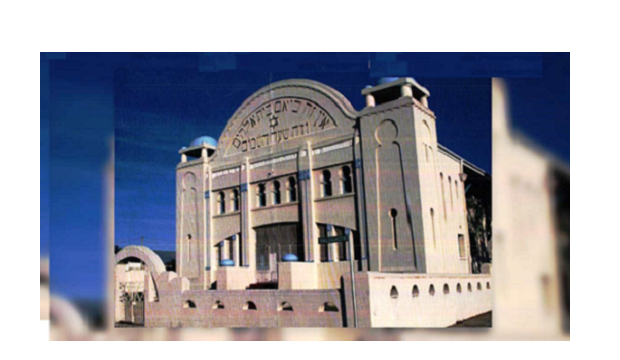
Of Adolph Mosenthal’s six sons, two died in their twenties, one went to London and the remaining three, Harry, George and William, went into the business. The family had a commitment to civic duty. Adolph became a Justice of the Peace at Graaff-Reinet (1851) and a Member of the Legislative Council (1857); Joseph was a Member of the Legislative Council in 1861; another brother, Julius, was the first professing Jew to be elected to the Eastern Cape Legislative assembly, and also became a JP (1855) 19 and Harry was Chairman of the Port Elizabeth Chamber of Commerce in 1893 and 1911. In 1867, with the discovery of diamonds, Harry encouraged his father’s firm to engage in mining, and at the age of twenty founded the London and South Africa Exploration Company, with Lord Farquar and Sigmund Ochs. The company bought the first two farms with surface soils indicating diamond fields, and within a few years owned a large part of the burgeoning diamond town of Kimberley. Later, Harry joined with Cecil Rhodes, Alfred Beit and Barney Barnato in establishing De Beers Consolidated Mines Limited, thus joining a lot of small mines into a huge conglomerate. George, said to be of a delicate constitution, was involved in developing the policy and activities of the firm. William took over after Harry died in 1912. He was also president of the PE Chamber of Commerce and the PE turf club, owning fine horses. His nephew, Edgar, took over after his death in 1933.[/vc_column_text][/vc_column][/vc_row] The first synagogue in Port Elizabeth, Whites Road, as it looked circa. 1980. Note Gothic window on side wall. Early editions of the Port Elizabeth Heraldhave advertisements for two other Jewish traders, S. Rodolph and George Britton, dealers in paints, glass, lead bars, cigars, pepper, soap etc. Britton, a discharged trooper from the Cape garrison, remained as a colonist in 1817, became an elephant hunter and trader, and was interested in coastal trade with Natal. In the early years, Jews in Port Elizabeth were active in Queen Street, close to the port, anticipating the likely direction of the development of the town. A congregation was first formed in 1855, with the hire of a small room opposite the St George’s church. The Port Elizabeth Hebrew Congregation was formally constituted two years later and a temporary synagogue, seating sixty, was set up in North End. The first Rosh Hashanah services were held there, with many Jews coming from country areas. In 1862, a church school building was bought to serve as a permanent synagogue. The first Jewish marriage in Port Elizabeth was that of Deborah Moss, shipwrecked stepdaughter of Saul Solomon, a trader from St Helena and later Member of the Cape Parliament, to Joseph Phillips (witnessed by Joseph Hess). A M Jackson, who arrived in 1859,20 was appointed marriage officer. He also secured land for a Jewish cemetery, still used today. By 1864 the growing community, mainly from England and Germany, supported the petition for self-government and put forward Julius Mosenthal to stand for a vacancy in the Cape Legislative Assembly. Nathaniel Adler was the French Consul and the dentist Ernest Moss became the first to use anaesthetics in the town. In 1869, after lengthy correspondence with the Chief Rabbi of the British Empire, Dr N M Adler, Rev. Samuel Rappaport of Portsmouth was appointed minister. He held the post for 25 years, serving communities in other parts of the Cape, Natal and the Orange Free State.21 Rev. David Wasserzug succeeded him. By 1874, larger synagogue premises were needed. Land in Western Avenue was purchased, and a new synagogue consecrated in 1877. A social club, a Sabbath school and a philanthropic society were established. In 1918, a Hebrew school opened in Albany Road. The Jewish population of Port Elizabeth, 1877-2016 Sophie Leviseur (b. 1857, Bloemfontein) wrote that her father, Isaac Baumann (b. 1813, Hesse-Cassel) came to South Africa in 1838, arriving in Graaff Reinet to join his boyhood friends, the Mosenthal brothers. He was one of the first people to own land in Bloemfontein and was present when the land was being marked off. He became director of the first bank and one of the first mayors. His was the first Jewish family in Bloemfontein, probably the first in the Orange Free State. The pattern of settlement was typical in that he brought out relatives and encouraged others to do the same. Thus the Jordan, Allenburg, Leviseur, Ehrlich and Haarburger families came to the Orange Free State. Anthony Trollope, in his Tr a ve l s i n Southern Africa22, was surprised to find a woman of such culture in Bloemfontein, namely, Sophie’s mother Caroline Baumann (born Allenburg). In 1863, the family was sent to Port Elizabeth with the intention of visiting Isaac Baumann’s mother in Germany. However, the Orange Free State-Basuto War broke out and Baumann could not leave his business, so the family remained in Port Elizabeth for several years. There the children, previously speaking Dutch and German, learnt English, and the family came into contact with organised Jewish life. In 1875, Port Elizabeth’s Eastern Starnoted that “the educated Jews and Germans… have been of inestimable advantage not only to the social life, but to the commerce and business, of Port Elizabeth… they are open-hearted and open-handed.’’23 Seven of the 38 members of the Port Elizabeth Chamber of Commerce in 1871 were Jewish firms. The arrival of ‘Russian’ Jews, mainly from Lithuania and Latvia in the 1890s, increased the size of the community (although it probably never rose above 3000 souls). As a percentage of the SA Jewish population, Port Elizabeth Jewry averaged 2.4% in the period 1936-1980). They did not integrate easily with the Anglo and German-origin Jews, and built their own synagogue in 1913. In 1877 the small congregation sent £150 to the Anglo-Jewish Association for ‘distressed co-religionists’ in Turkey. During the Anglo-Boer War, a Refugee Relief Committee was formed to assist Jewish refugees who had come from the Transvaal and the Orange Free State. A number of the refugees felt they were badly treated and exploited by the community, and letters of complaint were sent to the Jewish Chronicle (London). At this time funds were also collected for relief of distress in Russia and Romania. Jews were always prominent in civic affairs. Port Elizabeth has had seven Jewish mayors, the first being H H Solomon (1873-5). He was a diamond, wool, hides and skin merchant, and later became active in the Lydenburg Goldfields. Max Gumpert was the next (1899-1900).24 The adjacent, now contiguous, town of Uitenhage also had a number of Jewish mayors.25 Adolph Schauder (b. 1880 in Kolomya, then in Austria-Hungary, now Ukraine) was the most significant of PE’s Jewish mayors. He had 65 years of public service, not connected to any political party, and devoted himself to conciliation and building goodwill amongst all sectors of the population. His main interest was in mass housing and elimination of slums, in which respect Port Elizabeth was way ahead of the rest of South Africa. Schauder, who came from a very poor family, was initially apprenticed as a furniture maker and later as a hat maker in Vienna. He found it difficult to get work because of antisemitism, tried many places in Germany, Austria and Norway, and eventually secured a job as a cap maker in Manchester, England. Being restless, he got a berth on a ship bound for Australia and arrived in Cape Town. The Anglo-Boer War was still raging, and few jobs were available, so he went to Port Elizabeth and secured a job as a medical orderly in Grahamstown. On the strength of this experience he joined the Red Cross Detachment of the Prince of Wales Light Horse Regiment in 1901. He was issued with a rifle, bandolier and horse, and not given any nursing work. This unit was trailing General de Wet in the Free State and thereafter was active in the Standerton area in the Transvaal. Schauder had deep sympathy for the plight of the Boers. On encountering refugees families, he tried to help. He noted, “What a tragic picture it was. The men were barefoot and almost naked … The Boers will be ruined. Even if they were to stop fighting now there would be fa m ine.” When the war ended in 1902, Schauder returned to Port Elizabeth, where he started a small shop selling everything on a penny basis – fish, bread, beer for a penny. Here he met the Patlansky brothers, refugees from the Transvaal, and assisted them with letters of reference to the authorities in the Transvaal. He became a partner in their wholesale trading company, and was the first of the ‘foreign’ Jews to enter he wholesale business in Port Elizabeth, up to that time dominated by the Mosenthals, Frasers and Dunns. He had a reputation for trying new things, such as liquid soap and electric light bulbs. When WW1 broke out, Schauder volunteered for service, but was rejected on medical grounds. Anti-German riots broke out in the city, putting him at risk (since he was of ‘German’ origin). A prominent Baptist minister, Rev. Clapp, allowed him to use his name in an announcement in the local newspaper calling attention to his war service and patriotism. Schauder was involved in relief work during the war, at one stage sending a donation of a ton of cheese to England. In the 1930s and 1940s, Schauder was involved in promoting sub-economic housing for low earning Afrikaners and employment opportunities for families in very low-income groups. He secured the first ever government low interest loan (3/4%) for housing schemes in Port Elizabeth and cajoled his fellow councilors to clear the slums. He was innovative, at one time getting crates from the Ford and General Motors factories to be turned into wooden houses. Under his leadership over 30 000 houses were built for all races (Schauder Township was named after him) and he was able to get the terrible slum town of Korsten cleaned up. In 1951 he visited the UK and lectured extensively to local councils and housing authorities on the housing schemes of Port Elizabeth. Schauder would attribute the driving force of his work as coming from his ‘Yiddishe Neshama’ (Jewish soul). The Western Road synagogue was dominated by Jews of English and German origin and was known as the English Shul. The East European immigrants were not comfortable with the forms of service and low levels of observance, considering the English to be ‘goyish’ and ‘ignorant’. The English Jews in turn found the Litvaks to be crude and lacking in manners. In 1912, the Litvaks put together sufficient funds to build their own synagogue, in Raleigh Street.26 Schauder was one of the founders. This had some art nouveau elements but preserved traditional synagogue elements, and commissioned a well-known Pretoria architect, Orlando Middleton, to design it.27 This is now a national monument and houses a Jewish museum.28 Raleigh Street synagogue, Port Elizabeth Orthodox Hebrew Congregation Schauder belonged to both the congregations. He also organised the Chevra Kadisha (burial society) so that no single section of the community could control burials to the disadvantage of another. Although he was only 33 years old at the time, he remained as President of the society for 25 years. In 1918 he established a Hebrew school along modern lines; this was the first school in South Africa to get Hebrew recognized as a modern language. On a national level he served on the boards of the SA Zionist Federation, Ort Oze and SA Jewish Board of Deputies.29 Rev. Abraham Levy, a graduate of Jews College, London, went to Durban in 1903 and in 1913 succeeded Rev. Phillips in Port Elizabeth.30 He remained in this post until his retirement in 1954.31 He formed a strong bond between the Jewish and non-Jewish sections of the population, and actively helped to bridge the gap between the ‘Westernised’ Anglo-German Jews and the ‘Russian’ Jewish immigrants. He was involved in a wide range of Jewish and non-Jewish communal activities, including the School Board, the Jewish Board of Deputies and the Hospital Board. In 1934, he was the successful defendant in what came to be known as the ‘Greyshirt’ case [See reprint of chapter from Hadassah Ben-Itto’s book elsewhere in this issue – ed].32 Another PE notable was Sir Lewis Richardson, C.B.E., who came from Birmingham in 1882, and was knighted for his services to the Crown in provisions of wool and leather during WW1.33 Annual picnic of the Port Elizabeth Hebrew School, 1920. Hyman Schauder, (chairman) is left, front, and David Mierowsky, the first principal, right-front. Port Elizabeth represents a colonial port community that was intimately involved in the development of the Eastern Cape Frontier and later the Orange Free State and the Kimberly diamond fields. The original English settlers were augmented by German Jewish families with established trading and banking links worldwide. In this respect the Mosenthal family, with a background resulting from German emancipation and close links to England and America, were the most prominent. The communities of Argentina, Australia and South Africa are manifestations of the great frontier of Europe that began with the Spanish and Portuguese voyages of discovery in the late 15th Century. The discovery of new sea routes from Europe to the Orient rapidly moved with the opening of a land frontier in the New World. The land frontier, based on rural activities, agricultural or extractive (mining), is the classic frontier of the modern era. This evinced a chain reaction that opened up new frontiers; it was never a temporary phenomenon. Large remote territories had to be settled, with new technology that led to a new urban industrial frontier. The new frontier was characterized by a modern urbanisation, people coming together not just to serve agricultural or mining hinterlands but also to concentrate and apply technology to make new wealth – thus making the hinterland dependent upon them.34 A linkage developed between the extractive dimension of the land frontier and the urban-industrial frontier in other countries. This provided South Africa with the resources to develop an urban-industrial frontier of its own, precisely at the time that Jews were arriving in the country in force, so that they were participants in the last stage of the land frontier and the change to other frontiers. The Jews largely missed the Dutch frontier experience, but Anglo and German Jews participated in the development of the English ‘frontiers’ and also in the Afrikaner settlement of the interior. The Litvak newcomers were not simply immigrants but were pioneers with the Boers of at least the urban frontier. Individual Jews became closely connected to Afrikaners at all levels, but the communal development was more closely tied to the British, despite a degree of discrimination. Jews in the multinational society were accepted as individuals but kept separate as a group. There appear to be similarities between the group behaviours of Port Elizabeth Jewry as compared to communities in port and frontier cities in South America, Australia and New Zealand and the southern states of the US. The substantial participation of Jews, often, but not always, commercially successful individuals in the community at large, as well as amongst their own group, raises the question of whether this characteristic is common to port and frontier Jews in other parts of the world.

The Orange Free State
Civic Role


Summary and Conclusion
Dr Saul Issroff is past President of the Jewish Genealogy Society of Great Britain, Deputy Chairman of the International Institute of Jewish Genealogy and project director of The Centre for Jewish Migration and Genealogy at the Kaplan Centre, University of Cape Town. He has published various works on the Holocaust in Lithuania, migration to South Africa and Jews in the Diaspora. Born in Port Elizabeth, he now lives in London.
NOTES


