
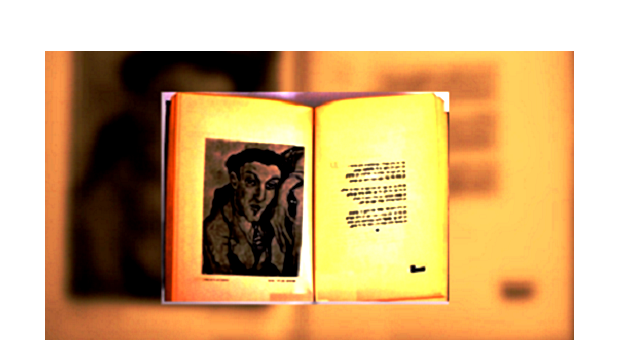
(Author: Hazel Frankel, Vol. 68, No. 1, Pesach 2013)
The Yiddish poems of Lithuanian immigrant David Fram offer significant insights into Lithuanian-South African literature of a particular Jewish immigrant’s diasporic experience. Joseph Sherman, well-known South African critic and Yiddishist, affirmed Fram’s importance, recognising him as “the eminent South African Yiddish poet”, whose “knowledge of and sensitivity to the Yiddish language are everywhere apparent, from his distinguished verse to his illuminating conversation”.1 Solomon commented that Fram was “South Africa’s finest Yiddish poet … who began in 1923 with idyllic poems of Jewish life in Lithuania”.2 For author and critic Mona Berman, he was the “poet laureate of Africa”.3 While the golden years of Yiddish are long gone, my hope is that my own research and translations will make a significant contribution to our understanding of this important writer.
David Fram was born in Ponevezh, Lithuania, in 1903. Together with many other Jewish families who lived in the Pale of Settlement4 at the start of World War I, his family was relocated to Samara, White Russia. Fram received a traditional Jewish cheder education and also studied with private tutors. He matriculated at a Russian Soviet workers’ school in 1921 and then attended the military academy in Ukmerge,5 in order to avoid conscription. There he boarded with Yudl Mark, a linguist and educator who became his tutor and mentor. In 1926, Fram spent three months in Toulouse at an agricultural college. He returned home before leaving Lithuania in 1927 to join an uncle in South Africa. His education and devotion to learning gave him the wherewithal to become a writer despite the vicissitudes of migration. He died in Johannesburg in 1988.
Fram’s Yiddish publishing debut occurred in 1923 when poems appeared in the Kveytn (‘Blossoms’), Ponevezh, Yidishe shtime (‘Yiddish Voice’) and Folksblat (‘People’s Paper’), Kovno, and Literarishe bleter and Oyfkum (‘Arrival)’, New York. In South Africa, his poems were published in Dorem Afrike,Yidishe tribune, Foroys (‘Forward’) and Ekspres, Johannesburg, and the Fri-steyter baginen (‘Free State Dawn’), Bloemfontein. His Lider un poemes (‘Songs and Poems’, 1931) was the first “published lyric collection by a recognised poet based in part on South African experiences”.6 The collection was Fram’s first step towards fulfilling his aim to “make South Africa a Yiddish literary centre”.7 It was followed by A shvalb oyfn dakh (‘A Swallow on the Roof’, 1983).
Various themes can be identified in Fram’s oeuvre, reflecting his longing for and memories of his home in Lithuania and his life in exile in the Diaspora as wandering Jew and perennial outsider. He developed a personal lexicon of imagery in landscape poems that include his responses to the local inhabitants and describe the relationship between nature and the Creator. In addition, Fram’s Holocaust poetry, by preserving the memory of his lost family and community, serve as testimony and bear witness; his poems were often personal.
Traditionalism
Fram’s commitment was to traditionalism. Like many writers after World War II who were determined to revive the language and its literature, he perpetuated his heritage by continuing to use Yiddish, the language of the historical and personal past, despite the pressures of acculturation and assimilation. By leaving Lithuania when he did, Fram disconnected himself from the upsurge in Yiddish literary creativity and the Modernist thrust of the Yung Vilne and Dikhalyastre groups. Once in Johannesburg, he became a member of the local group Unicorn, which included such South African writers such as Uys Krige and Vincent Swart. However, it would be true to say that Fram was never a part of any literary movement with a specific agenda, either international or South African, and so he may be considered rather as an individualist, a group of one.8
Thus Fram’s poetry owed much to and was enriched by his traditional background. The poem Fun tate-mames yidishe (‘From Jewish Parents’, Lider 77, 1939) was written thirteen years after he left his birthplace and is dedicated to “Di kinderlekh fun der ershter yidisher folksshul in Yohanesburg, geheylikt” (‘Dedicated to the children of the first Yiddish Folk School in Johannesburg’). In it he reflects on the importance of culture, language and tradition for the community for future generations and regrets its dissipation.
The first quatrain describes the parents as being ashamed or embarrassed by Yiddish and their alienation from yidishkeyt.9 The poet maintains an opposite stance to those Jewish immigrants who had become estranged from the old ways, “Fun tate-mames yidishe, vos hobn zikh geshemt / Mit yidish un fun yidishkeyt geven azoy farfremdt” / “From Jewish parents who were embarrassed / By Yiddish and were so estranged from yidishkeyt” (1-2). Notwithstanding their negative attitude, the poet delights in finding that a “fayer heyliker” / “holy flame” (4) continues burning for the next generation as children sing in Yiddish and enjoy the traditional dances. The use of traditional rhythm and language emphasise the overriding theme, the importance of maintaining Jewish values. In that the poem’s form, regular metre and rhythm follow those of the conventional folk ballad, they also affirm traditionalism:
Ir hot in yidish poshetn tsezungen ayer freyd,
Zikh gloybike, tsefridene in karahod gedreyt,
Un s’hot geklungen kishefdik der kindisher gezang,
Nokh vos ikh hob an elnter gebenkt vi ir fun lang….
You sang out your joy in simple Yiddish,
And faithfully in contentment twirled the circle dance,
And the childlike singing rang out enchantingly,
For which I like you had forlornly longed for ages….
As emphasised in “Az s’tsaplt zikh a heylikeyt bay yedern in brust” / “That a holiness quivers in each and every breast” (10), the children’s innocent enjoyment echoes the poet’s own longing for yidishkeyt: “Nokh vos ikh hob an elnter gebenkt vi ir fun lang” / “For which I like you have forlornly longed for ages” (8), and it emerges “oyf lipelekh bakheynt” / “on charming little lips” (11). Though deprived by their parents, “Pionern hobn oysgeleygt far aykh a heln veg” / “Pioneers have set out a bright path for you” (13), and the poet shares the children’s pleasure, “Dan hot mayn simkhe oyfgebroyzt mit ayerer tsu glaykh” / “Then my joy welled up together with yours” (15) and so “Az voyl iz mir, o kinderlekh, tsu freyen zikh mit aykh!”/”How happy I am, oh children, to rejoice along with you!” (16).
In Fram’s poem, the children’s songs give hope to the adults that the language and culture will continue. While the poem focuses on past traditions, Fram explores and expands the possibilities of poetry, breaking new ground by locating his Yiddish poems in a new locale, South Africa.
Home and Diaspora
For pre-Revolution Russian Jewry, their home was the Pale of Settlement. After Czar Alexander II’s assassination in 1882, and again after the Revolution and World War I, thousands of Jews left this homeland. Escaping persecution, they followed family and friends in the hope of better economic opportunities elsewhere. Fram was part of this chain of immigration to South Africa, which became known as the golden country, di goldene medine. However, like so many other immigrants, Fram continued to refer to Eastern Europe as home, di heym and many of his poems draw on a “rich store of memories of place … evok[ing] in some small measure the familiar environment of the old country”.10 When he wrote of home, he referred to his birthplace, Lithuania, which persisted as his muse long after he left his shtetl, and Melekh Ravitsh commented on how Fram describes “the old home in beautiful pictures because the young sentimental Fram found it difficult to part with his home, with his Lite”.11 The memory of Lithuania shaped his literary identity, affirming his recollections of home and family, intimacy and belonging, comfort, security and identity, all of which he lost when he left.
In ‘Mayn opfor’ (‘My Departure’, Lider 14), the poet’s close relationship with his family and his separation from it are embodied in the image of “Dos hemd” / “The shirt” (1), sewn for him by his devoted sister. The stitching itself provides a metaphor for their unbreakable bond, “Derken ikh ire kleyne shtekh, di forzikhtike net. / Zi hot mit shtiler hartsikeyt un benkshaft es baveyt / In lange, lange ovntn farzesn zikh biz shpet” / “I know her tiny stitches, the careful seams. / She breathed her quiet sincerity and longing into it / While sitting alone for long, long evenings until late” (2-4). This constancy of the shirt’s stitches contrasts with the rending of the fabric of his family on his departure.
The second verse of the poem describes how his mother caringly organised delicacies for his journey, “Un nokhdem hot mayn mame shtil a pekele gemakht, / Dort pomerantsn ongeleygt un tsukerlekh farpakt” / “And after that my mother quietly made a parcel / Packed with oranges and sweets” (5-6). He remembers her in intimate detail, “aza kleyninke in harbstikn farnakht / Fardayget mikh aroysbagleyt tsum breyt-tseleygtn trakt” / “such a tiny woman in the autumn evening, / As she worriedly escorted me to the stretched-out, broad road” (7-8). On the other hand, his father kept silence as “A shkie hot a blutike in hartsn zikh tsebrent” / “A bloody sunset burned in [our] hearts” (11). Stanza three emphasises the destruction and loneliness that occurred after the separation, “Un kh’hob in nakht in harbstiker farlozn zey aleyn, / Tseshnitn hot mayn shtume harts a trukn-sharfer vey” / “And in the autumn night I left them alone, / A dry, sharp pain cut through my silent heart” (13-14). This loss is emphasised in stanza four, “in vayter Afrike, iz veytogdik un shver, / Durkh benkenish gelayterter farvoglt in der fremd” / “in far off Africa, it is painful and hard / Wandering in a strange land filled with pure longing” (21-22). The poem concludes with the painful memory, “Mayn shvester hot mikh oysgeputst mit shmekedikn hemd, / Un mame hot aroysbagleyt in veg mikh mit ir trer” / “My sister dressed me up in a nice-smelling shirt, / And mother’s tear accompanied me along the way” (19-20). The shirt is the one tangible remnant of a time before “s’hot a nakht a finstere unz alemen tsesheydt” / “a dark night separated us all” (12).
The poem ‘Mayn mame hot mir tsugeshikt a kishn’ (‘My Mother Sent Me off a Cushion’, Lider 18) also describes his mother’s tenderness, in this instance demonstrated with a gift she sends him after he left her. This both reminds him of his home, “A grus a heymisher fun benkendiker Lite!” / “A home-made greeting from yearning Lithuania!” (2), and also highlights the harshness of his new circumstances, “Do in Afrike, in enger kaferite. 12 / Oy, ven zi volt epes fun dem visn!” / “Here in Africa, in the crowded concession store. / Oy, if she only had an inkling about it!” (3-4). Clearly her dreams for him have not materialised; instead “hakhnoedik, tsufridn un farlitn, / Kafers muz ikh shmutsike badinen” / “servile, content and patient, / I must serve dirty black customers” (7-8). Nevertheless, the poet feels a degree of closeness to the local customers, realising that they are “Glaykh vi oreme un leydndike brider” / “Just like poor and suffering brothers” (10). Like them, after long hours of work, he feels”farshvigener un mider” / “more silent and tired” (11), and is counting the length of time of his suffering, “Tseyl ikh ovntn tsuzamen shoyn in yorn” / “I have already counted my nights in years” (12).
In the final verse, the image of petals “fun gertener gerisn” / “torn from the gardens” (14), contrasts with that of feathers in verse one tenderly “gekhovet” / “gathered” (16) by the poet’s mother to fill the cushion. Like the flowers, he too felt torn away. The purity of white feathers also contrasts with his subsequent dirty working conditions. Finally, the poem reinforces the memory of his mother’s generosity and the beauty of his homeland, “Mayn mame hot mir tsugeshikt a kishn / Durkh vayse vintern di federn gekhovet” / “My mother sent me off a cushion / The feathers gathered during white winters” (15-16).
In both ‘Mayn opfor’ and ‘Mayn mame hot mir tsugeshikt a kishn’, a concrete object embodies the loss of the old home and advances the narrative. The poems themselves become containers like the cushion, of memories of home, of his mother’s feelings for him and his for her, of his loss of his family. Far from the hub of Yiddishism, Fram’s yearning for Lithuania and his adaptation to his new circumstances are thus embedded in his choice of imagery, highlighting the immigrant conflict between moving forward and looking back, between possibility and loss, between the acquiring of new languages and adapting to different cultural mores, and the diasporic longing to preserve the old customs, between the sense of belonging and feeling outcast.
Exile
Place plays an important role in Fram’s poetic subject matter, and his writing may be located within a diasporic-exilic dialogue. The poem ‘Ikh benk’ (‘I Yearn’, Lider 89) was written soon after Fram’s arrival in South Africa, when the pain of parting was still in the forefront of his memory. In it he describes the fields, forest and village he left behind, the people and animals going about their labours and the gathering of the crops. The repetition of the title as the first line of each verse emphasises his feelings of loss, “Ikh benk azoy mid nokh a shtikele shvartse, tsekvolene erd / Nokh harbstike regns oyf felder un blotes oyf endlozn trakt” / “I long so tiredly for a piece of black, swollen earth / For autumn rains on the fi elds and for mud on the endless road” (1-2), and “Ikh benk nokh di yidn fun velder, vi kuperne yodles farpekht, / Vos shmekn in friike reykhes fun shvomen un varemen mokh” / “I long for the Jews of the forests, pitch-dark like copper firs, / Smelling of the early scents of mushrooms and warm moss” (5-6). The poem evokes memories of the dark Lithuanian soil and the autumn gloom as the horses trudge through dense mud towards the shtetl, “Un zun kumt tsu geyn oyf a vayl vi a zeltener khoshever gast” / “And the sun visits awhile, like a rare, honoured guest” (12), and their associated emotions, the heaviness of “dorfi shn umet” / “village sadness” (4), and the exhaustion after the weekday toil so that they would “shlepn aheym zikh oyf shabes” / “drag themselves home for Sabbath” (7). Looking back, the poet remains aware of the beauty and abundance as “gibn di seder avek zeyer gob” / “orchards give up their bounty” (9) and “kelers farfult mit a vayniker gilderner last” / “cellars are fi lled with their wine-like golden store” (10).
The poet misses the familiar way of life despite the endless mud, the difficulties of “mide, tseveykte, farshpetikte, elnte ferd” / “tired, soaked, late and forlorn horses” (3), the “poyersher pratse” / “peasant toil” (4), the “shverer farmaterter vokh” / “heavy, exhausting week” (8), and the “groyer, farshvigener velt” / “grey, silent world” (16). He remains filled with nostalgia, “In teg fun farlozn di seder ikh benk azoy elntik-shtum, / Nokh yidn fun pekhike velder oyf sofl ozn, blotikn trakt” / “Now, when I have lost those orchards, I long, alone and silent, / For Jews of the pitch of the forest and the endless, muddy ways” (19-20).
Similarly, in ‘Oyf mayn dakh hot amol gesvitshert a shvalb’ (‘Once a Swallow Still Twittered on my Roof’, Shvalb 67), Fram’s memories of home are still idyllic. The central image of the ‘shvalb’, the swallow, awakens a sense of possibility and hope, the kitchen filled with the aroma of “tsufridenem broyt” / “satisfying bread” (2), the “farshikerter bez” / “intoxicated
lilac” (9), the “tishn gegreyt mit ladishes un kez” / “tables bedecked with jugs and cheese” (11), the abundance of “Fule donitses milkh” / “Full milk pails” (14) and “es tunkt zikh in gold dos farakerte feld” / “the ploughed fi elds were dipped in gold” (15). Remembering the pasture fi lled with “tsheredes shof” / “fl ocks of sheep” (17), the poet is seized by “gliklekher shlof” / “contented sleep” (19). Thus, while the swallow is still on the roof, the poet remains connected to his home. This is ironic in that, by the time this poem was written, Lithuania as Fram had known it no longer existed, its population wiped out and its shtetlach decimated. Emigration saved Fram’s life and he never returned to Lithuania, but its memory plays itself out in the poems written long after he had left.
However, as Fram began to “notice Africa, Africa began to dominate his poems … [and] he was inspired and determined to go along that path”.13 In so doing, he then became what Melech Ravitsh called the “progenitor of the Yiddish lyric in a new centre, South Africa”, his poems filled “like an African pineapple with juicy Lithuanian Yiddish speech; his Yiddish language as rich as a pomegranate”. Ultimately, Fram’s poems incorporate “two worlds … the world he brought with him and the new, wild and beautiful African world around him”,14 embracing the paradoxes of old and new, Lithuania and South Africa, often idealising both.
Landscape and its inhabitants
Fram was culturally alienated in a South African society divided by colour. Safely white, the Jewish poet empathised with the black victims of the system, his narrative poems steeped in the politics, language and customs of the local inhabitants. In addition, images of flowers and fruit, bright sun, stark African sky, mine dumps and ochre veld recur and develop into a personal iconography, fulfilling his aim to enrich Yiddish “with an entire continent”.15
The poem In an Afrikaner baginen (‘In an African Dawn’, Lider 74) opens on a joyful note with the sun as its central image, “S’iz zunik un s’iz loyter der frimorgn” / “It’s a sunny and clear early morning” (1), heightened by the line “Ekh, vos hele, shtralndike zun!” / “Oh, what a bright, radiant sun!” (2), and “A shmir, a shot, a glants fun toyznt zunen!” / “A smudge, an outpouring, a radiance of a thousand suns!” (27). Aural descriptions enhance the lyricism of Fram’s poems, for example “A klung, a shprung, a tants oyf feste gruntn” / “A ring, a jump, a dance on fi rm ground” (23). This use of short and springing rhythm endorses the high spirits in the lines, “aroysshrayen mit ale dayne glider” / “shout out with all your limbs” (39) and “zikh aleyn mit eygenem geshrey fartoybn!” / “deafens with one’s own cry!” (46). There are also other sounds, “Kvoktshet ergets-vu a leygedike hun” / “A laying hen clucks somewhere” (4), “A fokh, a patsheray, un fl igl shotndike veyen” / “A flap, a beating, shadowy wings fanning the air” (6) and in the alliteration in “Trikenen zikh shtil oyf grine lonke-lipn” / “Dry up quietly on green meadow-lips” (17), where “shpreyt zikh oyset vayt a nign” / “melody spreads far and wide” (12).
Nature’s richness also manifests in tactile images, “Fun tsarte flaterlekh, fun babelekh, fun fl ign” / “From soft butterfl ies, from beetles, from flies” (11), as well as nature’s aroma “stoygn shmekedikn hey” / “fragrant haystacks” (13) and those which refer to the sense of taste, “Oy, s’iz gut! S’iz zunik-hel. S’shmekt in vayse epel” / “Oh, it’s good! It’s sunnily bright. It tastes of white apples” (19), together with “bloyen himl-shayn” / “blue heaven-splendour” (45). The bright sunshine, the cluck of the hen, the white doves, the wind blowing and the songs spreading widely amidst the smell of the sweet hay, the green grass, and the yawning fields all hold nature’s promise, so that “s’kvelt a hele freyd in tsapldike brustn” / “ bright joy and delight well up in quivering breasts” (31). Repeated references to fruit and vegetables affi rm the land’s fertility, in “s’gist zikh on der vayn in grine troybn” / “wine pours from green grapes” (7), as the “royte kavones in feld dergeyen” / “red watermelons ripen across the fi eld” (8), and this is also emphasised in “korn baykhikn” / “ripe rye” (15), and “kupes hey, oyf shmekedike felder” / “heaps of hay, over sweet smelling fi elds” (48), and at the same time, “shiker iz di luft fun tsaytikdike peyres” / “the air is drunk with ripening fruits” (9).
Fram introduced South African words, images, language and local customs into his poetry, adapting Yiddish to the diasporic environment. Thus, in Oyf Transvaler erd (‘On Transvaal Earth’, Lider 263), local plant names are transcribed in English,16 for example, “watermelon” (36), “cactus” (64), “peaches” (76), “dahlias,” “hibiscus” (88), “eucalyptus” (93), “Christmas flowers” and “poinsettias” (140). Although he knew no English or Afrikaans, had never seen a black man before and had no knowledge of the different tribes, Xhosa, Zulu, Sotho and Shangaan, the inclusion of the words “sakebona” (hullo, 108), “Zulus” (114), “krals” 17 (mud huts, 91), and “matchekes” (blankets used as clothing, 104), and the Afrikaans words, “burishe” (like farmers, 5), “kaferl” (black child, 54), “kaferkral” (tribal hut, 55) and “pikanin” (black child, 56),18 make the poems site specifi c, heightening their atmosphere in a process of adaptation and fusion. 4
Nature and Prayer
Several of Fram’s poems connect natural phenomena with the presence of a greater Being, for example the lines in In an Afrikaner baginen, “A lid, a brumeray, a shirefarn boyre!” / “A poem, a hum, a song of praise for the Creator!” (10), as well as “Fun regn un fun toy batrifte tfi les” / “From rain and from dew spattered prayers” (16). Through “A shire, a geveyn, a loybgezang dem boyre” / “A song of praise, a lament, a hymn for the Creator” (32), nature herself seems to “Frum mispalel zayn un davenen un bentshn” / “Pray piously and worship and bless” (37-38).
In Ikh benk, nature’s bounty induces reverence in the poet, so that “Dan gloyb ikh … dan gloyb ikh mit hertser, vos gloybn emunedik-frum, / Vos zaynen mit heylike tfi les vi harbstike kelers gepakt” / “Then I believe … then I believe together with hearts that believe faithfully and piously, / Packed like autumn cellars with holy prayers” (17-18). The poet also makes specifi c reference to Shabes in “Vos shlepn aheym zikh oyfshabes durkh osyendik-vintike nekht, / Un garn nokh ruiker shalve fun shverer, farmaterter vokh” / “Who drag themselves home for Sabbath through windy autumn nights / Craving tranquillity from the heavy, exhausting week” (7-8), focusing on how, “Tsevakst dan in vareme hertser a groyser, derbarmiker Got, / Un shpreyt aza mekhtikn gloybn oyf groyer, farshvigener velt” / “And growing then in warm hearts a great, merciful God, / Spreads a mighty belief on a grey, silent world” (15-16).
The Countryside and its People
Fram’s poems Tsu di shvartse (‘To the Black Man’, Lider 19), Fun shop tsu shop (‘From Shop to Shop’, 1984), Matumba (Shvalb 85-88) and Matatulu (Shvalb 89-92) describe the experiences of rural black men in a hostile, urban environment. The poems indicaten Fram’s “liberal inclinations” and his “strong belief in human equality and brotherhood”.19 (46), and the lines “Hot keyn moyre un antloyft nisht fun mir, shvartse” / “Do not be afraid and do not run away from me, black man” (1) and “S’klemt a vey oykh vi bay aykh bay mir in hartsn” / “There is a choking pain in my heart as there is in yours” (3) indicate his desire for friendship. The poet empathises with the futility of the black man’s wanderings, his hunger and loneliness, as he describes his exotic physical difference and sculpted strength, “Ayer brust azoy geshmidt, vi fun tshugon?” / “Your breast was smelted, so like cast iron?” (12). The poet hopes to befriend him, but recognises the other’s hesitation, “Nisht dershrekt zikh far dem bleykh fun mayn gezikht” / “Do not be afraid of the paleness of my face” (2). Despite their physical differences, the two are alike as “ven emetser zol ayer layb tseshnaydn – / Oykh fun shvartser hoyt a rizl ton vet blut!” / “if someone were to cut your body – / Also from black skin blood would trickle!” (19-20). In addition, they have a similar moral outlook: “Un oykh ir farshteyt, vos shlekht iz un vos gut” / “And you too understand, what bad is and what good” (18), and there is kinship between them, “Ikh farshtey aykh, un ikh trog mit aykh tsuzamen / Ayer freyd un ayer shvaygndike payn” / “I understand you, and I carry with me like you / Your happiness and your silent pain” (5-6). Given his affinity for the black underdog, the term “shvartse” is here used descriptively, perhaps even affectionately.
Similarly Fun shop tsu shop, set in the Transvaal,20 describes the struggle of the protagonist to fi nd work, mirroring the poet’s own difficulties as a smous21 when he first arrived in Africa:
Azoy a gantsn tog – fun shop tsu shop –
Iz er arumgegangen betlendik a dzhob22 –
A shtikl arbet zol men im vu gebn.
Er iz geven yung un kreftik vi an ayzn
Un dafke hot zikh im gevolt nokh lebn.
A whole day like this, from shop to shop –
He went round begging for a job –
Hoping someone should give him a bit of work somewhere.
He was young and strong as iron
And yes, he still wanted to live.
(1-5)
The black man’s arduous efforts prove fruitless in the face of the shop-owners’ indifference, “Derlangt men mernit shtil a shokl mitn kop: / ‘Neyn, nito keyn arbet do, farshteyst? – Neyn!’ … / Un vider veys er vayter shoyn nit vu tsu geyn.” / “Giving him nothing more than a quiet shake of the head: – / ‘No, there is no work here, understand? – No!’ … / And once again he does not know where to turn” (17-19). The poem thus sets up the socio-political hierarchy, “Er hot azoy fi l gute, vayse mentshn shoyn gezen / Un keyner hot zikh iber im a hungerikn nit derbarmt / Mashmoes, keyner darf nit hobn do zayn pratse un zayn shveys.” / “He has already seen many good, white people / And no one yet has taken pity on him in his hunger, / Presumably, no one here needs his labour and his sweat” (21-23).
The man’s hunger is palpable in “s’triknt im di shpayekhts azh fun hunger in zayn moyl?” / “the saliva dries in his mouth from hunger?” (30), and so he “benkt farkhalesht nokh a bisl proste ‘mili-pap’” / “starving longs for a bit of simple mielie pap” (33). As he imagines how he would “shepn shporevdik mit alemen fun heysn blekh / Dos aynkaykln in zayne shvartse hent s’zol vern shvarts vi pekh / Un nokhdem leygn dos mit groys hanoe in zayn moyl” / “scoop up carefully from a hot tin with everyone / Rolling it in his black hands so it becomes as black as pitch / And then putting it in his mouth with great pleasure” (37-39), the reader’s mouth waters in sympathy.
Two long poems Matumba and Matatulu,23appeared in Dorem Afrike in 1953. Both tales of black men, they refl ect the political disjuncture of the times when the black population had curtailed rights, circumstances similar to those of the Jews of Lithuania. Both poems idealise country life, illustrate the ills of urbanisation, show empathy towards ordinary peasant folk similar to Fram’s grandfather and elevate them to heroic status. Matumba and Matatulu, forced to leave their kraals in search of work in the city for white employers, lose their homes, family and traditional way of life. The heroes’ naiveté and sense of alienation there, the cultural clash between traditional customs such as lobola24 and polygamy and the white man’s pass laws 25 and monogamy, ultimately contribute to misunderstanding and tragedy.
Holocaust Poems and Memory
Fram’s Holocaust poems provide a valuable aesthetic space for recording history, for bearing witness and giving testimony and for prayer. Thus, the imagery of the poem Unzere kedoyshim (‘Our Martyrs’, 1969) records the historical persecution of the Jews, specifi cally during the Holocaust. The central image is of rending a garment as a sign of mourning. By metaphorically tearing his own garment, the poet connects himself directly to the victims, the community tragedy also becoming a personal one, “Nokh aykh, ir brider mayne, hob ikh haynt gerisn krie” / “For you, my brothers, I have rent my garment today” (1) when “s’volt farbay a frume, shtralndike eyde / Fun yidn gloybike tsu Gots gebentshtn heykhl.” / “a pious, radiant congregation of faithful Jews / Were passing by [on their way] towards God’s holy temple” (6-8), that is, to their death.
An entfer der velt (‘An Answer to the World’, 1971), refers to the yellow star that the Jews were obliged to wear and to the way they were exterminated: “Ikh fi l, ikh trog oyf zikh tsurik di gele late. / Fun vaytn knoylt zikh nokh fun kalkh-oyvn der roykh” / “I feel, I wear the yellow star once again. / In the distance there still billows the smoke from the lime-kiln” (1-2). Again associating himself with the victims, the poet drives home the horror of the time when “Ven laykhtste shtrof gevezn iz: – ‘farbren im,’ / Dos iz der psak – dem henkers shvartser kol” / “When the lightest penalty was: ‘burn him,’ / That is the judgment – the hangman’s black voice” (11-12).
Dos letste kapitl26expresses the poet’s personal anger towards the perpetrators:
Di hent dayne zaynen mit blut haynt bagosn,
Dos blut vest shoyn keynmol fun zey nit farvashn,
Es hot zikh in dir dayn bizoyen farloshn
Un s’zaynen farfoylt itst mit mord dayne gasn.
Your hands today are drenched with blood,
That blood you will never be able to wash away,
Your shame became extinguished within you
And your streets are rotten now with murder.
(1984, 58-62)
Fram’s poems record a lost place and people in a shattered world, evoking the impact of the Shoah on himself and his family and the depth of personal wounds.
Fram addresses Lithuania affectionately in Dos letste kapitl as ‘Mayn Lite, mayn heymland’ (‘My Lithuania, my homeland’, 51). He recalls a time when the land was “bagosn mit fl amen / Fun gilderner hits un fun gilderner shefe / Un breyt hot di erd ire orems tseefnt” / “flooded with flames / Of golden heat and gilded abundance / And then the earth spread her arms wide” (4-6). The use of personifi cation intensifi es the country’s abundance as she embraces her Jewish children, “Azoy vi a mame” / “like a mother” (7). However, the pastures then become killing fi elds as the mother turns murderess and the love-song becomes a dirge,
Mayn Lite, mayn heymland, vi ken ikh dos gloybn,
Az du host di yidn bay zikh dort geshokhtn,
Du host zey dervorgn,
Mit dayne farblutikte negl atsinder,
Du host zey dershtikt – dayne eygene kinder!
My Lithuania, my homeland, how can I believe it,
That you slaughtered the Jews there in your midst,
You strangled them,Now with your bloody fingers,
You choked them – your own children!
(51-55)
Ultimately, all that is left are the “meysim, harugim un kupes mit beyner” / “murdered, the dead and piles of bones” (49), and “A yomer fun kreyen vos pikn di beyner” / “A lamentation of crows that pick the bones” (47). The poet himself then wants to take “Nekome far alte farpaynikte zeydes, / Far gantse fartilikte yidishe eydes” / “Revenge for old tortured grandfathers, / For entire annihilated Jewish communities” (85-86), and he considers his weapon:
Nor ven kh’volt itst kenen a meser a sharf ton,
A sharf ton a meser azoy vi a britve,
Volt ikh dayne merder, mayn yidishe Litve,
Di gorgls tseshnitn mit heyser nekome.
But if I could now sharpen a knife,
Sharpen a knife like a razor,
I would cut the throats of your murderers,
My Jewish Lithuania, in burning revenge.
(78-81)
The poem also bears witness for the annihilated men and women, grandmothers and grandfathers, brides, grooms and children unable to testify for themselves,
Oy vey iz mir, Lite – ot zaynen, ot lign –
Azoy fi l harugim: – mayn khaver, mayn bester,
Mayn shokhn, mayn korev, mayn eynstike shvester.
Oh woe is me, Lithuania – here they are, here lie –
So many slaughtered: – my friend, my best friend,
My neighbour, my relative, my only sister.
(74-76)
Fram’s An entfer der velt offers testament to the suffering of the whole of Jewish people and of his parents, where “s’hot zayn letstn Shma Yisroel oysgelebt mayn tate, / Vu s’hot mayn mame oysgehoykht ir letstn hoykh” / “my father lived out his last Shma Yisroel, / my mother breathed her last breath of air” (3-4), and “Vu brider zaynen tsu dem toyt farlitene gegangen, / Vu oyfhelekh geshtelt hobn in vakl zeyer shtiln trot”/ “Where brothers went to their deaths with resignation, / Where infants trod their quiet shaky steps” (5-6), as they “Hot men keseyder unz geharget un gevorgn? – / Vos greser s’iz der mord – alts freylekher iz zey.” / “They constantly killed and choked us? – / The greater the killing – the happier they are” (13-1.
In addition, the poem lists the cities that were destroyed:
Azoy zaynen gegangn yidn tsu dem shayter –
Fun Varshe un Pariz, fun Kovne un fun Bon.
Milyonen hobn zikh getsoygn vayter, vayter
Tsum shvartsn eshafot … oy, gantse zeks milyon!
Thus did the Jews go to the pyre –
From Warsaw and Paris, from Kovne and from Bonn.
Millions were drawn further, further
To black execution scaffolds … oh, a whole six million!
(17-20)
Fram’s poetic texts give voice to those who were silenced, functioning as testimony as well as literature. These Holocaust poems evoke Fram’s personal responses to the fate of a silenced people, going some way to resisting the historical amnesia of the Lithuanian Holocaust.
Poetry and Prayer
Fram’s poem Lesterung decries the way his Jewish compatriots were doomed despite their belief in God and describes his own loss of belief as a result:
Ikh hob mayn altn Got in hartsn merer nisht getrogn,
Un kh’hob zikh keyn al-kheyt fartsitert nisht geshlogn,
…
Hob ikh shoyn merer nisht gezogt ma toyvu ohalekho….
I no longer carried my old God in my heart,
I no longer in trepidation said al-kheyt
…
I no longer said ma toyvu ohalekho….
(35-36, 39)
He also gives up donning tfilin:27
In tfilin-zekl hobn lang gefoylt shoyn mayne tfi lin!
Es hot zikh der shel-rosh badekt dort mit a grinem shiml,
Un s’iz mayn talis heyliker farshemt geblibn lign.
My tfi lin have long been rotting in my tfi lin bag!
And the shel-rosh has become covered with a green mildew,
And my holy talis lay shamefully unused.
(42-44)
As he battles with these confl icts, he confronts his shame at having abandoned these rituals, whereas the victims were murdered for their beliefs. He addresses God directly, expressing his disillusionment and bitterness in “Hostu aleyn zey gor gefi rt tsu shekhtn in Treblinke” / “You yourself took them to be slaughtered in Treblinka” (70), and accuses him outright in, “Derfar hostu di gaz-oyvns farfult mit mayne brider, / Un hostu dem gzar aroysgelozt – dayn stade tsu farbrenen?”/ “Therefore you loaded the gas ovens with my brothers, /And pronounced your decree – to burn your fl ock?”(77-78). The reference to the Jewish people as His ‘flock’ is in keeping with the poet’s pastoral Lithuanian background, and echoes the psalms of the Shepherd and his shepherd, David, contrasting with the reference to the extermination camp.
In Dos letste kapitl, the lists of personal artifacts memorialise individuals and intensify the build up of anguish at their annihilation,
A shleyer ikh ze fun a yidishe kale,
Ot ze ikh a shtrayml, a yidishe hitl,
Un ot iz a vayser, a heyliker kitl.
Ot valgert zikh elnt a zilberner bekher
Fun velkhn mayn tate gemakht hot nokh kidesh …
A veil I see of a Jewish bride,
Here I see a fur hat, a Jewish hat,
And here is a white, a holy kitl.28
Here lies in desolation a silver goblet
With which my father still made Kidush…
(69-73)
The clothing and jewellery also become symbols of their owners,
Ot trogstu di hemder fun unzere zeydes,
Vos oysgeton hostu fun zeyere layber.
Ot trogn mit khutspe atsind dayne vayber,
Di tsirungen fun mayn gehargeter bobn,
Vos unter mayn shvel du host tsinish bagrobn.
Here you wear the shirts of our grandfathers,
Which you stripped from their bodies.
Here your wives wear now with impertinence,
The jewelry of my murdered grandmother,
That you cynically buried at my lintel.
(61-66)
The poem ends with the crematorium:
Oy, Got, ot hostu shoyn gezen, vi iz avek tsuzamen
Tsum shayter-hoyfn nokhamol dayn gantser groyser kool,
Un zikh gelozn far dayn shem fartsukn fun di fl amen –
Fun vanent s’hot aroysgeshpart der letster Shma Yisroel …
Alas, God, now you have seen, how together they have gone
To the pyre-mounds once again your whole great community,
And they let themselves be gobbled up by the flames for the sake of your name –
From where was sighed the final Shma Yisroel …
(79-82)
The poem may be likened to the kadish, intoned at the graveside and on the yortsayt, providing a fi tting memorial for the dead as a tombstone would. This is particularly poignant, given that this was denied those buried in mass graves or incinerated.
Fram’s poems provide a place for the poet to invoke his God and to address religious and spiritual concerns about matters of life and death. They offer lines of continuity to the ruins, recording a personal response to history, enabling the imaginative reconstruction of past events and reassembling the shards of the Shoah, of a lost culture, the once-vibrant Jewish community in Eastern Europe.
Fram’s Life and his Poems
Fram’s journeys between Lithuania, Russia, France, South Africa, England and Rhodesia epitomise those of the wandering Jew, and the resulting loss of his family and home influenced the content of his poems. Thus the poem Mayn opfor is subjective, self-reflective, introspective and emotional. Given the detailed references to his sister sewing the shirt for him, his mother packing sweetmeats and his father waving goodbye, the ‘I’ of the poem may be inferred to be the poet himself. Similarly, Mayn mame hot mir tsugeshikt a kishn may also be read as an evocation of the poet’s experience of immigration, the cushion and poem both serving as containers for his personal journey: Fram did not return to Lithuania and never again enjoyed such times of family togetherness.
In addition, in that Fram’s own family became victims of history, his Holocaust poems may also be read as autobiographical. In 1942 his mother, Shifre Mine, father Yoysef Ber and sister Ester who had remained in Lithuania were murdered in the Ponevezh death camp,29 as were many members of his extended family. Knowledge of these facts offer the reader additional insights into Fram’s life and poems.
Fram’s continuing connection with his mother tongue and homeland perpetuates links between Lithuania and the South African Diaspora, mingling his feelings of attachment to what he left behind with his responses to Africa, providing greater understanding of a particular Jewish immigrant’s Diasporic experience. For Fram, Yiddish remained a linguistic homeland where he could recover and reconstruct the world of the shtetl, emblematic of resistance to its destruction. Although not one of its eleven official languages, its poetry also contributes to a deeper understanding of South African culture. In addition, ours is the last generation that will be able to speak to or see survivors of the Shoah in the fl esh. Seeking “balm for the heart”,30 Fram’s poetry offers an important vehicle for preservation, bearing witness and offering testimony, going some way to resist historical amnesia of a lost world. Rather than remaining silent, Fram attached metaphor to memory to commemorate a lost community.
Dr Hazel Frankel is a Johannesburg-based novelist, poet and educator. The South African Yiddish poet David Fram was the subject of her recently completed PhD thesis.
NOTES
- Sherman, J (ed), From a Land Far Off: South African Yiddish Stories, Cape Town: Jewish Publications, 1987, p14
- Liptzin, S, The Maturing of Yiddish Literature, New York: Jonathan David, 1970, p251
- Email communication, 10/7/2010.
- The frontier area between the German and Russian Empires designated by the Czar for the Jews of Russia, where they suffered forced removals, pogroms and prejudice, antisemitism and genocide.
- Wilkomir.
- Liptzin, p251
- Ibid.
- Email correspondence with Kenneth Moss, Associate Professor of Jewish Studies at Johns Hopkins, 6/7/2010.
- Yidishkeyt in the religious sense means “Jewish learning, observance, mitsves, kashres, shul, but in the worldly sense it means secular Jewish nationalism” (Cedrick Ginsberg, e-mail 23/9/ 2011).
- Langfi eld quoted in Cesarini, D., T. Kushner & M. Shain, eds. Place and Displacement in Jewish History and Memory. London: Vallentine Mitchell, 2009, p2.
- Ravitsh, M, ‘Dovid Fram un zayne lider’ (‘David Fram and his Songs’), Literarishe Bleter, 4/11/1932, p 403.
- ‘Kaffi r eating houses’ (eating-place for black workers) established by concession on mine property during the gold industry’s boom period. Numerous fi ctional accounts describe the lives of white, Yiddish-speaking immigrants employed there. This was often the only employment they could get. It was badly paid and conditions were poor.
- Ravitsh, p403.
- Ibid.
- Sherman, J, ‘Singing with the Silence: The Poetry of David Fram’ in Jewish Affairs. Sept.-Oct. 1988.
- To distinguish the use of these English names, the poet places them in scare quotes.
- Foreign words incorporated by Fram in his poems have been spelt differently in the transliterations and translations, according to language rules.
- These pejorative epithets were regarded as acceptable at the time, examples also occurring in the stories of H. Ehrlich and R. Feldman, and many immigrant writers showed sympathy to the underdog, congruent with their personal experience of racial persecution.
- Davis, B, ‘David Fram, Yiddish Poet.’ The Jewish Quarterly, Winter 1988, pp45-49.
- This was a separate province in South Africa, now incorporating the provinces of Gauteng, Limpopo, Mpumalanga and North-West Province.
- Itinerant peddler; traveling salesman.
- English words have been transliterated in Yiddish.
- The version of Matatulu in Dorem Afrike is 225 lines in length. When it appeared in FA shvalb oyfn dakh (1983), 88 lines were cut. I have transliterated and translated the longer version as it includes references to the pass laws which are pertinent to my discussion.
- Customary bride price amongst Zulu, Xhosa and Ndebele tribes.
- ‘Pass’ (dompas). The document every black person was required by law to carry at all times.
- The original 68-page version appeared in pamphlet form. Fram made repeated alterations to it, and these handwritten and typed drafts and versions can be seen in his archives at the University of Texas, Austin. Leftwich translated it in rhyming couplets in the style of the original, but Fram only permitted him to print a short extract in The Golden Peacock (631-632), where it appeared under the title of ‘The Slaughter in Lithuania.’ Fram’s personal copy of this unpublished translation is noted as being in the library of the University of the Witwatersrand, but could not be located. A second translation of part of the poem by Barry Davis, appears in Sherman’s article ‘Singing in the Silence’. My own translation is of the Yiddish extract that appeared in Dorem Afrike (Jan.-Mar.1984 12) and is the one referred to here.
- Phylacteries.
- White garment in which a deceased Jew is buried; also worn by many religious Jews on Yom Kippur.
- Yad Vashem testimony documents (6332599, 6332600, 6332601), submitted by Fram’s nephew.
- Sherman, J, ‘David Fram Centenary Tribute’, http://shakti.trincoll.edu/~mendele/tmr/tmr08001.htm. 1-17, 2004.
[/vc_column_text][/vc_column][/vc_row]


