
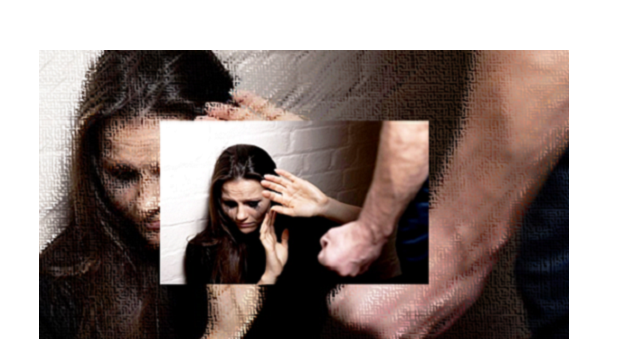
(Author: Matthew Liebenberg, Vol. 68, No. 2, Rosh Hashanah 2013)
The following is a short treatment of a sensitive and painful issue, that of domestic abuse and violence. It is an issue that, unfortunately, the Jewish community has had to confront more and more in the modern era. There remains a pervasive belief that domestic abuse simply does not happen in Jewish homes. When reports of abuse do surface, such cases are viewed as aberrations. There is also great shame associated with a family in which abuse has occurred, which might prevent victims from seeking help. Very often the lay or religious leaders that are made aware of abuse are incapable of handling the situation and may even give advice that exacerbates the problem, such as telling the victim to mollify her (or occasionally, his) spouse.
The inability of some Jewish communities to acknowledge the problem or the fact that in some instances abuse has been ‘covered up’ has led many to believe that Judaism sanctions domestic abuse. However, nothing could be further from the truth. Jewish law and philosophy is unambiguous on the matter: abuse is simply unacceptable and is antithetical to the way in which Jews are meant to live their lives.
Rabbi Dr. Abraham J. Twerski, a leading US rabbinical figure and psychiatrist who founded the Gateway Rehabilitation Centre, has written a ground-breaking book on this subject, entitled The Shame Borne in Silence: Spouse Abuse in the Jewish Community1. I consider this book to be the definitive work on the subject by a religious Jew and much of what follows is dealt with by Rabbi Twerski. The Chief Rabbi of South Africa, Rabbi Dr Warren Goldstein, deals with this issue in his book Defending the Human Spirit: Jewish Law’s Vision for a Moral Society2, albeit focusing on the specific matter of marital rape. I refer my colleagues, as well as clergy from other religions, to these two outstanding works, where they can find many excellent sources on the matter.
Although spousal abuse can and does happen in both directions, it seems to be more prevalent for the husband to be the abuser and the wife the victim. Thus, for the purposes of this article I will speak of the abuser as ‘him’ and the victim as ‘her’, but the opposite can be true.
What Jewish Law says about spousal abuse
The tone of the relationship between husband and wife may be summarized by the Talmudic dictum3 that a husband “should love his wife as much as he does himself and should respect her even more than he respects himself.” A husband who seeks to obey this rule could not possibly commit either physical or emotional abuse. Furthermore, as pointed out by the 13th Century Talmudist Ravad4, inasmuch as Eve was fashioned out of Adam, a husband must consider his wife an integral part of himself, and care for and protect her as he would any other part of his body. This is similar to the Talmudic observation5 that if a person were to feel pain because his left hand was injured, he would hardly strike it with his right hand to avenge the pain it caused him.
Domestic abuse has several manifestations6. Physical abuse consists of any physical force or intimidation towards another person, such as pushing, hitting, holding down, slapping or scratching. Emotional abuse takes the form of cursing, blaming, threatening and manipulation. It includes humiliation and deprivation as well as verbal insults that affect a woman’s self-esteem. Sexual abuse may occur between a married couple in the form of marital rape. Many women fail to identify the problem, as they tend to think that it is the husband’s right to have relations whenever he wants. Economic abuse is where a woman is totally dependent on the husband for money and finances are used as a form of control or as a means of threatening her.
Jewish tradition addresses all of these areas.
The Torah speaks about several forms of abuse including: financial7, verbal or emotional8 and physical abuse/violence9. Abuse and violence are forbidden by Jewish law against anyone, including one’s spouse and children.
The Talmud10, in a lengthy discussion on the topic of verbal abuse, states: “A man must always be exceedingly careful not to hurt his wife with words, for she [i.e. women] are emotionally sensitive and are easily moved to tears.” As an example we find that the Sages11 criticize the patriarch Jacob’s response to his wife, Rachel, when the latter said to him12 “Give me children – otherwise I am dead!”, to which Jacob replies, “Am I instead of G-d who has withheld from you fruit of the womb?’ He should have been more sensitive to her pain and prayed to G-d that she conceive in the same way his father Isaac had prayed that Rebecca should conceive. Rambam (Maimonides), the great codifier of Jewish Law13, writes: “a husband must speak gently to his wife, and should neither be tense nor short-tempered.” One of the Talmudic Sages14 declared: “A man must be most meticulous in giving proper respect to his wife, because the blessing of the household is by virtue of the wife.”
Regarding physical abuse, there are many explicit sources. The 13th Century ethicist Rabbeinu Yona of Gerona states that a Jew who assaults his fellow transgresses two scriptural prohibitions and that “many transgress these prohibitions by hitting their wives”.15 The Code of Jewish Law16 is unambiguous in its condemnation of wife beating: “It is a sin for a man to beat his wife, and if he does this habitually the courts can punish, excommunicate and whip him and apply all measures of force until he takes an oath never to do so again. If he violates this oath he may be compelled to divorce her.” A great Medieval authority on Jewish Law writes,17 “…as with another person whom one is commanded not to beat…even more so with one’s wife, whom one is obliged to honour more than one’s own self.” Furthermore, a husband who injures his wife even inadvertently is liable for damages in accordance with the principle that a person is always responsible for his actions and must pay for accidental injury18.
Regarding sexual abuse, the Talmud19 and Codes20 proscribe sexual intercourse when one’s spouse is asleep, when either of the couple are drunk or not on good terms with the other and most certainly when one’s wife does not consent to the intercourse or consents due to fear. Thus, marital rape has always been forbidden under Jewish Law long before most Western legal systems recognised such behaviour as criminal. Furthermore, depriving a woman of her conjugal rights is also a form of abuse and is forbidden.21
The financial relationship between husband and wife is the subject of an entire tractate in the Talmud called Ketubot. Judaism was perhaps the first religion or legal system to require every husband to provide his wife with financial protection in the event of divorce or his death. To this day, no Jewish wedding may be solemnised until such time as a valid ketubah (marriage contract) has been finalised. Today the ketubahis largely ritualistic in nature and Jewish couples will also enter into a civil ante-nuptial contract. The Torah also requires the husband to take care of his wife’s physical needs for the duration of the marriage22. A woman may bring her own estate into the marriage and although her husband may derive benefit from the ‘fruits’ (e.g. the rent of a building) he may not alienate the capital. The Talmud23 prescribes the proper attitude a husband should have vis-à-vis his financial responsibilities to his wife: “A person should always eat and drink less than which is within his means and should clothe himself in accordance with his means. He should honour his wife and children beyond his means for they are dependent upon him, and he is dependent upon the One who commanded and the world came into being.” In other words, a man should do without when it comes to the honour of his wife and family, and if this means that he will dress below his level, so be it. This includes providing his wife with fine clothing and jewelry24. A Jewish wife is fully entitled to work and is actually encouraged to do so even if she is wealthy25 since “idleness leads to immorality.” A husband who forbids his wife from working is also engaging in a form of abuse, as is a husband who refuses to allow his wife her own banking account or credit cards.
Misinterpreted Sources
As should be clear from the above, Judaism is unequivocal in its condemnation of spouse abuse. Nevertheless, there are some Talmudic statements/concepts that might be misinterpreted or taken out of context and used by some abusive husbands to ‘justify’ their behaviour:
A kosher (decent) woman is one who complies with her husband’s will.26
It should be immediately apparent that this Midrashic statement must have limitations. For example, if a husband were to tell his wife to cook on the Sabbath, she would certainly not be permitted to do so. Doing the will of a husband may not be used to violate any Torah commandment, nor may it be used to violate any Torah ethic. We have already noted the high standards provided by the Torah for respecting one’s wife and that the husband is cautioned to assiduously avoid upsetting or irritating her. The statement of “doing the will of the husband” may therefore not be used as a way to violate the Torah requirement for respect of the wife.
The principle “The ways of Torah are pleasant”27 is applied in the Talmud28 to rule out practices that would be incompatible with this principle. Tyranny in the household is abominable, and would in no way be condoned by the Torah. But what then is the meaning of the phrase? Here, the context is most important. The Midrash is discussing the heroism of Yael, the wife of Hever, who saved Israel in a crucial battle by killing the enemy general, Sisera. Scripture tells how she lured Sisera into her tent, gave him milk which caused him to become drowsy, and when he fell asleep, drove a tent peg into his head. It is upon this episode that the Midrash describes Yael as a decent woman who did the bidding of her husband. What is the relevance of this statement to Yael? The commentary Meam Loez states that Hever had a peace agreement with Sisera. If so, then Yael’s action was a clear defiance of her husband’s will rather than compliance! Yael’s heroism consisted of taking the necessary action to save Israel, even though she could have chosen to remain neutral because of her husband’s pact with Sisera. She could have remained within her tent and minded her own business. However, Yael understood that the pact was nullified by Sisera when he went to war against Israel, and that the will of her husband was really that she should destroy Sisera if she had the opportunity. It was for this reason and in this context that Yael was praised for understanding what Hever would have wanted.
At any rate, the phrase “A kosher woman is one who abides by her husband’s will” is not to be distorted to support tyranny. Exploiting this phrase to justify physical, sexual, or emotional abuse is a gross violation of Torah.
You will desire your husband and he will rule over you.29
This statement in Genesis follows the sin of Eve and Adam and is directed at Eve and her female descendants. Rabbi Goldstein30 discusses the meaning of this phrase in detail: “Jewish Law’s understanding of the prevailing reality of the world (i.e. the sexual and general oppression of women) is rooted in the Biblical curse addressed to Eve and to all womenkind: ‘You will desire your husband and he will rule over you.’ This curse has affected the course of history, and Jewish Law seeks to soften and mitigate the curse’s harsh effects [my emphasis] because it sees the curse as a reality entrenched in nature. This forms part of Jewish Law’s philosophy, in which man is called upon by God to partner Him in overcoming the natural realities that God Himself put into the world31. Thus, the Talmud32 interprets the verse in a sexual sense by saying that it refers to the marital sexual relationship. It sees in this verse the root of the sexual subjugation of women in specific terms of a woman desiring her husband sexually and it being inappropriate to verbally request sexual intercourse. The Talmud therefore links the historical oppression of women directly to sexuality, and in so doing demonstrates Jewish Law’s concern for women’s sexual vulnerability to men. The Ramban expands on this and explains that the root of women’s historical subordination and vulnerability to men is sexual desire. Men have always exercised control over the sexual relationship between themselves and women. He writes that men’s dominance of the sexual relationship led to the enslavement of women and was the fulfilment of the curse in the above verse.
Accordingly, the Torah is not granting licence to a husband to dominate his wife, but is instead stating a curse that mankind must endeavour to mitigate. The very fact that, according to Jewish Law, it is a husband’s obligation to satisfy his wife sexually should be proof enough that Judaism frowns upon men who abuse their natural tendency to dominate in this area33.
Shalom Bayit (peace in the home)
Rabbi Twerski writes34:
There are those who invoke the principle of shalom bayis to justify a wife’s resigning herself to abuse. This reminds me of the visitor to Soviet Russia who was told that the Soviets had already achieved the millennium, and was shown a lion and a lamb living harmoniously in the same cage. “Amazing,” he said, “How is that possible?” “Simple”, the guide replies, “Twice a day we give him a fresh lamb”. Yes, a wife may preserve peace in the household by silently accepting the control, nay, the tyranny of a power-crazed husband. This is hardly what the Torah wants. The Torah condemns human sacrifice. The Talmud35 cites the verse in Jeremiah:36 “I did not command it and I did not wish it,” to refer to the daughter of Jephtha37, and to the near-sacrifice of Isaac. The latter was meant to test the devotion of Abraham, but was not permitted to go on to actual sacrifice. To say that the Torah advocates a woman sacrificing herself to tolerate lifelong abuse is unconscionable. Shalom bayis is indeed a sacred concept, but it is the responsibility of both husband and wife to see that this is achieved. It is a mistake to think that the entire responsibility for shalom bayis rests on the shoulders of the wife.
Conclusion
In Rabbi Twerski’s view38, rabbis or others in leadership positions who turn a blind eye to abuse are transgressing the prohibition, “Do not stand idly by while your neighbour’s blood is being spilled”.39 The Talmud40 interprets this to mean that one has an obligation to divert harm from coming to another person. It further states41that “anyone who has the ability to correct a situation and is derelict in doing so, bears the responsibility for whatever results therefrom.” Writes Rabbi Twerski:
There will be those who will say that such subjects should not be aired publicly, and that [it is] a chilul Hashem, a disgrace to the sanctity of Judaism, to even imply that Jewish husbands can be wife batterers. I understand that position, but if I must choose between being reprimanded by those who believe that this problem should be concealed or by a wife who has suffered (along with her children) from an abusive husband, and could not receive help because no one believed her, I know where I must make my choice. Battered wives have often turned to their parents or to their spiritual leaders for help. Very often they have been told to avoid disrupting the family unit, to preserve shalom bayis (peace in the home), and that things will work out. Parents and rabbis are good and considerate people. They mean well, but they may have no way of knowing that their advice is wrong and could be deadly.
It is the responsibility of religious leaders to put an end to abuse, to assist victims and to address this issue so that abuse is stopped before it even begins.
Matthew Liebenberg is Rabbi of the Claremont Wynberg Hebrew Congregation in Cape Town.
Notes
- Mirkov Publications, 1996
- Feldheim Publishers, 2006, see chapter
- : Oppression of Women3 Yevamot 62b
- Introduction to the book Baalei Hanefesh
- Jerusalem Talmud, Nedarim 9:3
- Jewish Life, issue 46 “Flowers Aren’t Enough” by Chandrea Serebro
- Leviticus 25:14, as explained by the Talmud Bava Metzia 58b and Torat Cohanim chapter 3:4
- Leviticus 25:17, as explained by the Talmud Bava Metzia 58b and Torat Cohanim chapter 4:1
- Deuteronomy 25:3
- Bava Metzia 59a
- Bereishit Rabba 71:7
- Genesis 30:1-2
- Mishna Torah, Hilchot Ishut 15:19
- Bava Metzia 59a
- Shaarei Teshuvah 3:77
- Even HaEzer 154:3 in the gloss
- Rabbi Mordechai ben Hillel, in Ketubot 185
- Code of Jewish Law, Choshen Mishpat 421:12. The actual wording is where he harms her during sexual intercourse.
- Nedarim 20b and Eruvin 100b
- Rambam, Hilchot Ishut 15:17 and Code of Jewish Law OrachChaim 240:3
- See Code of Jewish Law, Even HaEzer 76:11 and Rambam, Hilchot Ishut 14:7. See also Rabbi Goldstein, Defendingthe Human Spirit, pp182-91
- Exodus 21:10 as explained by the Talmud Ketubot 47b
- Chullin 84b
- Commentary of Maharsha ad loc and Rashi to Sanhedrin76b
- Mishna Ketubot 5:5 according to Rabbi Eliezer
- Midrash, Judges, Chapter 5. For a full discussion, see Twerski, The Shame Borne in Silence pp62-4.
- Proverbs 3:17
- Sukka 32a and Yevamos 15a
- Genesis 3:16
- Goldstein, pp178-180
- Talmud Shabbat 10a; Sefer HaChinuch # 2
- Yevamot 62b and Eiruvin 100b
- For a full discussion of Judaism’s view regarding Conjugal Rights see Chief Rabbi Goldstein’s Defending The Human Spirit- Jewish Law’s Vision For A Moral Society, pages 182-191
- The Shame Borne in Silence, pp 66-70
- Ta’anit 4a
- 19:5
- Judges 11:30-40
- Twerski, p3
- Leviticus 19:16
- Sanhedrin 73a
- Shabbat 54b
[/vc_column_text][/vc_column][/vc_row]


