
(Author: Mona Berman, Vol. 64, #1, Pesach 2009)
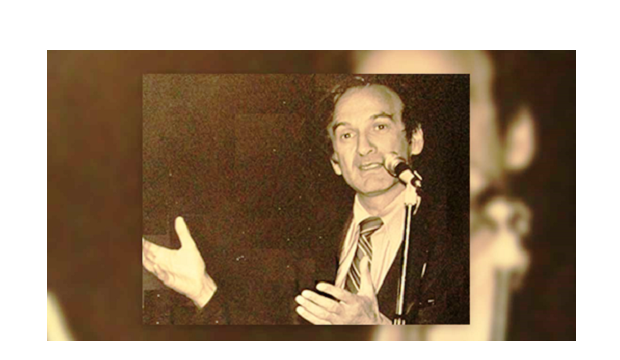
On 26-8 October 2008, the Elie Wiesel Center for Judaic Studies at Boston University hosted an international conference to celebrate Elie Wiesel’s 80th birthday. Over three days the participants reviewed all the major areas of Wiesel’s life work. As one scholar succinctly put it, “His legacy has been his life and his life has been his legacy”.
It was a great moment in this writer’s own life. I have studied, admired and written extensively on the work of Wiesel for over thirty years, have read almost everything he’s written, and also having followed the many scholars and commentators on his work.1 Most of the latter were also in attendance.
Critical consideration was given at the conference to Wiesel’s writings on subjects ranging from the Bible and Hasidism to the Holocaust and the State of Israel, as well as to his human rights efforts on behalf of oppressed people throughout the world. On the cover of the programme were the words which have become synonymous with his teaching: “There may be times when we are powerless to prevent injustice, but there must never be a time when we fail to protest.”
In 1986, Wiesel was awarded the Nobel Peace Prize and dedicated it to his fellow survivors who “have tried to do something with their memory, with their silence, with their life … they have given an example to humankind not to succumb to despair.” With the prize money he established “The Elie and Marion Wiesel Foundation” to advance the cause of human rights and peace throughout the world by organizing conferences and symposiums to bring out awareness of injustices and hate. Few Nobel Prize winners have achieved as much acclaim, worked as tirelessly and inspired so many people throughout the world with their moral vision.
9 a.m. on Sunday, 27 October, found me sitting in the auditorium of the Law School at Boston University for the first of the ten three-hour sessions that would be held for the duration of the conference. Looking around, I recognized many familiar faces. Many of the speakers had written important texts on the Shoah, which are prominently displayed on my book shelves. Over the years I was fortunate enough to have met other academics who were scheduled to speak on their particular fields of expertise. The reputation of these Jewish and non-Jewish scholars was formidable, but when the unmistakable and charismatic figure of Elie Wiesel finally appeared in the hall to a well-deserved standing ovation I knew that this event would be unforgettable. He looked slightly older, a little greyer and had a few more lines on his distinguished face. He smiled, nodded modestly to the gathering, and sat down quietly in his seat.
In his welcoming message, Boston University President Robert Brown expressed his gratitude to Wiesel for enhancing the reputation of the University during the three decades he has been the Andrew W. Mellon Professor of Humanities and Professor of Judaic and Holocaust Studies, a department that was established specifically for him. He observed that Boston University was usually a quiet studious place until Wiesel gave a public lecture, at which time10001500 students would suddenly descend on the University and crowd into the auditorium to listen.
“Once they are inside and he is introduced, it is silent. He does not need to move about, he sits at a desk – calm – he is a writer and teacher and there is an incredible impact. He teaches and writes what he has witnessed. The students who take his classes learn ethics, religion, fiction, compassion and how to stay in touch for a lifetime” Brown told the audience.
In the first session, Biblical and Talmudic Themes, Everett Fox (Clark University) spoke on the topic ‘Elie Wiesel as Interpreter of Biblical Narratives’, explaining how Wiesel, a born story teller, was able to flesh out Biblical texts and transform them into contemporary narratives. A more personal account was given by Reuven Kimelman in his paper ‘Wiesel and the Tales of the Rabbis’, in which he recalled the time when he and Wiesel sat together in Professor Saul Lieberman’s Talmud classes. The intricacies of Talmud and the study of Torah had taught them that study was a remedy for evil while prayer was a remedy for misfortune. For Wiesel, obsessed with truth and detail, Talmud was the song of his teacher, who made the past present. According to Rabbi Joseph Polak, it was Wiesel who awakened Torah study in the United States. This idea was corroborated by David Weiss Halivini, who illustrated various aspects of Wiesel’s vast knowledge of Biblical and Talmudic texts and explained his invaluable contribution to Aggada.
The afternoon session on Hasidism was introduced by Steven T. Katz, director of the Center for Judaic Studies at Boston and the organizer of the three day conference. He spoke with passion about ‘Elie Wiesel as a Contemporary Interpreter of Hasidism’ and described his relentless search for truth and authenticity, his portrayal of mysticism, his love of the Baal Shem Tov, his study of Kabala, and his conviction that “the just man can influence God”.
Arthur Green, a dynamic orator and authority on Hasidism, placed Wiesel firmly in the Neo-Hasidic context and reminded the audience that it was Wiesel who had been the first teller of Hasidic tales after the war. He explained that his existential struggle in post-war France was very different to Martin Buber’s personal struggle. Wiesel impacted on Karlebach and Schechter and was highly influential in the USA. Wiesel never sought that role but in his re-creation of Hasidism he took the lead in healing the wound and “letting us be”. He brought back the joy in Yiddishkeit and was directly responsible for exposing the plight of Soviet Jewry who lived in a society pervaded by insidious fear. He was responsible for making sure that their freedom became the responsibility of every Jew.
In the same session Nehemia Polen, a former student of Elie Wiesel and the Professor of Jewish Thought at the Massachusets Hebrew College, spoke about ‘The Hasidic Tale and the Recovery of Sacred Space in the Life and Work of Elie Wiesel’. She discussed one of my favorite, and one of the most enigmatic works, of Wiesel’s early fiction, ‘The Gates of the Forest’, and retold one of the best known and loved Hasidic stories:
When the great Israel Baal Shem Tov saw misfortune threatening the Jews, it was his custom to go into a certain part of the forest to meditate. There he would light a fire, say a special prayer, and the miracle would be accomplished and the misfortune averted.
Later, when his disciple, the celebrated Maggid of Mezeritch, had occasion, for the same reason, to intercede with heaven, he would go to the same place in the forest and say: “Master of the Universe, listen! I do not know how to light the fire, but I am still able to say the prayer”. And again the miracle would be accomplished. Still later, Moshe-Leib of Sassov, in order to save his people once more, would go into the forest and say: “I do not know the prayer, but I know the place and this must be sufficient”. And it was sufficient.
Then it fell to Israel of Rizhin to overcome misfortune. Sitting in his armchair, his head in his hands, he spoke to God: “I am unable to light the fire and I do not know the prayer; I cannot even find the place in the forest. All I can do is tell the story, and this must be sufficient”. And it was sufficient.
Gershon Greenberg, Professor of Philosophy and Religion at the American University in Washington DC, explained the phenomenon of “Elie Wiesel and Hasidut through the Holocaust: of Kotzk and Lubavitch”. Whenever Wiesel refers to Mendel of Kotzk he concludes that among the thousands of Hasidic leaders, great and small, from the Baal Shem’s time to the Holocaust, he is undeniably the most disconcerting, mysterious and tragic figure of all. The last speaker of the session, Pinchas Geller from the American Jewish University in Los Angeles, spoke about ‘Elie Wiesel in Context’, explaining that after Auschwitz everything changed: Talmudic studies, Torah, Mishna, Hasidic Tales and Gemorah. When the Hasidic rabbis and others lived through the reality of their time they lived with complete faith – “they were not broken”. Wiesel had brought them back to our consciousness.
Each speaker was chosen with great care as an authority in his or her particular field pertaining to an aspect of Elie Wiesel’s writing, his fiction, his Talmudic and Biblical texts, his methods of teaching, his philosophy and his activist work for victims of oppression wherever they may be. Each lecture emphasized that Wiesel does not regard himself as a theologian, philosopher or influential political activist, but is a story teller who tells the story to a listener who in turn becomes the teller of his tales.
On the second evening of the conference, Wiesel delivered his plenary lecture on Kristalnacht, which was free and open to the public. The auditorium was packed to capacity and the atmosphere of excitement was similar to Wiesel’s annual public lectures at Boston University and the 92nd Y in New York, where for the past thirty years they have become major milestones in the calendar of his followers. Some years ago, an article in the New York Times proclaimed him as a superstar, a hero, because of the strong passions he aroused in his audience. He alternated his subjects between Biblical characters, Hassidic Masters and their tales and current events. As the anniversary of the liberation of Auschwitz (27 January) and the anniversary of Kristallnacht (9-10 November) were dates close to the conference, his lecture on “The Night of Broken Glass”, spoken in his quiet, measured and melodious voice, gave a chilling account of the destruction of books, Torah scrolls, precious religious objects and the callous vandalism of the Nazis which would be a forerunner of the extermination of the culture and people of European Jewry. Few who heard his lecture will ever forget it.
The Monday morning session was devoted to Holocaust Literature, with renowned scholars such as Alvin Rosenfeld who spoke about ‘The Futility of Holocaust Testimony’ and gave a background to writers such as Amery and Primo Levi who wrote about their own trauma and were seeking lucidity of their experiences. Wiesel, on the other hand, believed that the call of the writer and his primary obligation was to tell tales as all the rest was commentary. It is only the story teller that can make the unbearable bearable. And it is always the last survivor who is condemned to tell the tale.
Alan Berger, a powerful speaker and perceptive commentator on Wiesel’s work, spoke about how a writer such as Elie Wiesel can say ‘No’ to God. The way he questions God is an indictment of God yet he ironically becomes His defender. God is never far from Wiesel because he believes that the way to God leads to man. In spite of Wiesel’s denial, Berger believes that Wiesel is a great theologian, as his poem Ani Maamin attests. He is rooted in Jewish Midrash which is his way of connecting to God, mindful that “Thou should be joyful”. Wiesel has an eternal dialogue and confrontation with God, and writes in spite of Auschwitz, not because of it. His work is always concerned with questions not answers as he believes it is part of our Jewish tradition to question God but it is not up to us to blame Him.
Ellen Fine, a distinguished scholar, was one of the first people to write a book about Wiesel, a man she has known and admired for over thirty years. She gave an impassioned portrayal of him as a young man in her talk ‘Dialogues and Dreams: Holocaust Memories of Elie Wiesel’.2 Fine commented that Wiesel’s Dialogues, a genre he invented in his “literature of testimony” and explored in One Generation After, have not been studied sufficiently because even though the “essentials of individuals are there” there are times that the reader is unclear about the identity of the speaker. Perhaps it is Wiesel’s intention to blur the characters as while their words sear and scorch they preserve the intensely personal and intimate memories. She found a similarity between the ‘Dreams’ and the ‘Dialogues’, which are like a silent scream as the narrator searches for his father in the cemetery. The world was a better place because of Elie Wiesel’s dreams, she concluded.
In the session on Testimony Lawrence Langer, whom I had met years ago at Simmons College in Boston when he was Professor of English Literature, reminded the audience how greatly Holocaust history has suffered in this half century and how the fallacies of gentile perspectives are so readily accepted by contemporary Jews.3 He mentioned the difficulties experienced by Primo Levi in trying to have If this is a Man published. When it was eventually published ten years later it was widely read and greatly acclaimed. He discussed Victor Frankel’s book Man’s Search for Meaning and how in 1999, nine million copies of the book were sold. Langer believes that the value of the novel depends on the authenticity of the author, and as Victor Frankel spent no more than three days in the death camps, he wondered how he could have gained such insight into Auschwitz. He acknowledged the difficulty in identifying fact and fiction in the Holocaust. In 1954 Vilkomorsky’s Fragments, supposedly a memoir, became a best seller but was subsequently discovered to be a fake. Even when it came under suspicion, no one challenged the author’s legitimacy when he gave a public lecture. Apparently, he was born in Switzerland and was not even a Jew. Today, people were exploiting the Holocaust because it was an event so improbable, unfamiliar and impossible, and the experience was so horrible, that no one was prepared to believe it. In Night, on the other hand, Wiesel, the writer, transcends history and autobiography by using the imagery of atrocity and his own experience to involve the nonparticipant in the essence of Auschwitz.
One of the sessions of the conference of particular interest was the one devoted to Teaching. I presumed that it would specifically be about teachers’ methodology in the classroom but to my surprise the speakers offered a key to the magic Wiesel creates when he is teaching. Alan Rosen, the first speaker, was one of Wiesel’s students, later became a tutor of his classes, and is now a Research Fellow and Lecturer at the International School of Holocaust Studies at Yad Vashem in Israel.4 He described Wiesel’s classes as spaces filled with shadows and with song – the essential dimensions of learning. He spoke about the importance of listening, which transforms both students and teachers. Wiesel always used the Baal Shem Tov as an example of a person who knew how to listen because every one who heard him believed that he was listening only to them. As a teacher of humanity, Wiesel was able to transform his students, who in turn became the teachers telling the tale. Rosen’s title of his paper came from his personal experience as Wiesel’s student, teacher and listener: ‘Classroom filled with Shadows and with Song: Dimensions of Learning, Listening and Teaching’. Reinhold Boschki, a remarkable teacher, is Director of the Department for Religious Education at Bonn University. He spoke about ‘Elie Wiesel: Teacher Through Words – Teacher Through Silence’ and had an extraordinary story to tell of his own transformation after reading Night. His subsequent meeting with Wiesel led to his decision to do some courses with Wiesel at Boston, which changed his life, outlook and teaching methodology. He is now responsible for teaching 1400 young German students about the ethics of remembrance, the value of memory and the story of the Holocaust, not through facts and statistics, with which young people become bored, but with the essence of Wiesel’s philosophy that to teach and to learn are equally important as everyone has the same access to Torah and Talmud. There must be mutual respect between teacher and student and while words are important, silence is equally meaningful. Wiesel taught him that learning must be at the same eye level as teaching. A teacher need never stoop down to a student. Boschki’s goal is to establish a University of Human Rights for teachers who can ask questions, learn to listen and thus encourage students to find their own answers.
Ariel Burger, a teacher involved in Jewish learning, education and combined Jewish philanthropies in Boston, presented a paper ‘Toward a Methodology of Wonder: Lessons for Educators from Professor Wiesel’s Classroom’. He spoke about the joy in learning and the curiosity, good fun and wonder of Wiesel as a teacher. He further discussed the ‘Literature of Memories’ and how essential it is to write everything down because Jewish people in the 21st Century are starting to forget.
In the last session of the conference, Round Table: The Lasting Contribution of Elie Wiesel, five formidable scholars delivered their papers and Wiesel gave a short and modest reply as a fitting conclusion to the three days of deliberation. Pnina Lahav, Professor of Law at Boston University, was the first speaker to raise the question that countless people ask: Why does Wiesel not live in Israel? She explained that she grew up in Tel Aviv and could not understand his reluctance to come to Jerusalem, a city he loves passionately, until she realized that the work and contribution he has made to the US and world Jewry required that it had to be from the Diaspora.
Reference was made by Roger Pol-Droit to Wiesel’s important place in French Literature, as all his books, fiction and non-fiction, are written in French, the language he chose not only for it’s poetic lyricism but because he was able to freely express ideas in his adopted language that were not weighed down by the past. He spoke too of the recurring themes in Wiesel’s writing which intensify the border between wisdom and madness, present and past, presence and absence, words and silence.
John K Roth, one of the foremost Christian academics of Philosophy, has co-authored and edited more than twenty books and is the Founding Director at the Center for the Study of Holocaust, Genocide and Human Rights at Claremont McKenna College. He spoke about Wiesel’s contribution to a Christian understanding of Judaism, and the profound impact he had had on himself and his own Christian identity. Misunderstanding Judaism had caused immense suffering, but he believed that Wiesel had brought Christians to a new understanding of the autonomous humanity of Judaism.
The person, initially responsible for persuading Wiesel to come to Boston University is John Silber, President Emeritus and Professor of International Relations, Law and Philosophy. In his powerful affirmation of Wiesel in his paper, Wiesel’s Legacy: Insight, Action and Perseverance, he reminded us that Wiesel never looked into a mirror until after Auschwitz and was unable to write for ten years until Francois Mauriac persuaded him to write his memoir. He wrote And the World was Silent in Yiddish and later rewrote it in French, shortened and edited it from over 300 to 120 pages. That book, Night, has become a classic and is read generation after generation. Silber says that Wiesel is truly a wise man and his comprehension is expressed through ambiguity and paradox. He believed that not only was Wiesel the most important Jew in the world but was important to humanity in general: “He uses his unique moral authority to encourage peace because his legacy has been his life and his life has been his legacy”.
The final speaker was the renowned orator Irwin Cotler, Professor of Law at McGill University, Member of Parliament and former Minister of Justice and Attorney General of Canada. His concluding address ‘Professor Elie Wiesel: The Conscience of Humanity’ refers to Wiesel as a Messenger, a universal metaphor for justice. Wiesel is not only a teacher but an advocate for justice and humanity. Wherever Wiesel had gone, he had inspired people with the abiding imperative that “unto each person there is a name”. Cotler spoke of the danger of hate and the demonising of the other, using the leader of Iran as a prime example. He warned of the danger of antisemitism, which is a paradigm for hatred and how we are witnessing the escalation of antisemitism aimed at wiping Israel off the map. He also spoke about the danger of silence and indifference to genocide because “no one can say we did not know about Cambodia, Darfur and Rwanda”.
When Elie Wiesel finally stood up to another heartfelt ovation, he said little. He was incredibly moved by the speakers, the three day conference, the accolades, the love shown to him and the things his friends and colleagues had to say about him. He recalled the 1400 children from Sighet and the many great scholars who perished. He admitted, “It’s possible. It’s possible now. God refused to look – not that he was hidden or there was an eclipse. Human beings did it, not God.”
I left the hall saying goodbye to the many new friends I had made. I knew that this extraordinary event would never be repeated but would forever stay in my memory. Whenever I would recall it, speak of it or write about it, I would remember the words and sentiments uttered at the conference and the silence that accompanied the words.5
Mona Berman is a veteran South African journalist and author, who has contributed numerous articles and book reviews to Jewish Affairs over many years, as well as writing a regular column for the former SA Jewish Times. She holds four degrees and has authored four books, including Silence in the Fiction of Elie Wiesel (2001) and Irma Stern: a memoir with letters (2003).
NOTES
- My association with Elie Wiesel commenced in 1964 when I first read The Gates of the Forest, and shortly after that The Town Beyond the Wall and then his seminal work Night, now the most widely read book in Holocaust literature. In the 1970s, I started research on his life and work and in November 1985 completed my Masters thesis: “Elie Wiesel’s Fictional Universe: The Paradox of the Mute Narrator”.
- I was particularly interested in what she had to say as I had interviewed her in New York many years before when I was setting out to write my thesis, with her book, and Lawrence Langer’s The Holocaust and the Literary Imagination, as my only sources of reference.
- After reading Langer’s The Holocaust and the Literary Imagination and later The Age of Atrocity and Versions of Survival, I had the opportunity of an interview with him, which convinced me that my argument for a “literature of testimony” was viable.
- Rosen was also editor of Celebrating Elie Wiesel: Stories, Essays, Reflections, to commemorate Elie Wiesel’s 70th birthday (1998).
- Regrettably, space does not allow me to mention all the speakers and scholars who so generously shared their expertise and knowledge at the conference.
[/vc_column_text][/vc_column][/vc_row]


