
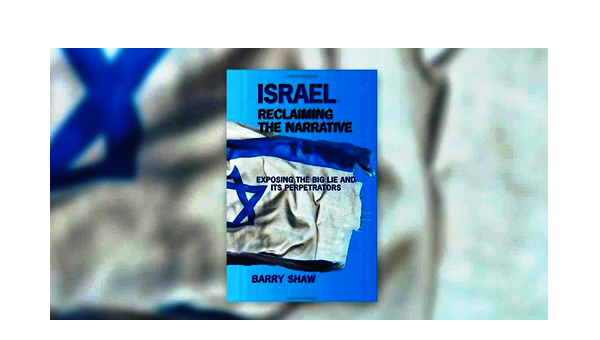
(Reviewer: Gary Selikow, Vol. 69, No. 2, Rosh Hashanah 2014)
For the Jews, the past decade has been deluged with antisemitic invective, which has poured from Islamic and leftist faucets. These sources include most of the international media, the extreme Left, the United Nations, much of the European Union, the Non-Aligned Movement, Third World regimes and university academics and have been perhaps the bitterest since the fall of the Third Reich. This malevolence extends to all continents.
Universities around the world have become cauldrons of the most uncompromising hatred of Israel, with the feverish participation of some radical pro-Palestinian Jews. The global media in large part does its best to paint the beleaguered nation of Israel as an aggressor and human rights abuser. In doing so, they use the most sophisticated as well as the most blunt propaganda tricks, while showing not the slightest sympathy for the six million Jews of Israel who are threatened with genocide and targeted for so long by sustained murder and terror.Those who identify as Zionist and love Israel are being put through difficult times in a world where Zionism and support for Israel is taboo. It is all too fashionable and PC to express the most vitriolic hatred for Israel and Zionism, and woe to anyone who suggests that this prejudice against Zionism and Israel might just have some connection to Antisemitism.
That is why Barry Shaw’s Israel – Reclaiming the Narrative is so important, and necessary. As the author writes, “This prosecution against the fraudsters, liars, hypocrites and their helpers who have led a deceitful campaign against Israel is an attempt to assist Israel in gaining its rightful place on the high ground of public opinion…” The book, Shaw stresses, is not a defense of Israel. There is no reason, he believes, that Israel, forced to fight for survival and its legitimate place in the world, is required to apologize. Rather, it is a prosecution against those who demonize, slander and try to isolate and harm the tiny Jewish State. Thus are the perpetrators, their hypocrisy and network of lies exposed.In the first chapter (‘If you’re going to boycott Israel, do it properly’), Shaw details just how much science, technology and medicine that the world relies on today is a direct result of Israeli achievement and innovation. The very systems behind the computers we use including Microsoft and the Pentium chip technology were developed in Israel as was the original instant messenger system. The proponents of Boycott, Divestment and Sanctions (BDS), if they were really and truly boycotting everything Israeli, would have to throw away the very tools they use to spread their agitprop.
Shaw asks why, if it is legitimate to boycott Israel for calling itself a ‘Jewish State’, BDS is not boycotting the forty members of the United Nations that formally include the word ‘Muslim’ or ‘Islamic’ in their countries names. And how, Shaw asks, can Israel be a ‘racist’ state when it airlifted tens of thousands of Ethiopians to safety in Israel.
The founder of BDS, Mustafa Barghouti, has said himself that the aim of BDS is the ‘euthanasia of Israel’. Nazi Germany also began its campaign to annihilate the Jews of Europe by economic boycotts of Jewish businesses.
Today’s boycotters do not wear brown shirts but kefiyahs and red, white, green and black colors, as they go about intimidating shoppers and shop workers in London, Paris, New York, Los Angeles, Sydney and Cape Town not to buy or sell Israeli goods. They also seek to prevent countries from using Israeli scientific and medical innovations that can improve or save lives. (Locally, anti-Israel academics prevented the University of Johannesburg from cooperating with Israel on a water sanitation project, thereby denying many local South Africans access to clean water).
The author points out the hypocrisy of those who claim to be against war but only oppose the actions of one side in a war – those defending themselves and not those who target women and children on the other side. He shows how no other country in the history of warfare has gone to such lengths to avoid harming its enemy’s civilian population. Colonel Richard Kemp, a former commander of British forces in Afghanistan, said as much to the UN Human Rights Council: “Based on my knowledge and experience I can say this; the Israeli Defense Forces did more to safeguard the rights of civilians in a warzone than any other army in the history of warfare.”
In another noteworthy chapter, Shaw pens a ‘Letter to a Pro-Palestinian Human Rights activist’, in which he asks:
Why have you not expressed your outrage for other far more critical human rights disasters as I have done. I understand you like political adventurism, like flotillas to free Gaza Why have you not joined a flotilla to feed and care for the thousands of dying children in Africa?… what is it about the Palestinians that gets your juices flowing over all other humanitarian tragedies? Could it be that you cannot incriminate Israel in human rights crimes perpetrated in Iran, Iraq, Lebanon, Kuwait, Saudi Arabia, Syria, Jordan, Egypt, Sudan, Zimbabwe, Burma, Russia, China, Pakistan, Turkey, Kurdistan, Cuba, so these abusive regimes do not get you emotionally involved?
Shaw addresses the hypocrisy of those who fail to condemn Palestinian rockets fired at civilian population centers in Israel, but raise a clamor when Israel responds. He further points out the genocidal intentions of the Palestinians, inter alia quoting Yasser Arafat’s statement following the murder of 21 Israeli teenagers outside a beach-side disco in July 2001 by a Palestinian homicide bomber: “We will not bend or fail until the blood of every last Jews from the youngest child to the oldest elder is spilled to redeem our land.”
Again and again, the author shows how Israel is the victim of one of the greatest frauds in human history. He asks why, since Israel has recognized the rights of the Palestinian Arabs to self-determination, the latter refuse to recognize Jewish self-determination in Israel? His firm view is that Israel need not yield an inch more of territory to Palestinian Arabs until they recognize Israel’s right to exist and cease their violence and incitement.
Another chapter details the fraud of the so called ‘Palestinian refugees’, in which Shaw looks at the many real refugee crises that have not been kept alive by UNWRA, as well as the approximately 800 000 Jews expelled from Arab lands who are never mentioned. The latter are the forgotten refugees, forgotten because Israel received them, absorbed them and provided them with housing, education, medical facilities and employment.
At the end of the book, Shaw includes ‘Inspiring Speeches’ by those who speak truth to power, people like the redoubtable Melanie Phillips and Pastor John Hagee. In a 2010 speech at Palm Beach Florida, Hagee said, “As a free man, I take pride in the words ‘I am an Israeli’. When an international body ignores the world’s genocides, massacres and racism to attack Israel, we must stand together and proclaim as one body, ‘I am an Israeli’. When college professors teach lies about Israel and students loudly call for Israel’s destruction, we must proclaim ‘I am an Israeli’.”
Phillips makes the illuminating point that the main problem in the West is the intelligentsia: “Bigotry is now correlated with education and class. The lower down the educational and social scale, the more people are sane and realistic and decent about the Middle East and the threat from the free world by radical Islam. But as soon as you get people who have been through higher education, you find that so often they’re the ones who are bigoted and irrational about such matters”.
The book serves notice to the sundry Islamists, far-leftists, academics, demonizers, sociopaths and boycotters that there will always be those like its author who will challenge and expose their lies and propaganda campaign against the Jewish State.
Israel – Reclaiming the Narrative by Barry Shaw, published by Barry Shaw, 2011, 320pp.
Gary Selikow is a media activist, and a frequent contributor of book reviews to Jewish Affairs


