(Marcia Leveson, Vol. 64, #1, Pesach 2009)
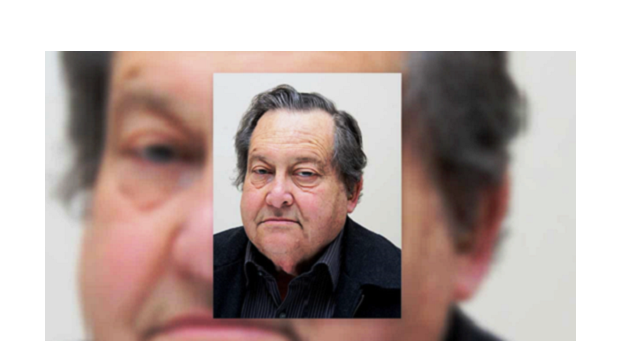
In November 2008 Joseph Sherman, Yiddishist par excellence, visited Vilnius, a centre of lost Jewish culture. He was overwhelmed with emotion. Perhaps it is fitting that this so rewarding returning to roots should have been one of his last journeys, since it was this world of Yiddishkeit that he had spent so much loving care in bringing back to life. Yiddish and its literature was his passion, and through his rescue of many lost texts, his commentary and his brilliant, finely nuanced translations, he single-handedly made it available to a world readership.
While attending a conference in Germany in December last year, he was suddenly taken ill. After a long struggle and slow recuperation back in Oxford, an infection ended a life so vivid and a career of such creative energy and achievement.
Joseph Sherman leaves an impressive legacy and also fond memories of a uniquely talented man and a caring friend.
Born in Johannesburg on 5 March 1944, he was educated at King David School and the University of the Witwatersrand, training as a teacher and actor/ director. His first posts were at King Edward VII High School and afterwards he was Vice Headmaster at King David Victory Park. He joined the English Department at Wits in 1980, becoming Associate Professor in 1996.
Joseph’s familiar tall figure with the signature bow tie lit up the corridors of Wits. He had many friends from all disciplines, and it was a joy to partake with him in academic discussion on a wide variety of topics, from Elizabethan drama and poetry to the nineteeth century novelists and playwrights, from South African literature to Yiddish writing.
His intellectual breadth and acuity was matched with a blazing, sometimes wicked, sense of fun and humour. We will remember with much fondness his twinkling eyes and huge gusts of laughter, his keen sense of the dramatic, the beautiful and the important.
Joseph’s contribution to university life was multifaceted. He delighted in mounting dramatic presentations, and he took part in these with great gusto, involving his colleagues and students in the fun. He could transform himself with ease into Dickens, and memorably he was Dr Johnson – a film fortunately captures that triumph.
His teaching was inspirational – he was loved and a little feared by his students. He did not suffer fools lightly and late-comers were greeted with – “Better never than late! Mr Smith or Miss Levy”. But all those who were committed to scholarship or in need of help would earn his support and encouragement given with that generosity of spirit that is the hallmark of the best of academics.
I was fortunate to share many of his interests, notably that in South African Jewish studies. We travelled to several conferences, where he always drew clusters of admiring acolytes. He was the wittiest of men, with a special bent for satire, and he could be the sternest of critics, reserving his scorn for those whom he considered lazy or whose work he considered sloppy. How very few could match his energy in taking part so wholeheartedly in teaching and administration, mounting of productions, presentations at conferences, concern for rescuing Yiddish books in the library and elsewhere. And his scholarship was of the finest – his list of publications is astonishing. It seemed effortless, but if you knew him well, you were aware of the long and hard hours he worked.
From 1990 to 1998 Joseph was executive editor of Jewish Affairs. Here again his dedication to excellence and the promotion of Jewish studies found expression. He broadened the editorial board to include overseas scholars, and aimed to produce an internationally accepted journal, attracting many first class, refereed articles. The original and colourful covers – the work of Jewish artists – are striking. He voluntarily and tirelessly edited everything himself, and was committed to the propagation of the journal. I felt privileged to be a member of the editorial board and to learn from his efficient and decisive handling of meetings and his dedication to his subject.[/vc_column_text][/vc_column][/vc_row]
In 2002 he was appointed the Woolf Corob Fellow in Yiddish Studies at the Oxford Centre for Hebrew and Jewish Studies, University of Oxford, and in 2005, University Research Lecturer at the University of Oxford. He loved Oxford and here he truly found his métier. He told me, “It felt as if I had died and gone to Heaven.”
He was in demand as a reviewer in the most prestigious journals, and he lectured around the world, keeping in touch with important scholars in his field. In 2003 his book The Jewish Pope: Myth, Diaspora and Yiddish Literature was celebrated as an original and significant contribution to Jewish thought. Then, again he co-edited the collection of essays, David Bergelson: From Modernism to Socialist Realism (2007) – another coup. He continued to produce a large body of first rate publications. In 2008 in New York he worked on a volume of the unpublished and never translated stories of I B Singer, which he had discovered some years before at the University of Texas. He had completed the translation of Bergelson’s finest novel, When All is Said and Done, and was completing a long-planned anthology of Soviet Yiddish stories, none of them previously published in English, as well as a study of the life and work of Peretz Markisch.
It is a blessing that he had those years where his special talents were so widely appreciated and honoured. In December 2002 the Modern Language Association of America awarded him the Fenia and Yaakov Leviant Memorial Prize for Yiddish Translation.
His much loved wife, Karen, was by his side during the dreadful period of his last illness. We all mourn with her. Joseph was a proud Jew with a unique personality, immense capabilities and wide-ranging knowledge, who became famed as an expert in his field, forging an unmatched and enduring role in South African and international Yiddish and Jewish studies.
Marcia Leveson, a long-serving member of the Editorial Board of Jewish Affairs, is a former Professor and currently an Honorary Research Fellow in the Department of English, University of the Witwatersrand.