
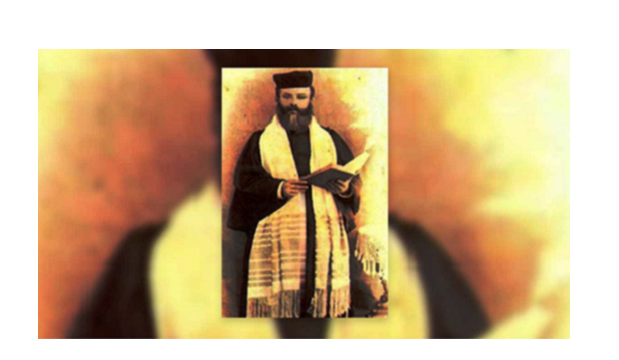
(Author: Naomi Dison Kaplan, Vol. 64, No. 2, Rosh Hashanah 2009)
In the course of my research for my thesis on Hebrew laments, I came across a poem, Al Mot Yehudah Leib Schrire – “Upon the Death of Yehuda Leib Schrire” – by Benjamin Turtledove, written for his late friend and teacher. I selected this poem because I wanted to make it known that laments were being written in Hebrew in Cape Town, and to counter criticism that academic work in South Africa was Eurocentric and not related to life in Africa.
This lament was written in 1912 by Turtledove (whom, we can guess, had previously had a different, ‘Yiddishe’, name), following the death of his friend Yehudah Leib Schrire. His lament, in Hebrew, was included in Nehemia Dov Hoffmann’s Book of Memoirs (1916), the first Yiddish book ever published in South Africa. In 1996, this was translated from the Yiddish into English by Lillian Dubb and into Hebrew by Sheila Barkusky, and published through the Kaplan Centre for Jewish Studies and Research, University of Cape Town, making it available to a new generation of readers.
Schrire was born into a scholarly family in Vilna and died in Cape Town at the age of 61. He was a poet and writer in Hebrew and Yiddish, and wrote various articles for the Jewish press. He left many Hebrew books, poems and other writings and also devoted himself to promoting secular and Hebrew scholarship.
Benjamin Turtledove himself was born in Medzerich, Poland, in 1872, and studied at Yeshivot in Volozhin, Pressburg and Vienna. In Vienna, he also attended university as an “Extraordinary Scholar”. He studied French in Paris, lived for a while in Manchester and then came to Cape Town as principal of the Talmud Torah. He, too, was a Yiddish and Hebrew journalist, publishing under the pseudonym Ish Ploni (“Mr X”), and was recognised as an excellent poet (Hoffmann, 1996:45).
Turtledove’s lament addresses ‘listeners’, as if they are standing at a funeral, mentioned as the grieving family, friends, co-workers in the institutions, scholars, young and old. The Hebrew is eloquently formal and constrained. The poet is sparing in metaphors and poetic devices. The poem includes references to traditional sources, and uses words influenced by the Aramaic of the Talmud.
In each verse, either the verse itself or one of its lines starts with the word Ayei or Ayeihu, which is very much like a refrain from Eichah (Book of Lamentations). The mainstay of the poem are the constant rhetorical questions “where is he?” and “why did he die so young?” – Madu’a maheir azav cheled? (“Why did he hasten to leave this world/ lifetime/duration of life”) and Halo yipaked m’komo1 bveiti, bein rei’a’v v’mosdim rabim (“Will he not be missed in my house, [also] among his many friends and many institutions?”2 The poet goes on to say: “The work is much and there are no workers”.3 He reemphasises that Schrire died so young: Ha-omnam meit vayispe b’lo yomo … In Genesis 18:23, the word tispe is used, Ha’af tispe tzaddik im rasha (“Will you sweep away the righteous, the tzaddik with the wicked?”) We are told in the poem that the greatly missed Schrire was a righteous man, and the implied reference seems to question again why the righteous had to die as though wicked.
V’et beito v’et rei’av azav la’atzavim – “He left his house and his friends to sorrow and pain”: The word atzavim used here has many meanings and could also mean “melancholy” or “toil”. In modern Hebrew, etzev would probably be used.
Schrire, ayeihu ha’askan v’hasafra? – “Schrire, where is he? The one who knows about books?”:
Safra is an Aramaic word used in the expression safra v’sayafa, that is, a “knower of books and a swordsman”. This could be an intimation that he was a fighter for what he believed in – not only was he a “knower of books”, but also an askan (“communal worker”).4 He was also a “basket full of Torah, chochma v’da’at”.
The poet continues: “Will not every one, the hoary head, the young and the child wait for his advice; he was like an eye to them”. Barkusky translates the last verse as: “Where is he? Listen and I will tell you!” although the original poem reads in archaic Hebrew Ma’du’a? a’yei’hu? Sh’ma a’shi’v’kha a’ma’rim – “Why? Where is he? Hear and I will answer your words”. The English version continues, “He was a truly noble soul”5 and then with “The vanities of this earth being too much for him/He ascended to a higher plane.” This latter quotation is a translation of Va’y’hi ki ozen v’cheiker ha’b’li iha’yitzurim vayikatz bam – va’ya’al hashamayim. (In using this unusual Hebrew, Turtledove tells the reader that Schrire hated idle conversation and gossip.) Herein there could be a hint that he is leaving this plane and joining the angels, which is more suitable for him.
The speaker begins the exordium by arousing the empathy of the listeners and speaks of the relationship between the deceased and those left behind:
Halo yipakeid m’komo B’veiti bein rei’av u’mosadim rabim
(His many friends and associates feel his loss, Will he not be missed in my house and among his friends and many institutions?)
Questions are asked in refrains. The mourner says, “Where is his place? Ubi topos? Ubi sunt? The mourner finds the death difficult to accept.
Where is Schrire? … Where is Schrire?
Where is he?
Is there an equal in this ungodly land of Africa?
Where is he?
Why was his departure so sudden …? Where is he?
“Where is he?” is repeated five times. There is rhetorical repetition, the name of the deceased is frequently mentioned, and a complaint about the shortness of life.
His many friends and associates feel his loss, Leaving behind his grieving family and friends.
And
Will he not be missed in my house,
Among his many friends and among many institutions?
The ‘departure’ is repeated:
He departed this world before his time Why was his departure so sudden?
Words similar in intonation to eichah or eich, such as ayei? and ayeihu?, are repeated. These are mourning words. Distressed but restrained, the mourner expresses praises of the deceased. He was an encyclopaedia of knowledge and wisdom and a noble soul. As in the Book of Lamentations and other laments, references are made to the young and the old: “All will yearn for his counsel, young and old”. “Why did he die before his time” (b’lo yomo)? He was so young. The past and present are compared. Life was rich when Schrire was there. Who will be helping them now? There are no people to continue the work. He was the watchful eye and adviser of the people. He was great among the living and now he has gone to another sphere, to heaven. Life is void.
Even though the pain is so great now, there is the recognition that this is derech olam, the way of nature. In the poem, the mourner asks, “Why did he leave while the work is so much?” and there are no people to help (stanza 3). Pirkei Avot 2:2 says, “It is not thy duty to complete the work, but neither art thou free to desist from it …”, but to the mourner it seems as if all is lost, and there are no people to take over Schrire’s work. The reader knows life will take its course and somebody will rise to the occasion to do it. From early times in history, it is not expected of any human to finish the task, only to do as much as possible. Life goes on; this is an outlook for the future.
This poem is written from a background of traditional learning and imbued with religious belief and a belief in the importance of faith and prayer. In accordance with this belief, the poet would have accepted that Schrire would have been gathered to his people (Gen. 25:8) and he would go to the Olam Haba. A comfort for those who are religious is the belief that they will meet with their dear ones again. Death divides and death unites.
The light comes in the answer, “listen and I will tell you”; the poet consoles the mourners by saying that the deceased was too noble for this world. The idea that the deceased went to a better place, the Olam Haba, would provide comfort.
This poem was written to express sorrow at the loss of a friend, and it tries to alleviate despair by providing an answer to the mourner’s feelings of why it had to happen. The poem praises Schrire’s wisdom, scholarship and character and ends by providing an answer to the questions of why this death had to happen: He was too good for this world; he had to ascend to a higher place.
The vanities of this earth being too much for him, He ascended to a higher plane.
Postscript
One of Yehuda Leib Schrire’s descendants is Gwynne Schrire, a frequent contributor to this journal and a member of its editorial board. I asked her if her family was related to the prestigious Gaon Shrerer6 (c. 906 – 1006). She replied that the family tradition was that it is so, although there have been many variations on the spelling of her great grandfather’s name, viz. Shriro, Schrire, Shrira and Sherira. We cannot personally know about Sherira Gaon, as he died about a thousand years ago, but what is in a thousand years from Sherira to Schrire? Great people, like great ships, sail on.
NOTES
- cf, 1 Sam. 20:27 and also 1 Sam. 20:18. Both of these verses are from the frequently recited Haftorah of Machar Chodesh.
- The Barkusky translation is: “He has left a void / His many friends and associates feel his loss”.
- This alludes to Rabbi Tarphon in Pirkei Avot 1:20 “The work is much and labourers are idle”.
- Ahad Ha’am also used the expression askan, “worker for the communal good” in conjunction with an expression relating to working with books, as follows: Bayamim haheim lo ha’yiti od lo sofeir v’lo askan, in those days I was not yet a writer nor a worker for the public good”. The work askan was also used in the Talmud, Chullin 57 in a slightly different sense. Askan bid’varim meant a person of initiative, an inventive person.
- A more correct translation is Schrire haya ish na’a’le bein hachayim. “Schrire was a man elevated amongst the living”.
- Encyclopaedia Judaica, Vol. 14, p1381
[/vc_column_text][/vc_column][/vc_row]


