(By: Isaac Reznik, David Saks, Vol. 69, No. 3, Chanukah 2014)
MERVYN MYER SMITH
David Saks

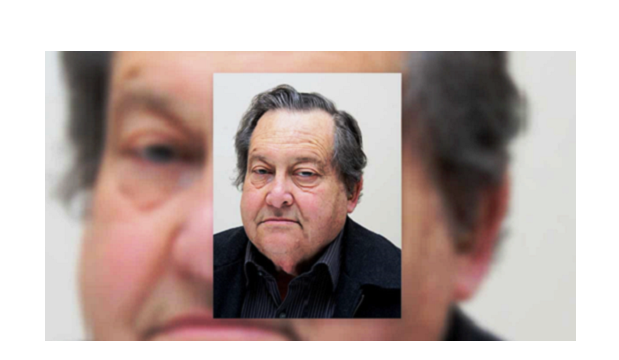
Mervyn Smith (right) with Nelson Mandela and Chief Rabbi Cyril Harris, when Mandela visited the Green & Sea Point Hebrew Congregation in May 1994.
Shortly before this issue went to print Mervyn Smith, one of the most eminent Jewish communal leaders in South Africa as well as in the arena of international Jewish politics, passed away in Cape Town at the age of 77. It is a mark of the esteem in which he was held that his passing occasioned tributes and obituaries throughout the global Jewish media.
For generations of Jewish communal leaders and professionals, Mervyn Smith provided an invaluable source of support and advice. Michael Bagraim, who in 2003 became the second Capetonian to be elected as SAJBD Chairman, described him as “a friend, adviser and mentor” who had been instrumental in advising and guiding him in most of the positions he had held both within the community and outside. This included his present position as a Democratic Alliance Member of Parliament. Smith was a long-acting DA Attorney, and shortly before his death was awarded the Democracy Award by the party.
While born in Vereeniging in the then Transvaal, Smith lived most of his life in the Cape Province, initially in Vosburg in the Karoo and thereafter in Bellville, Cape Town. He later practised law in Belleville, where he also played cricket for 25 years and ultimately became life president of the Bellville Cricket Club. Other positions he held outside of the Jewish community included those of President of the Law Societies of South Africa and the chairmanships of the Performing Arts Council of South Africa, the Cape Performing Arts Board and the Cape Town City Ballet.
Parallel to these activities, Smith was involved in Jewish affairs from an early age, being active in Habonim and serving as chairman of the University of Cape Town branch of the Students Jewish Association. He was first elected to the Cape Council of the Board of Deputies in the 1970s, serving two terms as chairman between 1983 and 1987. In 1991, he became the first-ever person outside of Johannesburg to be elected National Chairman of the Board. During his tenure, he was instrumental in establishing the African Jewish Congress to act as the representative, coordinating body for the Jewish communities of Sub-Saharan Africa and served continually as its president for the remainder of his life. His growing stature as an international Jewish leader was demonstrated by his appointment as a vice president of the World Jewish Congress and, in May last year, as co-chairman of its Policy Council.He was also a Director of the Claims Conference for Material Claims against Germany, and for many years represented South Africa on that body.
Smith was a stalwart supporter of Jewish Affairs, which he regarded as one of the jewels in the crown of the SAJBD. Over the years, he contributed a number of noteworthy articles to the journal, focusing on issues relating to South African Jewry and politics and legal issues pertaining to the community.
Always deeply opposed to the apartheid system, Smith was at the forefront of those within the SAJBD pushing for the organisation to adopt a firm moral position against it. These efforts bore fruit during the 1980s, when the Board adopted resolutions unequivocally condemning apartheid at its national conferences. During the years of transition to multiracial democracy, he was firmly of the view that the Jewish community should not only welcome the process, but participate in and contribute to it. His chairmanship was very much focused on pursuing those goals, which underpin the vision and strategy of the SAJBD to this day. For his “contributions to reconciliation, change and empowerment in South Africa in the fields of business and/or art, science, sport or philanthropy”, Smith became only the second Capetonian to receive the Lexus Lifetime Achiever Award.
Another area in which Smith was extensively involved was in combatting antisemitism, particularly in the legal sphere. One of Cape Town’s most respected attorneys, he devoted countless hours gratis to fighting the Board’s battles, of which the epic hate speech cases against Radio 786 and against COSATU International Relations Spokesperson Bongani Masuku were just two of many examples. He was especially passionate about Holocaust commemoration and education, and in that regard was a long-serving chairman of the Board of Trustees of the South African Holocaust and Genocide Foundation.
Smith is survived by his children Paul, Deborah, Raphael and Abigail, seven grandchildren and brother, David. He was predeceased by his wife Tamar, a teacher who headed the SAJBD’s Religious Instruction Department, and a daughter, Rinah.
Ronnie Mink
Isaac Reznik

Ronnie Mink – Yerachmiel Monat ben Dov Eliezer Ronal – passed away in October after a long illness courageously borne. A superb teacher, expert on the Holocaust and brilliant historian, he contributed a number of articles to Jewish Affairs on subjects relating to Jewish history and the Holocaust.
Ronnie Mink was born in Vryheid, Natal, to Barney and Cecelia Mink, nee Reichenberg, one of six daughters of the late Rabbi Moshe and Rebbetzin Sima Lieba Reichenberg (with whom I had the honor and privilege to personally be associated with when Rabbi Reichenberg was the Rabbi of the Jeppestown Hebrew Congregation). After matriculating at Vryheid High School, he completed a B.A Degree at the University of the Witwatersrand, and thereafter obtained a Higher Education Diploma at the Johannesburg College of Education. He also obtained a post graduate B.Ed degree, doing research into the history of education in Swaziland for his thesis.
In 1974, Ronnie was appointed Vice-Principal of the Yeshiva College in Johannesburg. After three years, he joined the staff of King David High School Linksfield, where he served with dedication and loyalty for 34 years. He became Head of the Department of Jewish Studies and a Vice-Principal of the school until his retirement. In 1980, he studied Jewish History at Yad Vashem in Jerusalem, specialising in the Holocaust, and during 1984/85 studied at Elton College in Israel.
For eight consecutive years from 1988, Ronnie led learners on the March of the Living to the extermination camps in Europe. Along with the late Dr. Jocelyn Hellig, he gave many lectures on antisemitism and the Holocaust at Wits. He further established and chaired a branch of Yad Vashem in Johannesburg, organizing regular seminars and lectures, and was for many years involved with the SAJBD in organizing the annual Yom Hashoah ceremonies at West Park Cemetery.
Ronnie will be remembered by his colleagues, past pupils and friends as an educator par excellence as well as a kind and compassionate person devoted to his family. He is survived by his wife Marla, daughters Melissa and Daniella, sons-in law, grandchildren and brother Dr. Jackie Mink.
May His Memory be for a Blessing.
RABBI NORMAN (NACHMAN) MEIR BERNHARD
Isaac Reznik

Rabbi Norman (Nachman) Meir Bernhard, ztl, one of the leading figures in the South African rabbinate, passed away, aged 81, on 1 October, after a long illness borne with enormous courage and fortitude.
Rabbi Bernhard arrived in South Africa from the USA in 1965. He grew up in the West Bronx of New York City, and attended Yeshiva University. After graduating, he received his rabbinical training under the tutelage of one of the most eminent figures in American Jewish Orthodox life, Rabbi Joseph Soloveitchik of Boston, in the first class of an expended new smichaprogramme.
At the time of his passing, Rabbi Bernhard was Rabbi Emeritus of the Oxford Synagogue Centre, where he served as rabbi for 35 years. During that time, both the Jewish community and the South African nation as a whole witnessed important and indeed fundamental changes. Rabbi Bernhard arrived in the country when the governing system of apartheid was entrenched in the country’s political and social life. The Jewish community was numerically much larger than it is now. Religious observance was not as vigorous as it is at present, and Jewish education was in the early stages of dynamic development.
Despite being the spiritual leader of a particular congregation, Rabbi Bernhard played a significant role in all these areas. He was involved in all spheres of communal activity, including with the SA Zionist Federation, SA Jewish Board of Deputies, Federation of Synagogues, Lubavitch Foundation and SA Board of Jewish Education. A prolific writer, he contributed a number of articles to Jewish Affairs over the years.
Rabbi Bernhard was a very popular congregational rabbi, public speaker, educationist and raconteur, as well as being an anti-apartheid activist and a much sought-after counsellor. He was the founder of the religious day school that became the Torah Academy, and later founded the Oxford Synagogue Social Action Centre, today known as the Oxford Synagogue Skills for Adults Centre (Ossac).
Rabbi Bernhard is survived by his life partner of 53 years, Rebbetzin Joan Bernhard, who supported him in all his endeavors, his daughters, sons, sons-in-law, daughters-in law and many grandchildren and great grand-children. South African Jewry owes a great debt of gratitude to him. May his Memory be for a Blessing.