
(Author: Israel Abramowitz, Vol. 66, #3, Chanukah 2011)
A relatively short eight to ten-hour flight from Johannesburg takes one to Perth, a picturesque city on the west coast of Australia with a flavour reminiscent of South Africa. The subject of South African Jews now living in Australia, and particularly in Perth, has received scant attention in Jewish Affairs. I therefore welcome the opportunity of making this contribution on Perth Jewry, and those former South Africans who now constitute a part of it.
There have been firm links between Australia and South Africa since the colonial era. Historical events in both countries have been similar. The discovery of gold in Victoria as early as 1820 attracted South African prospectors and a reverse trend occurred in 1886 with the discovery of gold in the Transvaal, leading to prospectors leaving Victoria to seek their fortune in South Africa. Following the Anglo-Boer War, there were Australian soldiers who remained in South Africa.
The present Australian Jewish community numbers 120000, with the majority resident in Sydney and Melbourne. The Jewish community is composed mainly of Ashkenazi Jews and approximately 50% are Holocaust survivors, especially from Hungary and of whom many have settled in Sydney.
According to the 2006 census, there were 18825 persons born in South Africa resident in Perth. According to that census, the Jewish community numbered 5082 and whose members had immigrated “primarily from Eastern Europe and more recently from South Africa”. As the Australian Census does not require the identification of one’s religion as obligatory, this figure must be treated with some reserve, particularly as one in five people in Perth professed to having no religion, with 11% not specifying their beliefs. It is hence believed that the actual current figure is closer to 7000. Demographic confirmation of this is not available; the results of the most recent census conducted several months ago are still awaited. Former Israelis also make up a fair percentage of those who chose Perth as their migratory destination. The actual total figures of Jews in Australia and Perth cannot therefore be determined with certainty and reliance on other sources, such as communal and school records, are required for a more accurate estimation.
In an attempt to increase the number of South African Jews choosing to settle in Perth, the Perth community devised a project some years ago, which they called “10000 by 2000”. Although not having reached its anticipated numerical objective, it provided a significant impetus for increased immigration. It is documented that about 75000. South Africans permanently relocated to Australia between 1995 and 2005, ostensibly because of “the crime and violence that afflicted South Africa at the time”. More than half of South African-born Australians arrived after 1994. This, it has been construed, was in response to the previous Australian government’s response to reducing the skills shortage in Australia. During 2006-7, South Africa was placed sixth as country of origin, with almost 4000 South Africans migrating to Australia during this period. In 2006,19349 people of South African birth were living in Victoria, giving it the fourth largest population of ex-South Africans after Perth. One in six of these were Jewish.
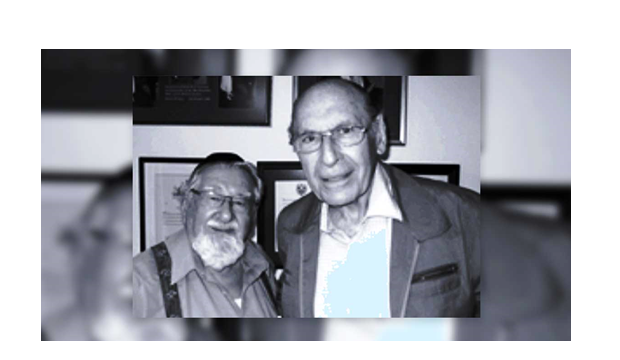
On a previous visit to Perth in December 2010, I had the pleasure after many years of renewing my acquaintanceship with Rabbi Shalom Coleman. Our first meeting was in 1948 when, as a member of the Board of Deputies and Habonim leadership in South Africa, I visited Potchefstroom. Shortly before this, Rabbi Coleman had accepted a call to become the Minister and Hebrew Teacher of the
Potchefstroom Hebrew Congregation. This was the beginning of his odyssey. He went on to leave an indelible imprint on the Jewish communities of Potchefstroom and Bloemfontein in South Africa, and subsequently Sydney and Perth in Australia. In February 1966, he was invited to Perth to accept the position of Chief Rabbi of the Perth Hebrew Congregation. Although he officially retired in 1985, his presence is still actively felt and he continues to give his services on a voluntary basis in a consultative capacity, particularly in halachic matters. In the 1990 Australia Day Queen’s honours, Rabbi Coleman was awarded Membership of the Order of Australia and is the only rabbi to have received Imperial and Australian Honours.
In his autobiography Life is a Corridor, Rabbi Coleman describes Perth as follow:” I have travelled far and wide, and I have found no city in the world to compare with its climate, ecology, pace; it is so full of the advantages of living and raising children.”

The author (right) with Rabbi Shalom Coleman.
Perth was founded in 1829 following the arrival of Sir James Stirling on the Swan River and the founding of the of the Swan River Colony on the west coast of what was then known as New Holland. (Jewish involvement and participation in early Dutch exploration is recorded in the area even before 1829). Queen Victoria proclaimed city status for Perth in 1856. Both Perth and Fremantle a half hour’s drive away developed in relation to the picturesque Swan River, which flows into the Indian Ocean at Fremantle. The river was so named by a Dutch explorer Willem de Vlamingh in 1697 after the black swans in the area. The discovery of gold in the Kimberley and Kalgoorie areas around 1890 led to a population influx and Perth became established as an important port and trading centre.
Perth remained the capital city of the State of Western Australia, geographically the largest of the states which united in 1901 to form the Federation of Australia. In recent years, Western
Australia has undergone considerable development. Its vast mineral resources, and in particular iron ore, have been in global demand. The mining extraction and processing of these commodities have boosted economic development and Western Australia has become the world’s third largest iron-ore producer. Mining exploration companies, insurance and financial corporates have located their headquarters and offices in the central business district, where glistening skyscrapers tower into the sky and are visible from afar.
Perth is a picturesque and well-manicured city. Its street trees and vegetation in particular are carefully protected, to avoid anything which could mar their pristine appearance. Dumping of household waste and junk is illegal and members of the public are encouraged to report any evidence of such practices.
Western Australia has become home to a vast variety of the arts, including the Western Australian Academy of Performing Arts, the West Australian Symphony Orchestra based at the Perth Concert Hall, concert hall venues such as the His founded. It will be celebrating its 120th Majesty’s Theatre and the Perth Arena, which is set to open in 2012 to host concerts and indoor sporting events.
In 1892, the Perth Hebrew Congregation was anniversary in January 2012, and a series of events have been planned for this, including a visit by Chief Rabbi Lord Jonathan Sacks. There are four other Orthodox synagogues in Perth, as well as a Progressive Congregation. All the synagogues are well attended and have active congregational following. The current Chief Rabbi of the Perth Hebrew Congregation is Rabbi David Freilich, who succeeded Rabbi Coleman in 1988.
The provision of kosher facilities is adequate at present, although not on par with that of Melbourne and Sydney. There are several food outlets where kosher food may be obtained. Regrettably, no kosher restaurants have managed to survive. The Maurice Zeffert Home provides a wide selection of pre-packed kosher food for its own residents, as well as on sale to the general public at reasonable prices. There is a well-stocked independent kosher food shop providing a variety of products as well as another independent kosher food outlet. One of the major supermarkets recently commenced making kosher meat from Melbourne available, in a special kosher section of one of its main Perth outlets. They have also a variety of kosher delicacies such as cheeses and pateson sale, and in addition stock a considerable number of kosher food products produced in Israel.
The Carmel Jewish day school is an important feature of Jewish life in Perth. Attended by the majority Jewish children, it enjoys the reputation of providing a high standard of education, on par with that of the Yavneh and Mount Scopus schools in Melbourne, and the Moriah and Masada Jewish day schools in Sydney. All these schools are not ‘Yeshivah’ schools, but are more akin to the King
David schools in Johannesburg and the Herzliaschools in Cape Town. There are five Universities. Many Carmel graduates attend these, although some have looked further afield to Melbourne, Sydney and elsewhere, to pursue their studies and professions. This, in addition to the fact many younger people have relocated to Melbourne, Sydney or gone on aliyah, has resulted in some diminution of local population numbers.
Perth is a very Zionist-orientated community and both the Bnei Akivah and Habonim youth movements have large and enthusiastic followings. Their programmes and activities are very similar to their counterparts in South Africa. Camps, seminars and shabbatonim are important features of their activities.
Perth offers many attractions to the would-be migrant, particularly in the recreational and communal benefits it provides. It is surrounded by a variety of attractive beaches literally a stone’s throw from the residential areas, which provide a welcome escape and relief during the hot summer months.
Perth has many scenic retreats, where one may escape to, for relaxation from the austere central business district and suburban areas. To name a few, there is the Swan Valley, famous for its award winning wines and often referred to as Perth’s Valley of Taste, the historic King’s Park with its Jewish War Memorial, and neighbouring Fremantle, whose streets have remained unchanged since the last century and where the colonial architecture of its historic buildings have been meticulously preserved and restored. A sports centre was recently completed for the Maccabi organisation of Western Australia, which provides a variety of sporting activities, including soccer, indoor tennis, basketball, table tennis, cricket and karate. The soccer team features prominently among Maccabi activities and participates in a Sunday afternoon league which enjoys an enthusiastic communal following.

Jewish war memorial, King’s Park.
The Jewish community of Perth is a very friendly and gregarious one and we have been made to feel very welcome since our arrival. There is an abundance of former South Africans and their familiar South African accents readily make one feel at home. Many ex-South Africans with school-going children have settled in suburbs such as Dianella, Yokine, Norunda, Menora and Mount Lawley, in close proximity to the Carmel school.
South African Jewish immigrants tend to maintain an affinity with South Africa. I noted that the Jewish Historical & Genealogical Society of Western Australia recently hosted a presentation on the History of SA Jewry. Surprisingly, there is a paucity of reference to South African political and other matters in the media. The availability of on line editions of South African newspapers has remedied this to an extent. There has been considerable interest in the Tri-Nations rugby tournament, which includes Australia, New Zealand and South Africa and which is played alternately in each of these countries. This is fully covered and featured on Australian TV. The recent World Rugby Cup competition held in New Zealand also evoked considerable interest. It is interesting that South Africans have maintained their support of touring South African rugby and cricket teams.
The formidable ex-South African presence in Perth has and will continue to have an impact on the city and Australia as a whole. South Africans have infiltrated many aspects of life in Perth and the presence of many South African food brands on the supermarket shelves, and the existence of well known South African food outlets is evidence of this. There are many former South African medical practitioners in practice here. South Africans have found their way into all walks of life, including business education and the rabbinate. Many relocated South Africans are retirees.
A Jewish newspaper called the Maccabean, ably edited by former South African Debbie Myerson, appears weekly and finds its way into most Jewish homes. It is of a high standard and is well produced and edited. There is frequent reference in its columns to South African matters.I was recently invited to contribute articles of South African interest and have since had one such article published in its columns.
It is more than likely that Perth will continue to attract South Africans as visitors and potential migrants. The fact that English is the medium of communication and that motor vehicles are driven on the left side of the street will continue to be a plus factor in this regard. The Mediterranean climate in particular is familiar to former Capetonians. These similarities make the transition an almost painless one.
Dr Israel Abramowitz, a long-standing contributor to Jewish Affairs, is a former Chairman and President of the South African Jewish Board of Deputies and now temporarily resident in Perth, Australia.


