
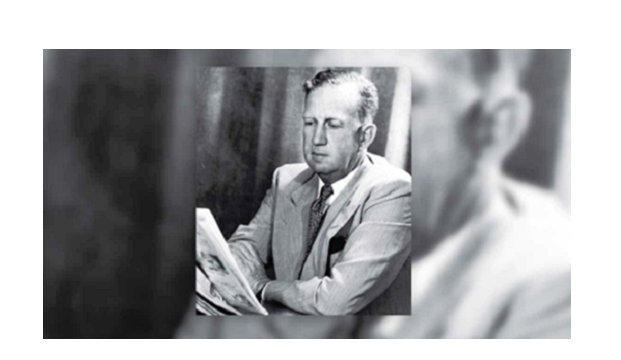
(Author: Barbara Brown, Vol. 64, No. 2, Rosh Hashanah 2009)
Editor’s note: During the 1950s, a little remembered trio of Jewish Labour Party MPs – Alex Hepple, Hyman Davidoff and Leo Lovell – vigorously opposed the mounting tide of apartheid legislation. Lovell’s life and career was a particularly interesting one. In addition to his distinguished years in Parliament, he made his mark as a Jewish communal leader, soldier, brave campaigner against antisemitism, lawyer and, at the end of his life, pioneer Finance Minister of a newly independent Swaziland.
The following article is based on a synopsis of For the Love of Justice, a new book on Leo Lovell prepared for publication by his daughter, Barbara Brown. The book mainly comprises Lovell’s own memoirs up until the commencement of his parliamentary career, including especially engrossing chapters on his leading role in (literally) routing a Greyshirt attempt to establish a presence in Benoni and on his wartime experiences. To this, Brown has added an introduction and a lengthy postscript, which include excerpts from Lovell’s speeches in Parliament demonstrating his views on labor, justice, democracy, racial prejudice and apartheid in general.
Lovell was a proud and fully conforming Jew, and was adamant that Jews, given their own history and ethical heritage, had a particular duty to oppose apartheid and all that it stood for. In her preface, Brown quotes from a letter he wrote to the SA Jewish Board of Deputies following an approach from the latter attempting to dissuade him from addressing a meeting of the Democratic Association held to protest against the Group Areas Act. Here, Lovell acknowledges that while in general there could not be said to be a specifically Jewish point of view when it came to political matters, this did not apply to measures that amounted to injustices based solely on the grounds of race. He wrote: “I claim to be able to say this as a man and as a Jew, by virtue of the suffering of our people in many lands throughout their history, solely on the grounds of race or religion. That Jewish point of view is to me as clear as the commandment ‘Thou shalt not steal’”. For the Love of Justice has been published by, and is available through the Isaac and Jessie Kaplan Centre for Jewish Studies and Research, University of Cape Town (021 650 3062).
.
The lifetime of Leo Lovell (1907-1976) spanned many momentous events: the First World War and its repercussions, the rise of Fascism and Communism, the emergence of Nazism leading to World War II and the aftermath of that war. In South Africa, major political changes and intense struggles were taking place, leading to the creation of a battlefield scenario that demanded from each individual a strong decisive viewpoint and a willingness to fight for his principles.
For the Love of Justice is the autobiography of one such individual. It incisively comments on many of these tumultuous events while bringing to them the personal experiences and emotions of one who lived through much of it. Lovell’s life and standpoint on the important issues upon which he commented and with which he was confronted can now be assessed with the valuable knowledge and relevance of hindsight. These factors transform the book from a dry historical narrative into an interesting anecdotal commentary on the events and philosophies that were current at the time.[/vc_column_text][/vc_column][/vc_row] Lovell traces his journey through life from his birth in the little town of Willowmore in the Eastern Cape to his education at Grey College in Port Elizabeth and Rhodes University in Grahamstown. He describes the wonderment of his discovery of the classical philosophers at the age of fourteen, which influenced so much of his thinking in later life and relates how he came to take up law as a profession that nurtured his passion for justice and fair-play. Lovell writes further of his growing appetite for knowledge about current affairs, contemporary world politics and recent history, provoked by the build-up of Nazism, Fascism and antisemitism in Europe and the appearance of the Greyshirts in South Africa. In a chapter, which reads like a detective novel, he describes his role in ridding Benoni, his home town, of the Greyshirt scourge, using well-planned military strategies. This was for him the beginning of what became an astute awareness of current philosophies and their impact on world events. Next, Lovell recalls his five years in the South African army during World War II, recounting his feelings and experiences during that time and bringing life to South Africa’s role in the East Africa campaign. This chapter ends with his co-option into the SA Air Force and his being tasked with the compilation of its Manual of Administration. The latter he accomplished in just over three months, to the great satisfaction of the second in command, Col. Rod Douglas. The autobiography ends with the events that led up to Lovell’s election to Parliament in 1949. Lovell’s memoirs show the development, from a very young age, of the ideas and values that later shaped his political opinions and cast light on the emotional and intellectual passage which led to his strong opposition to the apartheid policies of the Nationalist government during his time in Parliament. Throughout, the strong influence his Jewish background had on his thoughts and actions is evident. By far the most significant period of Lovell’s life was his Parliamentary career. He was elected as a Labour Party member for Benoni, a year after the National Party came to power. During the ensuing decade, he and the other members of his party were the most vocal and fervent opponents of the apartheid policies in the country. (Helen Suzman was at the time still a member of the United Party and as such subject to Party policy decisions, which often meant crossing the floor to vote with the Nationalists). Unfortunately, Lovell died before he could complete this part of his life’s story and I, his daughter, have written a postscript to the book which covers this period. In doing so, I have used excerpts from his speeches in Parliament to demonstrate his views on labour, justice, democracy, racial prejudice and the apartheid policy in general. These speeches show a very dedicated opposition to everything that the Nationalist Party stood for. They were eloquent, hard-hitting and courageous and, in this period of introspection and evaluation of the apartheid era through which we are now passing, they have become of more interest and relevance than ever. During his nine years as an MP, Lovell was noted for his integrity and courage. He was described by Deryck Humphriss in his History of Benoni as “an outstanding representative in Parliament”. He was recognized by the English media for his eloquent attacks on government Bills, with The Star newspaper referring to him as “the only real opponent of apartheid.” The importance of Lovell’s role in the apartheid era lies in the fact that so many other opponents of the government at the time were being silenced by bannings, imprisonment, house arrests and other measures under the new laws of the country. Of the few that were left standing to express abhorrence at the Nationalist government policies, he was one of the most vocal and outspoken. Following his very effective Parliamentary career in South Africa, Lovell went on to help shape the government of a newly independent African state. He came to Swaziland when it was on the brink of historic times, playing a constructive, innovative role in its successful transition from colonial rule to democratic government. As Swaziland’s first Minister of Finance, he gained membership for the country to such organisations as the International Monetary Fund, World Bank and the International Development Association. He worked tirelessly to improve the economy of Swaziland and create a better life for all its people, interacting with eminent politicians, financial experts and dignitaries from all over the world and showing himself to be “a consummate man of the world and intrepid history maker.” He left his mark on Swaziland and was held in very high esteem by all, including King Sobhusa II. For the Love of Justice is the story of a lawyer, soldier, anti-apartheid Parliamentarian, first Finance Minister in the Swaziland government, Jewish communal leader and, above all, of a dedicated critic of racism and oppression. It traces the journey of a man whose thinking was influenced by his rich Jewish heritage, ennobled by the influence of the classical philosophers and enriched by his continual search for knowledge and his quest for truth and justice.
Barbara Brown studied at the University of the Witwatersrand, obtaining a B.A. degree and going on to work in the Non-European Affairs Department with Dr Melville Edelstein. Thereafter, she entered the business world, where she remained active until recently, when she immigrated to Israel.


