
(Author: Stefan Welz, Vol. 72, No. 3, Chanukah 2017)

Stephan Welz (1943 – 2015)
Indirectly, the history of the Jews in South Africa starts in the late 15th Century with Jewish involvement with early Portuguese explorers, as cartographers and astronomers. Over the years there was a trickle of new arrivals, notably amongst the 1820 Settlers, but it was only in the second quarter of the 19thCentury that Jewish immigrants started arriving in sufficient numbers for congregations to be formed. In 1880 there were an estimated 4000 Jews in South Africa out of a white population Editor’s note:In the last year of his life, the renowned fine art expert and auctioneer Stephan Welz gave a number of public lectures in Cape Town and Johannesburg on the topic, ‘The important role played by the Jewish community in South Africa with particular reference to the visual arts and cultural history’. Amongst those who approached him afterwards for a copy of his lecture was Prof. Viola Makin. Sadly, before he could comply with the request, Welz passed away on 25 December 2015.Prof Makin later made enquiries to find out if the family had a copy and were willing to share it. After a few false starts and lost emails, a transcript was gratefully received in September 2017. During a subsequent discussion with SA Jewish Board of Deputies (Cape) Deputy Director Gwynne Robins (known to Jewish Affairs readers as Gwynne Schrire) about South African Jewish artists for possible curatorial research, it emerged that the Board had also asked Welz for a copy, but had not received one. The transcript was then shared with the Board and, after being edited by Prof. Makin, submitted for publication. The late Stefan Welz was regarded as the leading expert on South African art and antiques, with 35 years of experience. After earning his Bachelor of Communications degree at the University of South Africa, he was appointed to the Board of Sotheby Parke Bernet in South Africa. By 1983, he was a director of Sotheby’s London. This later led to the formation of Stephan Welz and Co., which he sold in 2006 to join Strauss & Co. Professor Viola Makin is Strategic Leadership and Governance, holding a doctorate from the University of Pretoria and an Honours degree in Curatorship from Michaelis School of Fine Art, University of Cape Town. She is an independent art curator and consultant at CurateSA (https://www.curatesa.com).Stephan Welz (1943 – 2015)of nearly half a million – less than 1% of the total. Twenty-five years later the figure had increased almost ten times to just over 38 000 – now comprising 3.4%. The Jewish community continued to grow steadily, peaking at 4.5% of the white population in 1936. Although it continued to increase after this date, percentage wise it has shrunk steadily and today is calculated at 0.2% of a total population of close on 55 million.
My story really starts in the second half of the 19th Century with the discovery of diamonds in Kimberley and gold on the Witwatersrand. It was then that thousands of fortune seekers arrived from all over the world. Among them were some two dozen men who, for the first time in South Africa, went on to accumulate vast fortunes. These millionaires moved back and forth between Britain and South Africa and soon became known as the ‘Randlords’. Naturally they adopted lifestyles reflecting their wealth, systematically acquiring properties and possessions that symbolised wealth and power in Europe. Arguably, their most symbolic expenditure was on art, which they bought with the same zeal that they had devoted to trading in gold and diamonds. In the 1890s, the Randlords were the most prominent collectors of Old Master paintings in London. This altered the price levels of the art market and established a precedent for the even more lavish American collectors who followed in their wake.
I will deal later with individual Randlords as benefactors to South Africa.
THE PHILANTHROPISTS
At the Cape there were three collectors who, to my mind, stand out as being among the greatest collectors and philanthropists as far as art and culture goes and who made major contributions towards our cultural heritage. They are Sidney Mendelssohn, Alfred de Pass and William Fehr.
Sidney Mendelssohn was born in Exeter, England, in 1860. His Prussian-born father, naturalized after a 13-year residence in Britain, was a Rabbi in the Hebrew congregation in Exeter and later in Bristol. In 1878, he became the first permanent rabbi of the Jewish community in Kimberley.
At the age of 18, Sidney entered the diamond trade, joining the firm of A.J. Swaab & Co. Over the next twenty years, while he was never regarded as a Randlord, he amassed a fortune as a diamond buyer and became a director of the New Bultfontein mine.
Books on South Africa fascinated him and in 1899 he started collecting them in earnest. He did not only read but annotated them. I quote: “Soon after commencing the collection of African books I began to catalogue them and when I had leisure at my disposal read, or partly read the works and made notes on their contents. Some years after, in the year 1904, Sir Percival Maitland Laurence, the President of the High Court of Griqualand West, delivered an address at the first conference of South African Librarians, on which occasion he remarked, ‘Has not the time arrived for a well-considered effort to produce, as nearly as may be, an exhaustive catalogue of works relating to South Africa?’ The plan for such a work had already been evolving in my thoughts and I forthwith decided to attempt the task . . .’
Mendelssohn then moved to London and spent all his time collecting, cataloguing and annotating books. The sum total of his endeavors resulted in his South African Bibliography, published in 1910 in two volumes comprising over 2 000 pages, 26 reproductions of rare works in his collection and about 7 000 entries with annotations. Thereafter, this work became the bible of all Africana book collectors and dealers – proving so popular that a facsimile edition of 500 copies was produced in 1957. Although it was subsequently superseded by SABIB (South African Bibliography), Mendelssohn’s work remains an essential tool for all Africana book collectors.

Mendelssohn bequeathed his collection of 700 books and 300 prints, paintings and sketches to the Government of the Union of South Africa. After his death in 1917 the collection was brought to Cape Town to form a major part of the Library of Parliament, known as the Mendelssohn Collection. He also left two sums of money – £1000 to purchase books published before his death and £2500 to purchase later publications to keep the collection up to date.
Noted Africana specialist Frank Bradlow was of the opinion that Mendelssohn “made what is probably the greatest single contribution to South African culture”. No doubt a strong case can be made for this, but having known Frank very well and knowing how strongly he felt about books and more particularly Africana, there might have been a measure of bias in his statement.
Of William Fehr, Bradlow says “. . . he has made an equally great contribution in the world of pictorial art”. I agree so far as regarding the magnitude of his contribution, but have to add that the pictorial art collection relates largely to topographical views and that his contribution encompassed much more. His collection of decorative arts and furniture are as important, particularly his collection of oriental ceramics.

William Fehr (1892-1968)
Fehr was born in Burgersdorp in 1892. His father, who was born in Germany, chose to return there with his family in 1901 as a consequence of tension around the Anglo-Boer War of 1899–1902. William spent his early years in Berlin and London before returning to Cape Town in 1915. In 1920 he founded a wholesale grocery business. This flourished, with several retail outlets. He was also a founder of the Cape Town Sugar Exchange and the Wholesale Cigarette and Tobacco Distributors Association. Although he was a successful businessman his fortune could not, by a long stretch, be compared with that of the Randlords or Alfred de Pass and Sidney Mendelssohn. In my eyes, this earns him even greater respect.
Fehr started collecting Africana as a young man and according to Bradlow was the first South African collector who systematically imported pictorial Africana from abroad. In 1952 he, together with other collectors, was invited to exhibit historic items in the Castle of Good Hope at the time of the Van Riebeeck Tercentenary. After the festival a large part of his collection, largely paintings and furniture, remained on display in the Castle. In 1964 that part of the collection was purchased by the South African government for R350 000. A year later he donated his important collection of works on paper, which included watercolours, prints, maps and sketches to the nation. This is today displayed in Rust en Vreugd, a fine 18th Century house in Buitenkant Street, Cape Town.
Fehr wrote three books: The Old Town House, Treasures at the Castle of Good Hope and A Guide to the Collection at Rust en Vreugd. He also translated Ludwig Alberti’s work on the Xhosa from the German manuscript which he owned. It was published in 1968 as Ludwig Alberti’s Account of the Tribal Life and Customs of the Xhosa in 1807.
In 1960 William Fehr was awarded an honorary doctorate by the University of Cape Town. He died in Cape Town in April 1968.
The last of the major collectors who, in my opinion not only displayed connoisseurship of a very high standard but was also extremely generous in his donation to the nation is Alfred Aaron de Pass (1861–1952), son of a wealthy Cape family. His grandfather, Aaron, a descendant of an old-established Sephardic Jewish family who had migrated from Holland to England in the mid- 17th Century, came to the Cape with his family in 1846. He founded the Cape Town merchandise and shipping house of De Pass Brothers, ultimately controlling a vast guano enterprise and coastal shipping trade and thereby accumulating a great fortune. His son, Alfred’s father, continued in the business.
Alfred completed his schooling in London and went on to get a degree in industrial chemistry from the University of Göttingen, in Germany, after which he joined the family business as a research chemist at one of their sugar estates in Natal. Here he was involved in finding a strain of sugar cane resistant to local diseases, which involved travelling all over the world. Later he also undertook guano research.

Part of the William Fehr Collection, The Castle, Cape Town
Alfred de Pass was deeply interested in art and collecting and this prompted him to take early retirement in order to pursue his passion fulltime. He moved to England, where he soon acquired a considerable collection of paintings and objets d’art. In 1926, he donated more than 300 paintings and sculptures to the South African National Gallery. In 1929/30 he acquired collections of Chinese ceramics, Egyptian bronzes, Babylonian artefacts, Persian enamels, Greek pottery and Roman glass, which he donated to the South African Museum. He also donated works of art to the Koopmans De Wet House.
In 1927, after Groot Constantia, which had been destroyed by fire in 1925, had been restored, he re-equipped the house with antique Cape furniture throughout. For his important contribution to South African cultural life, the University of Cape Town conferred an honorary LLD on him in 1950. Alfred’s generosity was by no means limited to South African institutions. He made considerable donations to several galleries and museums, especially at Falmouth, Bristol, Cambridge, Plymouth and Truro, as well as to the National Portrait Gallery and the British Museum. In short, he was a Serial Philanthropist!

Alfred Aaron de Pass (1861-1952)
Julius Gordon of Riversdale is a lesser known philanthropist, whose museum bequest receives very little recognition. The Julius Gordon Africana Centre in Riversdale houses a fine, if somewhat mixed, collection of South African paintings, including works by J.E.A. Volschenk and Johannes Meintjes, both natives of Riversdale, Thomas Bowler, Maggie Laubser, Pieter Wenning, Irma Stern, J.H. Pierneef, Gregoire Boonzaier, Ruth Prowse, J.H. Amshewitz and Terence McCaw, among others. The collection also includes furniture.
Julius Gordon (1892-1974) was born and raised in Riversdale. He studied medicine and law but made his money from alluvial diamonds off the Cape west coast. The Centre opened in 1966 and is housed in Versfeld House, which was bequeathed to the municipality by Theodore Versfeld with the proviso that it should house the Gordon collection. Gordon made money available to alter the house so as to be suitable for this purpose.
An interesting aside is that the terms of the bequest stipulate that if the municipality were to close down the museum, the collection is to go to the State of Israel.

THE RANDLORDS
Early in the 20th Century there was a misconception, to some extent still held today, that the Randlords were predominantly Jewish. This idea was fueled in the press, probably for political reasons, with cartoons and caricatures created, particularly by D.C. Boonzaier, with his ‘Hoggenheimer’ character and by Constance Pentsone (under the pseudonym, ‘Scalpel’), who produced ‘Joey of Jewsberg’.
In reality, no more than half the Randlords were Jewish or of Jewish origin, and they were the ones who were to make the greatest contribution to South African art and culture. Most important among them were Lionel Phillips and Max Michaelis.
In May 1910 Lionel Phillips, in a letter to Julius Wernher, states that the Johannesburg Town Council’s approval to proceed with the building of the Art Gallery was imminent and expresses his delight that Wernher has indicated his intention to acquire some pictures. He goes on to express the wish that “You will feel inclined to double the amount you mention in your letter to me and bring some pressure to bear upon people like Sigi Neumann”.
He then sounds a warning which somehow reverberates right up to the present day: “Now that we may look upon the Witwatersrand as more or less of a permanent industry it is absolutely necessary to cultivate the people’s minds and teach them to regard this country as their home. That certainly is the only way to counter-act those tendencies which produce an exaggerated sense of hatred in the minds of the ‘have nots’ against the ‘haves’. If one considers the profits taken out of this country and the comparatively little spent in those voluntary institutions which in other countries, even in a country such as Canada, contribute to the people’s enlightenment and contentment, one realises how it is that the absentee capitalist is so disliked”.
Outside of the cultural milieu, other Randlords did make considerable contributions, particularly towards education and infrastructure. Alfred Beit gave £1,2million to the Cape to Cairo Railway Trust; £200 000 towards Wits University and a further £200 000 for educational purposes in Rhodesia, as well as several smaller bequests to various other, mostly educational, institutions.
Talking about Beit one thinks automatically about Rhodes although he was not Jewish. Despite being a major benefactor, Cecil John Rhodes never bequeathed anything towards the arts. Interestingly Prime Minister General Smuts, talking about Alfred Beit, said “Without Beit, Rhodes might have been a mere political visionary, bereft of the power of practical creation”.
Sir Lionel and Lady Florence Phillips
Sir Lionel Phillips was born in London in 1855, the only son of Philip Saunders Phillips, a Jewish merchant of modest means. He came to Kimberley in 1875, where he was employed by J.B. Robinson. He was financially ruined twice, only to bounce back to make a considerable fortune. In 1885 he married Dorothea Sarah Florence Alexandra Ortlepp, daughter of a land surveyor for the government of the Orange Free State. She had been born and raised in Colesberg. Her paternal grandfather had come to South Africa for the Berlin Missionary Society, but turned to trading in skins and ivory, while her mother was a British magistrate’s daughter.
In 1889, Lionel moved with his family to Johannesburg, where he ultimately became a partner in what became the Corner House, one of the most powerful mining houses on the Witwatersrand. His life history and career is extremely interesting and much has been written about it. He was, for instance, sentenced to death for his role in the Jameson Raid, pardoned by Kruger, shot by a crazed disaffected miner, and so on. I, however, will stick to his role in promoting art and culture in South Africa.
In everything they did, Lionel and Florence Phillips were driven by their love for South Africa. They espoused all causes which could benefit, conserve or promote the country, its people and its culture.

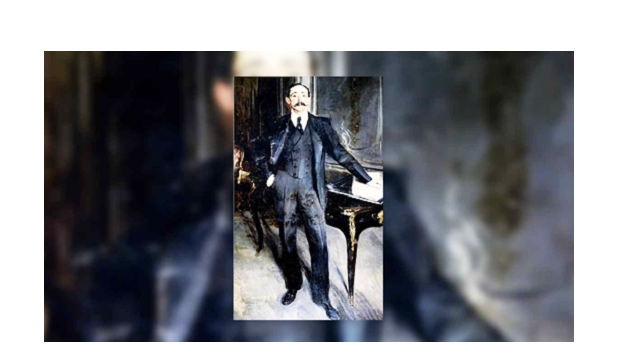
Sir Lionel Phillips 1903, oil on canvas by Giovanni Boldini, Johannesburg Art Gallery

Lady Florence Phillips 1909, oil on canvas by Antonio Mancini, Johannesburg Art Gallery
Max Michaelis was born in Germany in 1852. As a young man he worked in a Frankfurt banking house before migrating to South Africa in 1876. He went to the Kimberley diamond fields and was one of the founders of Wernher Beit & Co. After gold was discovered on the Witwatersrand he moved to Johannesburg, where he became manager of the Central Mining and Investment Corporation. He spent nearly 25 years in England at the company’s headquarters in London and led a very secluded life there on his country estate.
Michaelis was a great philanthropist and we have much to thank him for: a £5000 donation (one of the biggest) to Florrie Phillips’s purchasing fund for the Johannesburg Art Gallery (calculated as being worth somewhere between £500 000 and £4 million in today’s money); the establishment of the Michaelis Art Library in Johannesburg; the collection of Dutch and Flemish old masters in the Michaelis Collection, housed in the Old Town House, Cape Town; a Chair of Fine Arts at UCT and much else besides. On his death, his wife donated 53 Old Master drawings and 59 painting to the South African National Gallery, and 58 paintings to the Pretoria Art Museum. His is the biggest benefaction of art to South Africa by a Randlord.
Sir Ernest Oppenheimer and his son Harry are somewhat of a problem when it comes to gauging their role in supporting the arts – not because they did not play a big role but because of the private nature of their support. Also, a great deal of what they made possible was done through Anglo American (the Chairman’s Fund) and De Beers, essentially shareholder’s money. Sir Ernest made some considerable donations to educational institutions in South Africa and Great Britain. On his death in 1957 his estate was bequeathed to his son Harry. His will contained no charitable bequests but Harry immediately formed the Ernest Oppenheimer Memorial Trust, to which he gave £1 million.
It is interesting to note that much of what has been made available to the public in terms of art and culture remains largely under the control of the persons or bodies that made the loan. So, for instance, the Humphreys Loan Collection and Timlin Collection in the William Humphreys Art Gallery in Kimberly are on indefinite loan from De Beers as is the Brenthurst Collection of African Art in the Johannesburg Art Gallery. The Brenthurst Library in Johannesburg has until recently published important manuscripts and pictures in the library, but these were prestige publications produced in limited editions. Although one can talk of an admirable institution in this instance, it is not exactly a public one. In Sir Ernest’s obituary, published in The Times,his philanthropy is described as ‘stealthy and imaginative’ – a policy which, to a certain extent, is still pursued today.
COLLECTORS
Ben and Cecilia Jaffe
Ben Jaffe was born in Paterson, New Jersey, USA, in 1890. His mother could not adjust to life in America so returned to her country of birth, Lithuania, with her four children. Their return was, however, short-lived as they once again emigrated, this time to South Africa, arriving in Cape Town in 1903. Cecilia Shapiro was born in Lithuania in 1891. Her father, who had been to South Africa several times, in 1907 persuaded his wife to follow him there with their three children.
Ben and Cecilia were married in 1913. They settled in Cape Town, where Ben worked as a bookkeeper/accountant on a modest salary. They immediately took a keen interest in the city’s cultural activities. Ben was present at the first concert given by the Cape Town Municipal Orchestra in February 1914. Cecilia had just given birth to their first child and could not attend. They continued to subscribe until the death of Cecilia in 1977 – they were members for 63 years!
Ben never owned a car although he was one of the first people to get a driver’s license in Cape Town, in 1913. Their seven children were all university educated, there was always food on the table and they kept an open house for all and sundry. Despite all this, the Jaffes were able to put together an incomparable collection of South African art, as well as a fine collection of decorative art. At the time of Ben’s death in 1978 the collection included sixteen Gregoire Boonzaier paintings, five works by Cecil Higgs, seven by Wolf Kibel, twenty by Lippy Lipshitz, six Freida Locks, twelve by Irma Stern and nine by Jean Welz – an outstanding testament to their support for the arts and local artists.
For many who knew the Jaffes, the most vivid and joyful memories are about their ‘open house’ on Sunday evenings after the symphony concert. Lippy Lipshitz, Gregoire Boonzaier, Jean Welz – in fact all the artists active in Cape Town at the time – dropped in regularly as well as visiting artists, musicians, academics and writers. Stories around these evenings are legendary, particularly those relating to Irma Stern, probably one of the most regular visitors. As described by one of the Jaffe children, she was “an oddly warm friend with a most abrasive personality. She regarded hardly any picture in our house, except her own, as worth hanging”. Sadly, after Ben died, all efforts to keep the collection together failed, and I ended up being commissioned to sell it at auction in Johannesburg in October 1981.
Jack and Helene Kahn
It was only when their collection of South African paintings came up for auction in Cape Town in February 2007 that the South African art world sat up and took notice. This auction marked a turning point for the South African art market.
Jack Kahn’s family came from Latvia. His father owned the Orient Candle Factory in Roeland Street, Cape Town, and it was here that Jack first met local artists – Wolf Kibel and Lippy Lipshitz had their studio in the building adjacent to the factory. The studio became known as the Palm Studio, recorded in many paintings and reminiscences. Kibel in particular made a big impression on Jack and he often recounted how his father gave Kibel candle wrapping paper when he ran out of materials – and no doubt helped him with many other things too. How often have I not come across Kibel drawings or watercolors on coloured paper – candle wrapping paper!
Jack Kahn married Helene Levitt in 1961. They had no children. In their very quiet way the couple put together an amazing collection which, as proved later, collectors were willing to give their eye teeth for. In their unpretentious Sea Point flat the pictures were rarely seen by anybody but themselves although they were always prepared to lend them for public exhibitions. I had the pleasure of being invited to their flat from time to time. They regularly attended auctions and previews but always remained very humble about their collection.
Jack Kahn died in 2005 and Helene some months later in 2006. Joe Wolpe very aptly described Jack as “someone who will be remembered with great respect and affection by all who knew him as a thoroughly decent human being of dignity, integrity, unassuming, quietly-spoken, all-round gentleman of the old school”.

Irma Stern, Portrait of an Indian woman 1936, oil on canvas
When it came to art, the words ‘money’ and ‘investment’ were not in their vocabulary. I would like to believe that it was for this very reason that when the collection was sold, it proved such a great success in every respect – including as investment. The auction of 46 paintings and sculptures raised just over R23 million against a presale estimate of under R7 million. The highest price was paid for Irma Stern’s Indian woman, which made R6.6 million – the then absolute record. Sometime after the auction The Economist noted that prices for Stern had stagnated and that only after two Sterns sold on the Kahn auction for R6,6 and R2,64 million respectively did her work gain international renown.
The most heartening part of this story is the fact that the Kahns left the bulk of their estate to charity.
DEALERS
Joe Wolpe
Joe Wolpe was born in Cape Town in June 1922. His father Max had immigrated to South Africa from Lithuania at the beginning of the century. Max was a freelance photographer, later very successfully turning to picture framing. Joe started his working life in 1940 as an articled clerk, aiming to become an accountant. In 1945, however, when his father’s health deteriorated, he seized the opportunity to join the family business.
Slowly, through circumstance and Joe’s own doing, the business was transformed from purely framing to framing and dealing in art. Few dealers have managed to maintain such a consistently high standard as regards aesthetic values as Joe has. With his remarkable instinct to recognise great talent, integrity and a fine sense of humour, he is a thoroughly lovable person, always putting the artist’s interests first. I can add that he is an accomplished artist in his own right, although very reticent about this talent.
Many South African collectors are or were greatly indebted to Joe for recommending or coaxing them into buying major works of art they have never regretted buying. So often when I come across a major South African painting, I can trace it back to him – as he only sold paintings he himself liked one senses or recognises a certain pattern.
But, it was not only as a dealer in South Africa art that Joe excelled. At one time he was the most important local dealer in international art. Those collectors who made use of his services as consultant and trusted him to buy for them in the main art centres of the world built up remarkable collections. Purchases included works by painters such as Marc Chagall, Ben Nicholson (his favorite – paying the record price for the artist at a Sotheby’s auction in London in 1971) and Giorgio Morandi and famous sculptors such as Henry Moore, Elizabeth Frink, Barbara Hepworth and Marino Marini.
Louis and Charlotte Schachat
Louis was born in 1926, the son of a Lithuanian father and English mother, and grew up in Robertson. His father traded in ostrich feathers and speculated in cattle. Louis qualified as a lawyer and practised in Cape Town for some twenty years. During this time, he married Charlotte and raised a family, two daughters and a son.
The Schachats started collecting oriental carpets and South African paintings. The latter became their enduring passion, to the extent that in 1971 they decided to open an art gallery – Die Kunskamer – which was to become a household name in South African art circles. The choice of an Afrikaans name is not surprising. In Robertson, Louis had grown up in a largely Afrikaans community and spoke the language fluently.
Die Kunskamer soon became a dominant force in the South African art market. Given Louis’ integrity, sound judgement, discerning eye, enthusiasm and excellent relationship with collectors, artist and fellow dealers and auction houses this was hardly surprising. Here they mounted major exhibitions and set new standards of excellence.
The tumultuous politics of the 1970s tested South African society to the limit. Needless to say, the local art market came under severe strain and by 1980 many galleries and dealers had closed their doors. Louis and Charlotte, however, had faith and confidence as well as the support of a loyal client base, admiring collectors and friends to carry them through these turbulent times.
Louis had the courage and insight to expand his business beyond the comfort zone of established artists. Over the years he encouraged and supported young artists. He gave many an opportunity to exhibit at Die Kunskamer and acquired their work not only for stock but for his own collection. By way of generous donations and sponsorships, the Schachats supported numerous exhibitions, publications and other art-related events.
There were several other dealers who positively influenced both collectors and the art market:
Eljra Solomon was one of seven children born in Parow, Cape, where his father was a scrap metal dealer, amongst other things. His youngest brother Yonty (Jonathan) became a highly respected concert pianist and in Britain professor of music at both the Royal College of music and Trinity College.
Eljra and his partner had a nursery in Tokai. They put together a remarkable collection of South African paintings. On his partner’s death the collection was sold to Dr and Mrs Anton Rupert and forms the basis of their collection. Eljra became an art dealer moving to Paarl where he had a charming double-story Georgian house on the main road. He died when his car hit a buck while he was returning from a trip to Johannesburg.
Solly Disner was born in 1909 in Lithuania and came to South Africa in 1927. Initially he had a general dealer store on the Cape Flats. In 1940 he turned to sculpting and was reasonably successful. He also acted as art advisor to respected collectors such as Jack and Helene Kahn.
David Heller was a Cape Town antique dealer who put together an important collection of Cape silver, now in the Cultural History Museum, Cape Town. He was also responsible for two important books on Cape silver and one on VOC glass.
Ashbeys Galleries was founded by Edwin Ashbey in 1891. In 1914 he sold the business to Morris Robinson and left for Australia. Until well into the 1950s the galleries could be hired for exhibitions and auctions. So, for instance, John Marcus conducted auctions at Ashbeys. Morris died in 1946 and his son Basil – although he had not previously been involved in the business – took over on his return from service in the Second World War. Over many years, he and his wife Sue built up a remarkable collection of South African art and decorative arts, during which time Ashbeys was one of the most prominent auction houses in Cape Town.
I conclude by noting a few art dealers operating mostly out of Johannesburg.
Matthew (Taffy) Whipman, an artist, gallery owner and art framer, was one of the first art dealers to introduce European and British graphic art to South Africa. He specialised in selling lithographs, multiples, etc. by the likes of Chagall, Braque, Matisse and Moore.
Linda Goodman, later Givon, was born in Johannesburg in 1936 and opened the Goodman Gallery in Hyde Park, Johannesburg, in 1966. All along, the accent of the gallery was very much towards younger contemporary artists. In many ways, artists such as Cecil Skotnes, William Kentridge and Willie Bester owe at least some of their success to Linda. Although she sold her gallery some years ago [since 2008, it has been under the directorship of Liza Essers] she continues to take an active interest in the art world.
The list of people I have mentioned is by no means complete and if there are serious omissions I apologise. I conclude with a very apt quote from an essay published in Harper’s Magazine in 1899 in which Mark Twain observed:
. . . If statistics are right, the Jews contribute but one percent of the human race. It suggests a nebulous, dim puff of stardust lost in the blaze of the Milky Way. Properly, the Jew ought hardly to be heard of but, he is heard of, has always been heard of. He is as prominent on the planet as any other people, and his commercial importance is extravagantly out of proportion to the smallness of his bulk. His contributions to the world’s list of great names in literature, science, art, music, finance, medicine, and abstruse learning are also always out of proportion to the weakness of his numbers. He has made a marvelous fight in this world, in all the ages: and has done it with his hands tied behind him. He could be vain of himself, and be excused for it.
Editor’s note: In the last year of his life, the renowned fine art expert and auctioneer Stephan Welz gave a number of public lectures in Cape Town and Johannesburg on the topic, ‘The important role played by the Jewish community in South Africa with particular reference to the visual arts and cultural history’. Amongst those who approached him afterwards for a copy of his lecture was Prof. Viola Makin. Sadly, before he could comply with the request, Welz passed away on 25 December 2015.
Prof Makin later made enquiries to find out if the family had a copy and were willing to share it. After a few false starts and lost emails, a transcript was gratefully received in September 2017. During a subsequent discussion with SA Jewish Board of Deputies (Cape) Deputy Director Gwynne Robins (known to Jewish Affairs readers as Gwynne Schrire) about South African Jewish artists for possible curatorial research, it emerged that the Board had also asked Welz for a copy, but had not received one. The transcript was then shared with the Board and, after being edited by Prof. Makin, submitted for publication.
The late Stefan Welz was regarded as the leading expert on South African art and antiques, with 35 years of experience. After earning his Bachelor of Communications degree at the University of South Africa, he was appointed to the Board of Sotheby Parke Bernet in South Africa. By 1983, he was a director of Sotheby’s London. This later led to the formation of Stephan Welz and Co., which he sold in 2006 to join Strauss & Co.
Professor Viola Makin is Strategic Leadership and Governance, holding a doctorate from the University of Pretoria and an Honours degree in Curatorship from Michaelis School of Fine Art, University of Cape Town. She is an independent art curator and consultant at CurateSA (https://www.curatesa.com).

Linda Givon and Norman Catherine at the first Goodman Gallery in 1973


