
(Author: David Saks, Vol. 70, No. 2, Rosh Hashanah 2015)
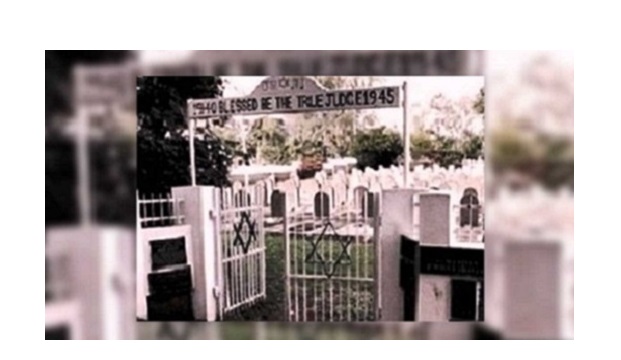
- Feature image: The St Martin’s Jewish Cemetery in Mauritius, where 127 Jewish detainees who died on the island during World War II are buried. The cemetery was taken over by the SA Jewish Board of Deputies after the war, and is today maintained by the African Jewish Congress.
When the South African Jewish Board of Deputies took a decision in the middle of 1941 to launch a monthly bulletin – to be called Jewish Affairs – the two issues of dominant concern to local Jewry were the continued high levels of virulent antisemitism in South Africa and the country’s involvement in World War II. Given the profoundly unsettled nature of the times, it was felt that annual conferences and occasional report-back meetings were no longer sufficient to keep the Jewish community abreast of what was happening and that a more regular channel of communication needed to be established.

The early issues of Jewish Affairs were dominated by war news of Jewish concern, including on local recruiting campaigns, fundraising efforts, casualty lists, military awards and, more broadly, the impact of the war on world Jewry, including ever worsening reports on what had befallen Jews in areas under Nazi occupation.
On 6 September 1939, following the narrow defeat in Parliament of the pro-neutrality faction headed by Prime Minister J B M Hertzog, South Africa declared war on Germany. The next day, SAJBD Chairman Cecil Lyons wrote to the newly appointed Prime Minister, General the Rt. Hon. J.C. Smuts, pledging the full support of the Jewish community:
Dear General
Smuts,On the occasion of your acceptance of the heavy responsibility of the Government in this hour of crisis, we desire respectfully to reaffirm the loyalty of the Jewish citizens of the Union for their country and their readiness to serve it with faithfulness and devotion.
We desire, too, to convey to you personally the prayer which we know is in the hearts or all the Jewish citizens of this country, that your work on behalf of the South African people in these days of difficulty and trial will be blessed by the Almighty.
This letter went beyond standard polite assurances of Jewish loyalty from the community’s representative spokesbody. Even more than for those of British origin, this was a conflict whose waging and outcome concerned Jews in the most painful and immediate way. At the commencement of the war, few if any can have anticipated how total would be the catastrophe that would befall European Jewry. That being said, there were already sufficient indications that the outcome of the struggle would be of crucial importance to the Jewish world, and that consequently, there was an especially pressing need for Jews to actively support the Allied cause. In the wartime debates at SAJBD conferences, speaker after speaker stressed that the community had to go beyond merely “doing its bit”, but must rather exceed what other groups were contributing. This was not in order to counter perennial antisemitic slurs that Jews were ‘shirking’ (which had been a major motivating factor for Jewish participation during the previous World War), but rather because this was a conflict that directly involved Jews over and above the rest of South Africa. It should always be borne in mind that the great majority of South African Jews were first or second-generation East European immigrants or recently arrived refugees from Germany, and hence in most cases had relatives or friends still trapped in Nazi-occupied Europe. A second powerful motivating factor was the threat posed by local antisemitic movements, who quite openly identified with the aims and ideologies of Nazism.
Notwithstanding the view that Jews should support the war effort because of the intrinsic nature of the conflict rather than to appease those who accused them of not pulling their weight, the Board nevertheless took a decision to publish a booklet, entitled They Answered the Call, to publicise how the Jewish community was contributing.1 Two editions were eventually brought out and widely distributed around the country. The Board continued to compile statistics and other war service-related information regarding Jewish participants. At its 1945 national congress, it was reported that the number of South African Jewish men and women who had served in the SA and Allied forces as of 20 February 1945 was just under 10 000 (9 862), out of 210 000 white South Africans who served. This figure is proportionate (but, somewhat surprisingly, no more than that) to the Jewish percentage of the white population at the time (4.5%). Total casualties at that date were 1129, made up of 357 dead, 309 wounded, 28 ‘missing’ and 609 Prisoners of War. The number of decorations and awards was 170, the great majority of them being for bravery.

At the Board’s 1940 congress, resolutions dealing with the war and its problems were adopted. Among them the following stood first:
At this critical hour when Nazism is destroying the liberties of nations and individuals, and challenging the fundamental ideals of civilisation, this Congress of South African Jewry solemnly affirms the obligation of every citizen resident in the Union to rally to the defence of the country, and further pledges that the Jewish community will do all in its power to assist the Union and its allies in their fight for victory.
The SAJBD’s own wartime activities took many forms. Domestically, it included proactively encouraging and facilitating Jewish recruitment into the Union Defence Force, providing for the needs – spiritual, material and cultural – of Jewish members of the Forces and fundraising for war-related causes. To implement these goals, three special War Committees were established, namely the War Service Council, the War Emergency Council and the Soldiers Assistance Committee. The first was “charged with….invigorating the community’s direct contribution to national service”, the second had the task of “assisting the Jewish chaplains in their ministrations” and the last was “to attend to the needs of serving and discharged soldiers” whose cases were not sufficiently dealt with within the ambit of the Governor General’s National War Fund and other national organisations.2
Immediately after its 1940 national congress, the War Service Council embarked on an intensive campaign to stimulate the war effort. Numerous community meetings were held where addresses were delivered by speakers on behalf of the Board in support of the Prime Minister’s recruiting appeal. For that year’s High Holidays, Jewish ministers were asked to deliver sermons on the subject of national service, and this request was thereafter issued each year thereafter for the principal Jewish holidays. Through the Special Committee of Jewish Recruiting, twenty prominent Jewish community members were co-opted to canvas Jewish employers with a view to their signing on to an undertaking, on the lines of that drafted by the Johannesburg Chamber of Commerce, pledging to give allowances to employees (whether Jewish or not) who volunteered to serve. It was accepted as a major obligation of the SA Jewish War Appeal to assist soldiers and their dependants in cases of hardship arising from war service. Monies set aside for this purpose were administered by the Board’s Soldiers Assistance Committee, which worked in close collaboration with the Governor General’s National War Fund and the Demobilisation Committee. Cecil Lyons represented the Board on the National Council of the Governor-General’s National War Fund, and was in due course appointed a member of the National Executive of the Fund and Chairman of its Fund Raising Committee.
Following the implementation in mid-1944 of a new recruiting drive for reinforcement for the 6th SA Armoured serving in Italy, the War Service Council launched an intensive campaign within the Jewish community. Jewish officers addressed numerous meetings of Jewish organisations, with particular attention paid to university students, a general letter of appeal was sent to all Jewish householders and the Jewish press were supplied with publicity material. In March 1942 Captain H. Serebro, a former Mayor of Volksrust who had returned from service in North Africa, was appointed itinerant recruiting officer for work in the Jewish community. He was formally commended for the “energy and tact” with which he had carried out his duties, in collaboration with the War Service Council. Opportunities were also created for encouraging the enlistment of Jewish women in the Women’s Services, and meeting to this end were held with representatives of Jewish women’s organisations. For those debarred by physical disability or other causes from joining the full-time forces, steps were taken to bring the claims of the National Volunteer Brigade (Civic Guards, the Red Cross and St. John’s Ambulance Brigade) to their notice.
The Board’s War Emergency Committee’s role was to deal with such questions as the welfare of Jewish members of the forces and the appointment of Chaplains. By the end of 1944, there were six full-time Jewish chaplains to the forces “up north” and in the Union there were five full-time and thirteen part-time chaplains. When the 6th SA Armoured Division went to Italy, the Board provided a mobile synagogue for the use of its Chaplains. At the instance of the Board, the Union of Jewish Women defrayed the cost of the religious appurtenances and the furnishings for the new synagogue at Voortrekkerhoogte. The Board itself was instrumental in securing furnishings for the non-denominational Chapel of Zonderwater and further defrayed the cost of furnishing the Jewish Chaplains’ quarters at Voortrekkerhoogte. Through the Jewish chaplains in Egypt, the Board facilitated visits by Jewish and non-Jewish members of the forces to Palestine, and donations were made to the Jewish Soldiers Welfare Committees there. From time to time, at the request of its counterparts in the UK, the Board assisted Jewish members of the Imperial forces stationed in East and West Africa.

In addition to its work of seconding the efforts of Jewish Chaplains, the War Emergency Council provided in various ways for the welfare of the Jewish soldiers, both locally and in the operational areas. Especially welcome, no doubt, was the provision of reading matter. Large quantities of books and periodicals (including Jewish Affairs) and pamphlets dealing with Jewish subjects were purchased and regularly despatched. In all, exclusive of pamphlets and journals, well over 18000 books of Jewish interest were sent to Jewish members of the forces. Gifts were distributed for the major festivals and other suitable occasions, including to patients of the military hospitals and convalescent houses. The War Emergency Council further involved itself in the Prisoners of War Relatives Association, making annual donations towards the expense of its monthly magazine.
In its reports to congress, the Board singled out for commendation the Soldiers’ Canteen conducted by the Jewish Ex-Service League at the Jewish Guild, Johannesburg, the billeting service of the Sisterhood of the Johannesburg Jewish Reform Congregation, the Durban Jewish Club’s Soldiers’ Canteen and the Services Club of the East London Jewish community. In Cape Town, the Board’s Cape Committee funded the canteen for visiting troops conducted by the Union of Jewish Women at the Zionist Hall.
The Board further felt it necessary “to give a lead to the Jewish Community with a view to the avoidance of ‘ostentatious festivities’ and the practice of austerity in wartime”. To this end, conferences were held with representatives of various congregations, and leaflets on the subject were issued. A conference convened in March 1942 unanimously adopted a resolution directed at “eschewing the usual festivities on the occasion of wedding and barmitzvahs”. Among minor war problems, the Board was called upon to assist when the community was found unprepared for the shortage of matzoth over the Pesach of 1944.
Further afield, the focus was on helping to relieve the plight of Jewish victims of the war. Anticipating that Jewish sufferings in Europe was likely to be on an “unprecedented scale”, the Board took a decision early on to organise a War Victims’ Fund similar to that established during the previous global conflict. A sum sent by the Board became the nucleus of a fund of £30 000, to which other Jewish bodies abroad also contributed, and which made possible a relief programme for Polish refugees in the Vilna area to be carried out by the US Joint Distribution Committee.
Of particular note is the assistance provided by the Board to the more than 1500 Jewish detainees on Mauritius, all refugees from Nazism who had been interned on the island after being denied permission by the British authorities to settle in Palestine. This included providing siddurim, reading material, essential medicines and other provisions. After the war, the Board’s connection with Mauritius continued through ensuring the upkeep of the St Martin’s Jewish Cemetery, which was extensively restored at its behest in the 1990s. Since then, this work has been taken over by the African Jewish Congress, whose head offices are located within the administrative structure of the SAJBD. Rabbi Moshe Silberhaft combines his work of Spiritual Leader to the South African Country Communities within the SAJBD’s structures with that of CEO of the AJC. In 2014, a memorial centre and exhibition recording the story of the detainees was opened.

St Martin’s Jewish Cemetery, Mauritius
The SA Jewish War Appeal’s general policy was to act autonomously, but wherever collaboration with other world relief bodies was felt to be in the best interests of the war victims, it co-operated with such international Jewish relief bodies as the Joint Distribution Committee, the Jewish Agency and the World Jewish Congress. A monthly remittance was sent to Switzerland exclusively for the benefit of Jewish refugee children, and through the SAJWA, arrangements were made for blocked account facilities that enabled people in South Africa to make small personal remittances to their dependants in that country. Further substantial sums were collected for Ort-Oze in Switzerland, a body “dedicated to promote retraining and health of central and eastern Europe’s Jews”. As soon as the advance of the Allied forces made North Africa accessible, funds were sent to Algeria, Tripoli, Benghazi and Casablanca. Monthly remittances were sent to Spain and Portugal to assist the Joint Distribution Committee in its relief activities, and a substantial sum was sent to Stockholm to assist the World Jewish Congress in sending small food parcels to prisoners in Bergen-Belsen, Birkenau and other concentration camps. Further funds were sent to assist in the transportation and maintenance of refugees, chiefly children, in Teheran, for refugees from Hungary, Bulgaria and Rumania and for the relief of Jews in Greece. As soon as contact with Poland became possible, the SAJWA purchased a large quantity of clothing and food from lend-lease supplies in the Middle East, and some 56 tons of goods were sent to Polish Jewry in the name of South African Jewry.

Clothing Depot SA Jewish Appeal, Johannesburg
As more was learnt about Nazi atrocities, the Executive Council appointed a Special Committee on the Tragedy of European Jewry (on which the SA Zionist Federation and the ecclesiastical authorities were represented), the main object of which was to bring home to the public the significance of the news in order to arouse “strong public indignation in the hope of exercising a restraining influence on the Nazi leaders”.3 Reliable information regarding “the diabolical policy of mass extermination

Day of Mourning, Cape Town City Hall, 29 December 1942. Rabbi Israel Abrahams reads the opening prayer.
of the Jews in Europe” began reaching South Africa in the latter part of 1942. A Day of Mourning, the first of several, was held on 29 December that year, for which Jewish business premises closed for part of the day, and mass meetings were addressed by Jewish and Christian leaders throughout the country.

Day of Mourning, Johannesburg City Hall, 29 December 1942.
Among other steps taken in attracting the attention of the public was the wide distribution amongst Members of Parliament, clergymen and others of an issue of Jewish Affairs containing material relating to the tragedy of European Jewry. In February and again in September 1943, joint deputations of the Board and the SA Zionist Federation met with Prime Minister Smuts, urging him to take “every possible measure which could offer rescue, relief and asylum to the victims of the Nazis”. Smuts was reportedly, “sympathetic but could not offer much hope of a successful action”.
Ultimately, despite the endeavours of the Jewish communities and the Allied nations, the Board’s report to congress in 1945 conceded sombrely that it had “not been found possible to take any practical steps to save more than a mere handful of the victims of the Nazis, who as they saw their doom approach, intensified their bloody work”.4 For the time being, the immediate glow of victory helped to lessen the full impact of what had happened within the community. Only in succeeding years, as the enormity of the catastrophe sunk in, would it come to dominate how South African Jews looked back on the war, to the point when the victory over the Nazis regime and the part they had played in it would hardly be remembered at all.
David Saks is Associate Director at the SA Jewish Board of Deputies and editor of Jewish Affairs.
Notes
- A 180-page book, entitled South African Jews in World War Two, was brought out by the Board in 1950.
- SAJBD Reports to Congress, 1942, S A Rochlin Archives.
- SAJBD Reports to Congress, 1945, S A Rochlin Archives.
- Ibid


