
(Author: David A Sher, Vol. 68, No. 2, Rosh Hashanah 2013)
The Great Synagogue in Wolmarans Street, Johannesburg, can be seen as being reflective of and formative in the history of the Johannesburg Jewish community as a whole. The synagogue traces its roots as far back as the founding of Johannesburg itself. On 10 July 1887, in Mr Barnet Wainstein’s shop on Market Square, it was decided, after the first recorded Jewish death and burial1, for “the present meeting to form itself into the Witwatersrand Goldfields Jewish Association”. Rev. Joel Rabinowitz, then fortuitously working in the town, led Johannesburg’s first official High Holy Day services, held, with 500 worshippers, on 19 September 1887 at the Rand Club. In January 1888, the congregation purchased two stands in President Street and its synagogue, declared “the most pretentious one of the kind in this part of the world”2, was opened on 22 September 1889 by its new minister, Rev. Mark L. Harris.
The first significant secession from the congregation took place in 1891, with East European Jewish immigrants breaking away because they found the service too anglicised3. Their own style of worship, moulded in Lithuania, had been too uninhibited and brief for them to feel at home with the rather lengthy, formal service that manifested itself in President Street. Eventually, the newcomers finally built their own synagogue, named the Beth Hamedrash (‘House of Learning’) in Fox Street in 1893. This doubled as a cheder and house of study of the Talmud and scripture.
Another schism occurred when a group more entrenched within the congregation felt that Rev. Harris, was too much of a ‘reformer’ in his approach, which allowed halachically-questionable innovations including a ‘mixed’ choir to be introduced4. The congregation committee was also horrified at his collecting money when officiating at funerals and Brit Milah ceremonies5. As a result, in December 1891, 150 of the founding and most wealthy members (including Sammy Marks) broke away to form a new congregation, named the Johannesburg Hebrew Congregation (JHC), under the leadership of Emanuel Mendelssohn6. The parent congregation changed its name to the Witwatersrand Old Hebrew Congregation (WOHC), and struggled on. President Kruger granted the JHC four stands on the corner of Joubert and De Villiers streets, near the original Park Railway Station, on which to build their synagogue. Known as the Park Synagogue, this was an Italian Renaissance building seating 800 people, decorated in a light blue and gold, with a beautiful cupola.
In 1898 the WOHC appointed Rabbi Dr Joseph Herman Hertz – then only 26 years old – as its minister. Hertz held a B.A. from New York College (1891) and a Ph.D. from Columbia University (1894). He also concluded a course of Rabbinical studies at the Jewish Theological Seminary in New York, receiving that hallowed institution’s very first Rabbinical Diploma. He subsequently served New York’s Syracuse Hebrew Congregation before coming to Johannesburg.
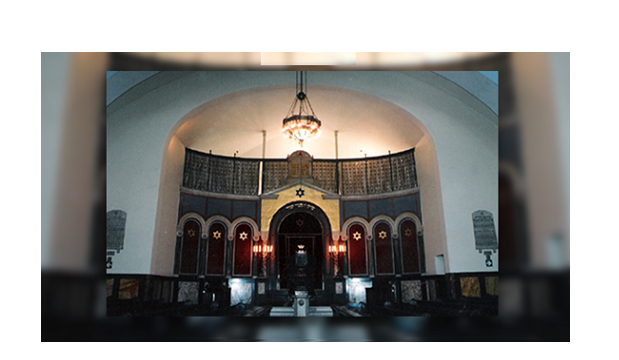
[/vc_column_text][/vc_column][/vc_row] Rabbi Dr J L Landau, Chief Rabbi United Hebrew Congregation, 1915-1942 In 1903, eager not to be outdone, the JHC brought out Rabbi Dr Judah Leo Landau, primary minister of the New Congregation in Manchester, to be its rabbi. Rabbi Landau produced several Hebrew literary works and was appointed as Professor of Hebrew at the University of the Witwatersrand (founded 1896). Both Hertz and Landau were vociferous in their Zionism, with the latter being the vice president of the SA Zionist Federation and a founder of the Jewish Board of Deputies. The background of the two congregations meant that some attempted to deepen communal schisms by provoking the two Rabbis against each other. This is clearly demonstrated in a spate of communication between Rabbi Landau and the Chief Rabbi of the British Empire, Dr N M Adler. Evidently, Rabbi Landau had not given an encouraging report on the state of affairs because Dr Adler wrote to him in relation to Dr Hertz, “it grieves me greatly that harmony has not yet been established.” He also made the pointed observation in somewhat of a classically Jewish ‘mussar’ (religious rebuke) style; “I can conceive no greater injury to the interests of religion than when members of a community find that the leaders wrangle instead of straining every nerve for the advancement of the Holy Faith and Kiddush Hashem (Sanctification of G-d’s Name)7”. In 1913, preparations were made, due to increasing numbers of congregants, for the erection of a new synagogue for the JHC. It was to be the largest Judaic structure on the continent. Siegfried Raphaely laid the foundation stone of the JHC’s new synagogue on 3 September 1913; after a year of construction, on 23 August 1914, Rabbi Landau officially consecrated the ornate new building. Sammy Marks had provided the building’s bricks and was honoured at the opening ceremony by presenting Rabbi Landau with the keys to the building. Swiss architect Theophile Schaerer had designed the imposing building to represent Johannesburg Jewry’s growing sophistication. Three arched doorways in an impressive redbrick facade marked the entry to a capacious vestibule. Four years prior to the synagogue’s opening, the congregation had received the saddening news that their first indomitable President, Emanuel Mendelssohn, had died, aged 618. His memory was now honoured with a marble plaque gracing the vestibule and an associated Biblical quote. A matching plaque was placed on the other side of the vestibule acknowledging the ‘eminent services’ of the tireless Dutch communal activist, Jacques Klisser. An immense main sanctuary of the building seated over 1400 people – 880 men, and 550 women. It consisted of an impressive and soaring space, offset with a gold Star of David in the middle of the dome. A set of leaded-glass arched windows running around the base of the dome lighted the interior. The dome itself was colossal, within which the women’s balconies sloped downwards. The ground floor consisted of a charcoal painted wooden floor in small graded steps, with nearly 900 mahogany crafted pews. A magnificent pair of tablets with the Prayer for the Royal Family (donated by Mayor Harry Graumann) were now moved from the Park Synagogue and placed in the new building, where they remained for many years. The proposed construction of an assembly hall was not executed in view of World War I, however, and at the war’s termination, the scheme was abandoned. The synagogue’s imposing structure set the style of future Johannesburg synagogues. Ark of the Great Synagogue (courtesy Rose Norwich) Since 1905, there had been fruitless deliberations between the WOHC and the JHC regarding their amalgamating. Rabbi Hertz’s departure to assume a ministerial position at the Ozar Yisrael Congregation in New York in 1911 and the decaying state of the President Street Synagogue presented an opportunity for the two congregations’ rapprochement after 24 years. After lengthy negotiations, an agreement was reached whereby, on 30 May 1915, the United Hebrew Congregation (UHC) was formed, with over 400 foundation members9. The second Park (later renamed Great) Synagogue on Wolmarans Street became the UHC’s principal house of worship.10 It was the first in South Africa whose Ark was orientated in the halachically correct manner – facing north, towards Jerusalem; other synagogues in the country faced east, the correct direction for the East European houses of worship. Thenceforth, all synagogues were constructed according to halachic dictates, taking their lead from the construction of the Great Synagogue. On 13 July 1914, the recently united congregation adopted its Constitution and bye-laws. The primary objects were: “(a) To establish and maintain a Synagogue (b) provide properly qualified officials and carry out all matters connected with the observances of the Jewish religion and rites; (c) unite…[all] Congregations and Institutions in South Africa; (d) establish a Beth Din, and extend its influence…amongst our co-religionists and (e) “establish a school or schools for the proper and efficient teaching of the Jewish Faith and doctrines, Hebrew language, literature and history”. All of these represented the desire of the Congregation to act as the recognised implement of the city’s entire Jewish community. Any primary minister to the Congregation would be expected to “hold the Rabbinical Diploma and a University Degree.” The minister, acting in his capacity as Chief Rabbi, would deliver “sermons, lectures, classes,” and “supervise all Ritual, Institutions such as Shechitaand Mikwah,” as well as acting “as superintendent of the religion classes and other educational institutions of the Congregation”. The list went on: “He shall supervise the Shochtim, Chazonim, and all teachers” and, unbendingly, “He shall attend Divine Service on Sabbaths and Festivals in his official robes.” The most arduous responsibility, however, fell on the ‘First Readers’ or ‘Readers’ who would “conduct Divine Service” and would have to be able to act as “Bal Korah” and “Bal Takia,” and, when required and when authorised, as Mohel. These should “assist at the solemnising of marriages, officiate at funerals, and the setting of tombstones,” and “visit the sick and dying”, and where appropriate, to “visit hospitals and prisons”. Additionally, they had to attend houses of mourning, be in attendance when the religious rites were performed to the dead, attend synagogue five minutes before the commencement of prayers, and “appear on all necessary occasions in their clerical dress.” The exhaustive list went on: they would need to “prepare the sons of Members for their Confirmation (‘barmitzvah’)”; assist in religious education, “supervise all the Sephorim”and be prohibited from engaging “in any business undertaking whatever”. A ‘Beadle’ (to be clad in “becoming attire”), ‘President’, ‘Chairman’ and selection of ‘preachers’ would be appointed by the Council and honorary officers.11 The synagogue’s protocol was undoubtedly based on the highly anglicised version of Britain’s United Synagogue, and the fact that many later congregations adopted almost identical constitutions reflects to what extent the UHC set the tone for future synagogues. The nusach or rite was stated as Ashkenaz in accordance with Litvak tradition, but in fact, the congregation followed the developing Nusach Anglia or English Rite12, best epitomised in the Singer Prayer Book and the Routledge Machzor(Festival Prayer Book) of which both were used in the Park Synagogue and subsequently by the UHC. Evidence of the long reaching consequences is the fact that most large congregations used these prayer books for many years; they are still in use today13. It was upon this convoluted amalgamation that Rabbi Landau was proclaimed Chief Rabbi of the UHC in 1945, with two secondary ministers – Reverends Samuel Manne and W Woolf. Any potential rivalry for this position was mitigated by Rabbi Hertz’s departure and upon Rabbi Landau’s later appointment as Chief Rabbi of the Federation of Synagogues, which encompassed all the Johannesburg and Reef Congregations. Rabbi Landau was eminently suited to this new office and exploited it to the full on behalf of his community. He played a foremost role in aiding the Chevra Kadisha’s efforts to establish kosher kitchens at the Johannesburg General Hospital and, most notably, in the formation of a much-needed Beth Din (Jewish Ecclesiastical Court) in 1915. The establishment of a Beth Dinis further testament to how the UHC served as a base for other offshoots of orthodoxy across the city. By now, gentile and Jewish leaders alike informally considered Rabbi Landau as leader of all South African Jewry, despite competition in Cape Town in the person of Reverend Alfred Bender of Gardens Synagogue. Rabbi Dr. Dennis Isaacs recalls how once when Chief Rabbi Landau “…was very ill and was confined to bed in the apartment he occupied in a block of flats across the road from the Great Synagogue, a whole section of the street was cordoned off and straw strewn over the street so that he should not be disturbed by passing traffic.”14 The most self-evident way in which the Great Synagogue played an important part within the wider community is that it was the seat of the Chief Rabbi. Rabbi Landau’s work has already been described and the congregation itself valued him immensely. For his 70th birthday in 1936, it presented him with a new motorcar and published a volume of some of the sermons that they had been privileged to hear from him for 22 years. In 1947, five years after his death, it was decided to pay tribute to him by endowing a Dr. J. L. Landau Chair of Hebrew at the University of the Witwatersrand. In 1943, the Council invited 36 year-old Rabbi Dr. Major Louis Rabinowitz, minister of the Cricklewood Synagogue in London, and Senior Jewish Chaplain of the Eighth Army in the Middle East to visit the congregation as soon as he could receive leave from the army. Rabbi Rabinowitz was appointed in a meeting that was also noteworthy for the decision that henceforth the synagogue would no longer be known as the Park but as the Great Synagogue. Rabbi Rabinowitz arrived in 1945 and, in morning dress and top hat, was inducted in a spectacular ceremony on 6 March. However, the community was unprepared for his passionate insistence on authentic Judaism. Intimately involved in all Jewish communal endeavours, he would insist on all functions, and particularly communal receptions, being held under the auspices of the Beth Din. Rabbi Rabinowitz’s ardent Zionism endeared him to his community. When British Foreign Minister Ernest Bevin was impeding the creation of a Jewish State,15 he was both forceful and unequivocal in his opposition. During a lengthy speech (he was noted for his excellent oratory), he famously tore of the medals he had been awarded during the war and flung them to the ground!16 It was not only in Jewish matters where Rabbi Rabinowitz’s fearless character found its expression. He was strongly opposed to the apartheid system and through his sermons demanded that Jews, who had known far worse, not be silent in the face of such vicious racism. He immigrated to his beloved Israel in 1961, leaving the post of Chief Rabbi vacant for two years. Rabbi Dr L I Rabinowitz, Chief Rabbi United Hebrew Congregation, 1945-1961 In 1962 Rabbi Bernard Moses Casper, Dean of Students at the Hebrew University of Jerusalem, visited the Great Synagogue over the High Festivals and created a most favourable impression with the worshippers; it was decided with wide acclamation in 1963 that the congregation would accept him as its Chief Rabbi. Rabbi Casper had served as a British army chaplain from 1940-1946, He was Senior Chaplain of the Jewish Infantry Group, serving in Egypt, Italy, Belgium and Holland from 1944-1946. His exploits and service in the Jewish Brigade are well documented. He had also served as minister at the Higher Broughton Synagogue in Manchester. The new Chief Rabbi was less fiery than Rabbi Rabinowitz, once remarking that he only fought “if he had a chance of winning”. It was during his tenure that what was termed a ‘concordat’ was secured with the Reform community, in terms of which their respective leaders would cooperate on all communal matters apart from spiritual ones. Rabbi Casper was known as a finer orator, and sensitive to all; his kindness extended to his Kenyan domestic help, for whom he attempted to find a suitable job with the Chairman of his Council before his departure.17 Prior to his appointment as South Africa’s Chief Rabbi, Rabbi Cyril K. Harris had been minister of London’s St John’s Wood Synagogue, a military chaplain and director of the Hillel Foundation. On 28 March 1988, he was inducted as Chief Rabbi by Chief Rabbi of Great Britain and the Commonwealth, Lord Immanuel Jakobovits, at the Great Synagogue. Over 3000 people were in attendance, including many gentile communal officials. As Rabbi Harris later recalled, “…the amazing thing was the number of people… The huge Wolmarans Street Synagogue was teeming and there was the electric atmosphere of a state occasion. Those who could not get a seat, and there were hundreds who came along for the rare spectacle…sat in the aisles with dozens squashed at the back18”. Rabbi Harris was noted for being ‘the right man in the right place at the right time19’. He involved himself whole-heartedly in the country’s transformation from apartheid to democracy, had a warm personal relationship with Nelson Mandela and was instrumental in the establishment of Tikkun (now Afrika Tikkun) to help impoverished blacks. Notably for the Great Synagogue, he now diverged from tradition by not confining himself to it as its official minister; he was also the last Chief Rabbi to be inducted at the venue. Johannesburg has long been regarded as being one of the great centres for Chazzanuth (cantorial renditions). This has its origins from the very opening of Wolmarans Street, in a ceremony featuring Rabbi Landau and Cantors Revs. Hirschowitz and Samuel Manne. The latter was the first truly eminent Cantor in the city, and thereby initiated the famous Johannesburg cantorial tradition20. Choral services were held in both original congregations, but it was at the Great Synagogue that great emphasis was placed on the choirmasters. Such choirs accompanied all services and in addition would often appear above the Ark when weddings were solemnised. Chief Cantor Pincasowitch replaced Rev. Manne. He was replaced on his resignation in 1927 by Cantor S. Rabec, who was replaced in turn by Chief Cantor S Inspektor in 1930. The latter had just flown in from Europe by aeroplane, something then noteworthy in South Africa with its yet undeveloped aviation. He had to be settled in hurriedly, since he had arrived on the eve of Rosh Hashanah and had to don his white robes almost immediately! Perhaps it was due to this insistence of high-quality cantorial services that other congregations laid emphasis on their chazannim. The Beth Hamedrash Hagodel, for instance, appointed Cantor Berele Chagy, one of the world’s most eminent cantors, in 193221. In 1936, Israel Alter was appointed as Chief Cantor of the congregation; he was to hold this office for over 25 years. Cantor Alter was appreciated by all sections of society, and former worshippers recall trekking from beyond the outer reaches of Doornfontein to hear his superb renditions22. The Chief Rabbi of Great Britain and the Commonwealth, Israel Brodie, once remarked how, 14 years later, he retained a ‘vivid impression’ of the service in the Great Synagogue, which he felt was “beautified by the rendering of the prayers by Chazzan Alter23”. In 1961, he moved to the United States. The Great Synagogue also had exceptional choirmasters. In 1963 Rev. Abram Mordechai Himelsztejn became choirmaster, having been prominent in the congregation for some years. Born in Warsaw, he practiced under such important European choirmasters as A. Davidovitz of the Zalman Nozhik Synagogue and David Eisenstadt of the Tlomztzka Street Synagogue. Anybody familiar with the world of Chazzanuth will be impressed to note that he conducted the choir accompanying performances by Cantor Gershon Sirota. Himmelsztejn held positions as choirmaster at Cape Town’s Tifereth Yisrael Synagogue in Roeland Street in 1936 and in 1942 began a lengthy service with the UHC, initially at the Yeoville Synagogue and later at Wolmarans Street. He stayed in this position for over 25 years. Rev. Himelsztejn brought fame to the Great Synagogue when he published two books of Chazzanuth compositions: LaChazan and Lamnatzeach; these are still sung today by cantors the world over. Many cantors graduated from the Great Synagogue Choir to become outstanding Chazzanim in their own right. Cantor Avron Alter, grandson of the aforementioned Israel Alter, studied under the baton of Rev Himelsztejn as a choirboy and is now Chief Cantor at the Sandton Beth Hamedrash Hagadol. Another fine Chazzan based in the Great Synagogue was Cantor Johnny Gluck, who performed such compositions by Cantor Josseleh Rosenblatt as Ki Lekach Tov and Vesechezenohas well as Yiddish folk songs and opera arias. He conducted many weddings alongside Rabbi Casper and the Great Synagogue Choir with Gus Levy24; sadly, he died at a young age. His death led to another prominent event for Johannesburg as a whole – the foundation of the Johannesburg Jewish Male Choir in 1985. This enthrals audiences to this day at events in Johannesburg, Jerusalem, London, New York, Sydney and other important cantorial centres. The Congregation had fine records so far as communal service was concerned; in 1923, it mourned the loss of Rev. Manne who had served for almost 24 years. 1925 saw the introduction of Gershon Grosberg as the second reader and choirmaster; this position he was to hold for thirty years. Another lengthy service of a different variety came to an understandable demise before the war – the old organ of the synagogue, in service since 1891, was replaced in 1939 with an electric organ. In 1942, the congregation’s Annual Report mentioned the formation of the Ladies Guild and also sadly noted the death of Chief Rabbi Lindau after a protracted illness. This was another example of lengthy service; Dr Landau had guided the spirituality of Johannesburg Jewry for almost forty years. A mass meeting was organized in the Synagogue with a stirring memorial service conducted by Rabbi Dr. A T Shrock, minister of the Yeoville Synagogue and Rabbi Isaac Kossowsky, the Av (Leader) Beth Din.25 The Report noted Rabbi Shrock’s unstinting service upon the Chief Rabbi’s illness. Later, Rabbi A H Lapin was appointed to aid him at both the Yeoville and Wolmarans Street synagogues. Rabbi Shrock’s service was long-standing as was Rabbi Lapin’s, who served well into the latter years of the century26. The congregation’s record for extended service was evident during 1947 when the Great Synagogue’s Beadle, N Hurwitz, retired after twenty years’ service. On 13 July 1953, Herman Baranov, Secretary to the congregation, celebrated forty years of service; sadly he died only a week later. Rev. Grosberg marked his 28th anniversary as choirmaster and second reader in May 1956; he had built up a choir that was “of the best in the country”27. Links were continued at the Synagogue in 1962 when Chief Rabbi Rabinowitz’s son, Jimmy, was appointed as children’s leader and Chief Cantor Alter’s son Eliezer as second reader after their fathers’ departures. Apart from setting the tone of religiosity in the community, the Great Synagogue also hosted many important events, some of them seminal in the development of Johannesburg Jewry. In November 1923, for the second time in the history of Johannesburg’s synagogues, a mayoral service was held at the Park Synagogue (as it was still called) in honour of councillor and mayor-elect M J Harris; the first such service had been held to celebrate Mayor Harry Graumann’s appointment in 1910 at the JHC. The occasion was made even more moving because the new Mayor was the son of Rev. M L Harris, one of Johannesburg’s earliest ministers, who as late as 1926, continued to conduct the children’s service at the Hebrew High School over the Days of Awe. The Synagogue continued to be the main venue for any Jewish related event and its splendid interior saw many other mayoral services. The congregation’s prominence as a representative of Johannesburg’s Jewry was evidenced by the participation of Zionist leader Dr Chaim Weizmann and Dr Alexander Goldstein at the synagogue’s services in 1932. The anglicised synagogue ensured that Johannesburg Jewry would retain its loyalist allegiance: the Silver Jubilee of King George V in 1935 saw a mass thanksgiving service held in the Park Synagogue with 4000 people crowding in to witness the service conducted by the Cantors and combined choirs of the Park, Berea, and Beth Hamedrash Hagodel Synagogues. The latter were large congregations in their own right and once again, their attendance in the Park Synagogue is a testament to its dominance and determination that the service would be on par with that of London’s finest28. The synagogue’s members, many of them European-born, were no doubt concerned at the growing unrest in Europe, with news of the Anschluss being sombrely received. Growing unease meant that the Jewish community decided to hold an intercession service on behalf of ‘Sufferers from the Nazi Attacks on Religion and Human Freedom’. This took place on the fast of 17 Tammuz, corresponding to 17 July 1938. A Special Service of Intercession and Prayer for the Success of the Allied Arms and the triumph of Justice was held at the Park Synagogue, on 24 May 1940, a day designated by King George VI as a national day of prayer. According to the Council of the Congregation this was “one of the most impressive services ever held in that synagogue. At least 3000 people attended and many hundreds could not gain admission.” Rev Dr Schrock officiated and Chief Cantor Alter and Cantor Backon, assisted by the Park Synagogue Choir under the conductorship of Mr Grosberg and accompanied by organist Esme Ratzker, led the service. The SA Jewish Ex-service League organised a parade of their members and there was a large number of Jewish soldiers in uniform. (Over 10 000 members of South African Jewry volunteered for service during World War II).29 On 2 December 1945, for the first time in the Transvaal, a Jewish service was broadcast from a synagogue. The occasion was the annual Hanukkah service held in association with the SA Jewish Ex-Servicemen’s League. It was the first service since the conclusion of the war, which had decimated the family of many members. For the first time in South Africa, the Ark was opened by a Cabinet Minister, Minister of Health Dr Henry Gluckman, thereby showing the congregations growing national influence. The fact that the Great Synagogue represented South African Jewry in the country’s largest town was made clear in 1947 at the Diamond Jubilee of the congregation, with a special service held at the synagogue on 2 July 1947. This service was broadcast and was followed by a reception at the Johannesburg City Hall, with Prime Minister Jan Smuts as guest of honour. The gathering included high-profile members of the Jewish community, members of the judiciary of the city, national government, church and the press. Evidence of the importance of the Great Synagogue’s celebration was made abundantly clear when the Prime Minister deemed the occasion prominent enough to include in his historic broadcasted address his proposed solution to the Palestine problem, in which he had been much involved, having encouraged the Balfour Declaration many years earlier. Some of these events were formative both spiritually and politically. It was only natural that the key event for Johannesburg Jewry in 1948, the service of Dedication and Intercession for the Welfare of Israel following the establishment of the Jewish State, was held at the Great Synagogue. Many hundreds were unable to gain admission. Although similar services were held in the other two UHC synagogues (Yeoville and Oxford), it was from the Great that all radio stations broadcast the inspirational service rendered by Chief Cantor Alter. On this occasion, a formative aspect of Johannesburg and indeed South African Jewry took place, for it was decided that the service would be conducted in the Sephardit or Modern Hebrew pronunciation, one that radically diverged from the pronunciation of virtually all Johannesburg Jewry, who followed the Ashkenazi,Litvak pronunciation. This change initiated by the Great Synagogue was introduced into the United Hebrew Schools of Johannesburg and remains the form of pronunciation in synagogues across Johannesburg and in the King David Schools to this day. During 1952, a most moving memorial service was held upon the death of Dr. Chaim Weizmann, first President of Israel and a tireless worker for Zionism who had counted several prominent South Africans as his closest supporters. Support for Israel did not suggest any lack of loyalist inclination; during 1953 another very well attended service was held to celebrate the coronation of Queen Elizabeth II. The Great Synagogue also served as the venue for celebration of communal achievements and another notable ceremony took place in 1958 when the synagogue honoured the 70th anniversary of the Jewish Helping Hand and Burial Society. Being representative of the community also had its downside; one night in January 1961, huge damage was suffered by the Great Synagogue structure when the eastern part of the building was blown up, considerably damaging the interior. Despite exhaustive investigations by police, the culprits were never found. “During the last 25 years the Jewish community has grown stronger and stronger, both financially and spiritually. A number of synagogues have been added to our Great Synagogue which still forms the pride of the Community, but it is most gratifying to be able to state that all synagogues are in an almost flourishing position, each contributing towards the spread of Judaism.” Thus opened the Chief Rabbi’s message in 1942. Rabbi Landau was pointing to the increasing numbers of Jews under his jurisdiction and was also hinting at the need for a more Torah-orientated community, the absence of which had long been a source of much pain to him. Most encouragingly, a new Chevra Mishna (‘Society for Study of the Mishna’) had been instituted at the Yeoville and Park Synagogues The Council of the Congregation reported that 244 marriages had been solemnised during that year and that a ‘Seyfer Torah’ had been donated to the Lusaka Jewish Refugee Settlement “in compliance with an urgent request…. for the High Festivals”. The formality of the synagogue was also observed when the council informed the congregation that they had abolished the “antiquated practice” of ‘Synagogue offerings’ which was the traditional rounds made during services collecting money for charity. 1942 was also the year in which the proposal was made for the erection of a synagogue in the Houghton-Saxonwold area; this would eventually be known as the Oxford Synagogue; the third synagogue of the United Hebrew Congregation after the Yeoville Hebrew Congregation had been erected in 1923. Other later offshoots were the Sandton and Randburg congregations. In 1952 part of the Simchas Torah service at the Great Synagogue was conducted with senior youth members of the children’s service acting as a choir. The Chief Rabbi hosted a fancy-dress Purim party at his home and a demonstration Seder was held for the children. The practice of encouraging children to participate in the service remains an integral part of services within the Union of Orthodox Synagogues today. The synagogue was also the setting of numerous customs that still characterise the Jewish community; in 1958, the first annually celebrated bat-mitzvah ceremony of the King David High School was held. Shortly afterwards a service for the Jewish Ex-Servicemen’s League in commemoration of those who had fallen in both World Wars and in the Israeli War of Independence took place. The congregation celebrated Tu b’Shvat, the New Year for Trees, on 5 February 1958 in a most original way when Ds J.M. Du Toit presented an olive tree grown from Israeli cuttings to the Great Synagogue. An innovative ceremony was held for planting the Biblical trees on the grounds of the Synagogue, with children reciting appropriate scriptural verses in Hebrew, Afrikaans and English. The congregation noted with pride that the Great Synagogue had served as a training ground for Rabbis Sydney Katz in Pretoria, Dennis Isaacs in Cyrildene and Ben Isaacson in Bloemfontein and Rev. Abner Weis in Durban; something indicative of the synagogue’s influence across South Africa. As the congregation celebrated its Golden Jubilee year in 1964 it was noted that in order for the synagogue to be successful a conscious effort had to be made “to bring the influence of the synagogue, on the social and cultural as well as the religious plane, into the homes and lives of its congregants, for the modern synagogue cannot remain static in its attitudes in a rapidly changing world.” And so the synagogue continued its tradition, with Hillbrow remaining an area populated by Jews. During Rabbi Harris’ tenure as Chief Rabbi, the community was changing. The baal teshuva movement was making its mark on the city and many young Jews now felt the attraction of observing Judaism in a more fastidious fashion. Chief Rabbi Harris jestingly referred to Johannesburg as the ‘ir hakodesh’ (holy city) and in this context it is understandable how the UHC appointed Mr Samuel Sher as Chairman of the Council in 1987. The new chairman, a regular worshiper at Wolmarans and Senior Warden at Oxford Synagogue, also maintained warm friendship with the haredi headship, including Rabbi Moshe Sternbuch30. More than once, he was importuned by members and ministers of the UHC to ask Rabbi Sternbuch to tone down his shechita (ritual slaughter) programme. However, as Jews slowly moved northwards and as Hillbrow degenerated during the 1980s, weekly attendance diminished (though the High Holy festivals still attracted numerous worshippers). In 1988 Rabbi David Hazdan became the synagogue’s minister, walking 10km home every Friday night from an area that had become progressively unsafe and from a service with worshippers at times equal in number to the choir. Debate began about relocating the synagogue, and despite understandable resistance and after several unpleasant incidents, the congregation began to identify a site for a new synagogue. In November 1994, after celebrating its 80th birthday, the Great Synagogue closed its doors with an emotional concluding service; the despondency was relieved by the possibility of relocation. A minyan was held at the Rabbi’s home on Currie Street with a little synagogue built, accommodating 120. On the Days of Awe, the congregation rented the Transvaal Automobile Club Hall, erecting facades depicting the old synagogue. This arrangement continued for five years. Efforts to relocate the congregation were frowned upon in the mid-1990s, with some maintaining that with a dwindling Johannesburg community, the community would flounder. Rabbi Hazdan, with a group of resolute congregants, fought this view. On Rosh Hashanah, 1997, he preached that “…If you reach the point that you’ve written off this Jewish community… we have to move into a tranquil surrounding to make the death palatable and less painful and nurse ourselves through the final moments. But if we believe that there is a chance to make a difference and mobilize forces and not see ourselves as a dying community, there is a completely different set of circumstances…we have to put on our ‘trackies’and become an environment that is actually going to give life.31” By the High Holy Days of 2000, the community had succeeded in constructing an elegant synagogue in Houghton Estate, which eventually filled its 650 seats. It is a popular synagogue; by Rosh Hashanah 2007, fifty seats were added with an overflow of sixty people. It recreates some of the old synagogue’s ambiance through the original fitments, including the chandeliers, candelabras, bimah, pulpit, pews, clock, ner tamid and foundation stones of Johannesburg’s earliest synagogues32, yet incorporates new elements, such as stained glass windows by Judith Mason, designer of the Constitutional Court’s windows. Despite the relocation of the Great Synagogue’s congregation and many of its fittings to a safer district, the edifice on Wolmarans Street remains. The plaques commemorating the work of Jacques Klisser and Emanuel Mendelssohn, the Ark and women’s gallery seating remain intact, despite its latest use as a house of worship and partially a chicken takeaway33. It is critical that measures must now be taken to ensure that the edifice becomes a protected structure, particularly in light of this magnificent building’s vital link to Johannesburg Jewry’s rich past. Noting Hillbrow’s inexorable decline, it was incontrovertibly prudent to relocate. Nonetheless the new synagogue, handsome though it may be, is not the same gargantuan edifice as the former synagogue. This was witnessed by the fact that the inauguration of Chief Rabbi Warren Goldstein was held in the Sandton Synagogue rather than in the Great Park Synagogue because of its greater seating capacity. The spirit, however, lingers on in Houghton Estate; congregants at the new synagogue admit that there is an aura of the old and the congregation remains committed to its history. It formally celebrated its 100th birthday as the successor to the Great Synagogue in June 2013. As has been noted, the Great Synagogue influenced every aspect of Johannesburg Jewish life, including synagogue architecture, the prayer book used, style of worship and customs, the cantorial tradition and even the way Hebrew is pronounced. It has trained ministers across the country and been the scene for Johannesburg Jewry’s proudest moments. Truly a testament to the community as a whole, it is a monument at risk that now needs to be safeguarded. David Sher is a student at Shaarei Torah Yeshiva in Manchester. His family has a long history of involvement in the United Hebrew Congregation. This article is adapted from his book on the history of Johannesburg Jewry, to appear shortly. NOTES
Setting the Style of the Synagogue in Johannesburg

The Chief Rabbis

Chazzanut and the Great Synagogue
The Great Synagogue: Dedicated Service
Special Services
Spirituality and Relocation
What has been left behind


