
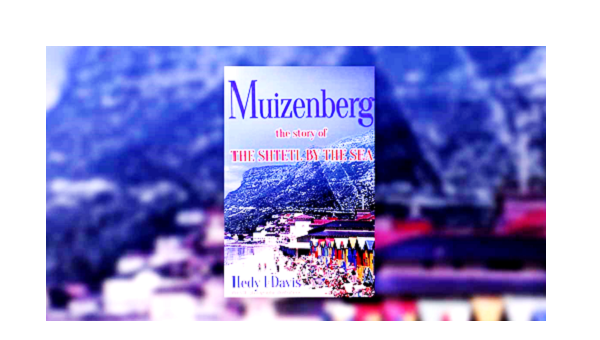
(Reviewer: Ralph Zulman, Vol. 70, No. 2, Rosh Hashanah 2015)
This is a fascinating account of a place that for many years was the favorite and fashionable annual holiday resort of many South African Jews. The author, a teacher, lecturer, researcher and social historian, has made every effort to trace and acknowledge sources and has made extensive research to ensure accuracy.
The book consists of nine chapters (each detailing the period that it covers), acknowledgements, collections, institutions, various interesting photographs, bibliography, newspapers and periodical references, directories, a glossary and an Index. Each chapter is accompanied by a number of interesting photographs of the period. In Chapter One, a perhaps little-known early history of the place between 1880 to1903 is recounted. The activities of Isidore Hirsch, who is considered to be the founder of Muizenberg, and his conflict with his nemesis, Professor James Gill, is described. Hirsch acquired the Farmers Peck Inn in 1880. His wife, Rosa, established herself as a cook par excellence, and stories of her talent were spread far and wide. On Sundays, Cecil John Rhodes would often ride out to Muizenberg on horseback with a group of friends and enjoy the fine dishes that she had prepared. The chapter ends with the death of Rhodes in Muizenberg in March 1902, the announcement of which ensured that the name of Muizenberg would ‘reverberate’ all over the world.
Chapter Two deals with the years 1904-1926, during which period the Muizenberg and Kalk Bay Hebrew Congregation was established. At the turn of the century, there were no facilities for Orthodox Jews, who had to send to Wynberg for their kosher meat and walk to Retreat for a minyan. Lily Guinsberg, a member of one of the early Jewish families who settled in Muizenberg, left an account of her family’s role in the formation of the congregation. The author reveals the involvement of those who would form its first committee. On 14 February 1914, the Reverend A Bender laid the foundation stone of the new synagogue, to seat 400 congregants.
Amongst the first Jews to settle in Muizenberg after 1900 were Chana and Abraham Krikler, who established the first kosher hotel there in 1914. At the end of 1916, a private kosher boarding house, run by a Mrs Goldberg, was opened. In February 1918, Muizenberg Jewry hosted the SA Zionist Conference, which was held in Muizenberg for the first time. On 1 January 1919 Reverend Sam Michelson, who had arrived in Cape Town from London with his young wife, was appointed minister, chazzan, shochet and Hebrew teacher. He was succeeded in June 1924 by Reverend E S Walt.
The first rabbinical appointment held by the present Chief Rabbi of the United Kingdom, Rabbi Ephraim Mirvis, was that of the Muizenberg Hebrew Congregation (over the High Holidays in 1981). During his brief visit to Johannesburg in August 2014, he was presented with a copy of this book by the author.
The magnet of Muizenberg at the time was probably the efficient train service, the safe bathing and the endless miles of soft white sands, not to mention the fresh ‘luft’. From 1921, therapeutic baths could be taken at the Astoria Hotel and Hydro. The hotel was advertised as a “High Class Private Residential Hotel.” It was next door to the Elite Bioscope and the nearest hotel to the Wooden Pavilion, where one could hear stirring music by visiting bands and which drew huge crowds. For many years there was only one pharmacy. Dankers Stores was the only family outfitter. There was huge excitement at the end of 1919 when the Solomon brothers offered flying trips from Muizenberg Aerodrome. The highlight for many who visited Muizenberg was to watch the fishermen haul in their heavily laden fish nets on the beach. The most famous person to come to Muizenberg in those years was probably Agatha Christie.
By 1925, 28 hotels and boarding houses had been established. The Alexandra Hotel was one of the most popular, and in season was always packed to capacity. Other well-known hotels were the Belgrave (run by Dave and Bertha Jonas), the Mountain View, the Queens, the Royal, the Seacliffe and the Seacombe Private Hotel.
Chapter Three covers the period 1927-1935. The wooden pavilion, one of the landmarks built in 1911, was demolished in 1929 when the new concrete Pavilion, with an accompanying promenade, was built. At that time, too, the unique colored bathing boxes were erected. The famous Snakepit, no doubt the birth of many a ‘shidach’, also came into being.
Chapter Four introduces the reader to the amazing ‘balabostes’ – the women of Muizenberg. Chapter Five details the 1941-1945 wartime period, Chapter Six describes what is called the ‘the golden heydays’ of the ‘shtetl’ and Chapter Seven, entitled ‘The decade of change’, covers the years 1953-1962. In Chapter Eight (1963-1972), we are told that Muizenberg is no longer “the darling of the masses”, while Chapter Nine (1973-1980) describes Muizenberg as the “Cinderella of Cape Town”. It was certainly not the ‘luft’ that led to the town’s decline. Perhaps it was the short season and the emergence of more fashionable holiday resorts.
Muizenberg, the story of the shtetl by the sea is a comprehensive and well written history. Reading it brought back many happy childhood memories for me, and I am sure that it will do the same for other readers.
Muizenberg, the story of the shtetl by the sea by Hedy I Davis, 263 pp., 48pp. illus., paperback,Johannesburg, 2014. For details of where to buy the book, see the author’s interesting website: www.muizenbergshtetl.com.
Mr Justice Ralph Zulman, a long-serving member of the editorial board of Jewish Affairs and a frequent contributor to its Reviews pages, is a former Judge of the Appeal Court of South Africa.


